
Lieferung heute & morgen

Qualitätsgarantie

Willkommens-Angebote freischalten: KOSTENLOSE Lieferung | Bis zu 80 % RABATT | Kostenlose 30-Tage-JoyPlus-Testphase
App herunterladen
A digital kitchen scale is an essential piece of equipment for many home cooks, bakers and coffee lovers. However, similar product images and terms such as “High Precision” do not automatically lead to the right purchasing decision. The key factors are the technical specifications, ease of use and the intended purpose.
A display showing 1 g increments does not mean that the scale responds with the same level of precision in every situation. Many models only work reliably from a certain minimum weight and switch to larger increments at higher loads. For everyday cooking, a 5 kg kitchen scale with 1 g increments is often sufficient. If you want to weigh larger bowls, quantities of dough or stored ingredients, you may wish to consider a 10 kg kitchen scale.
The “ml” unit is practical on digital scales, but it does not replace a measuring jug for every type of liquid. Millilitre readings may be based on water or milk and rely on preset assumptions. With syrup, oil or very thick liquids, the actual volume may differ. A kitchen scale with multiple units of measurement should therefore also display grams and ounces, allowing you to follow recipes flexibly.
Bluetooth, app connectivity and nutritional databases can be useful when portioning food, but they also increase the set-up required. A simple kitchen scale with an LCD display is often sufficient for flour, sugar and vegetables. Before buying a Bluetooth kitchen scale, check which app is required, which foods are stored and whether a user account is needed.
For baking recipes, a precision kitchen scale with 1 g increments is a sensible choice for normal household use. Coffee scales may work with finer increments: according to the product details, the Unique Smart Coffee Scale measures up to 3,000 g and displays weights under 1,000 g in 0.1 g increments. The minimum weight is 0.5 g. Traditional kitchen models, by contrast, commonly offer 1 g increments and a weighing capacity of 5,000 g.
Look out for these three specifications:
A kitchen scale with a tare function sets the weight of a container to zero. This allows you to weigh several ingredients one after another in the same bowl. A clear display, automatic shut-off and warnings for overloading or low battery levels are also useful features.
Check the power supply, too. Some devices require two AAA batteries, which are not included. Other models have a built-in rechargeable battery and charge via USB-C. Running costs therefore depend on your usage habits and the power supply you choose.
Stainless steel, tempered glass and bamboo differ in terms of care and durability. Stainless steel and glass surfaces can usually be cleaned with a soft, slightly damp cloth. However, electronic kitchen scales must not be immersed in water. Do not place hot pans or baking trays directly on the weighing surface unless the manufacturer expressly permits this.
For reliable measurements, place the scale on a level, dry and stable surface. Non-slip feet are particularly practical when stirring or transferring ingredients while weighing.
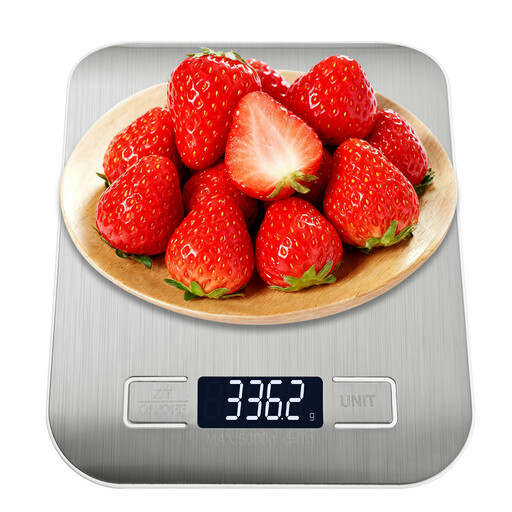
Why this product suits this profile: This model offers a 5 kg weighing capacity, 1 g increments and several common units for everyday recipes.
The technical specifications clearly state the weighing capacity and resolution. This makes it easier to compare the model with devices that only make vague claims about being “precise”.
LCD display, automatic shut-off, overload and low-voltage warnings; two AAA batteries are required and are not included.
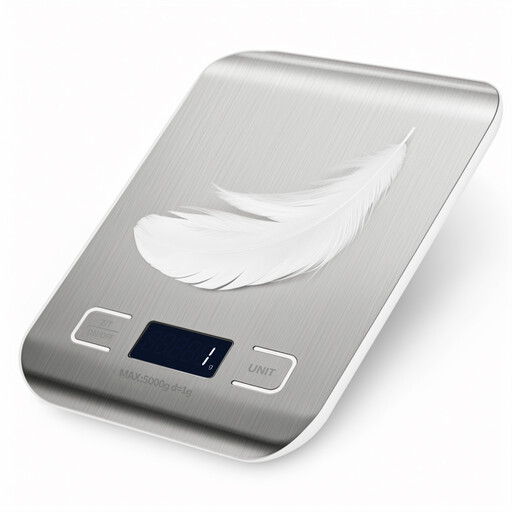
Why this product suits this profile: The fingerprint-resistant stainless steel surface is ideal for anyone looking for a compact kitchen scale that is easy to wipe clean.
The product specifications state a 5 kg weighing capacity and 1 g increments instead of making vague claims about precision.
LCD display, automatic shut-off and g, oz, lb:oz and ml units; powered by two AAA batteries, which are not included.
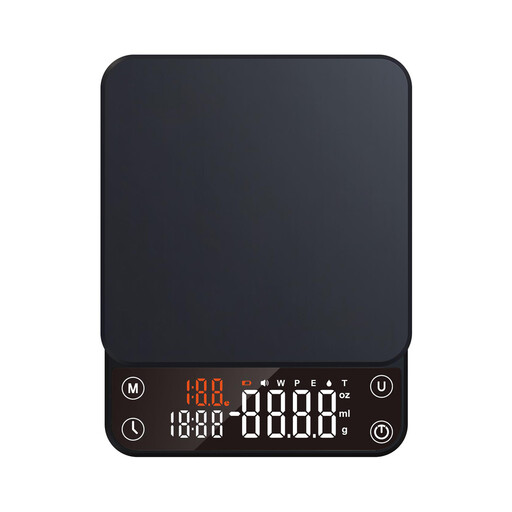
Why this product suits this profile: Coffee lovers can enjoy specialist pour-over and espresso modes, as well as a display showing the water-to-coffee ratio.
The additional functions are clearly specified: four modes, auto-tare and automatic espresso timing triggered by liquid detection.
Weighing range up to 3 kg, 0.1 g resolution below 1 kg, LED display and built-in 800-mAh battery with USB-C connection.
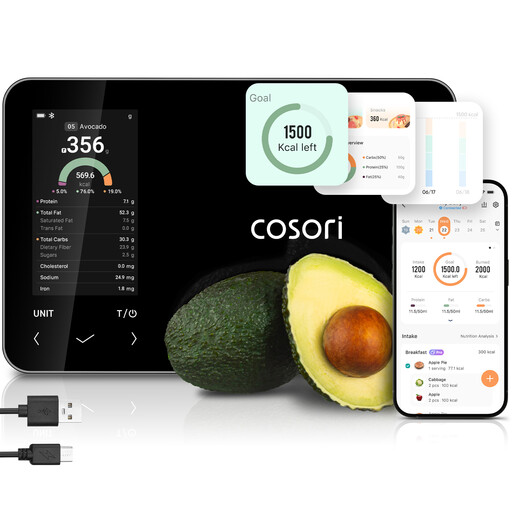
Why this product suits this profile: This nutritional scale combines portion weighing with an app and can display data for several nutritional values.
The app functions are linked to Bluetooth, a food database and specific input options such as barcode scanning or search.
1 g increments from 3 to 5,000 g, seven units and USB-C charging; the nutritional data is intended as an overview and does not replace individual dietary advice.
We have put together a complete, regularly updated list of products that fully meet these strict selection criteria and the safety regulations applicable in the EU.
Its lifespan depends on the batteries or rechargeable battery, moisture, overloading and mechanical stress. Storing the scale in a dry place, cleaning it carefully and using it within the stated weighing capacity can help extend its service life. It is not possible to give a standard lifespan that applies to all models.
For flour, sugar and portions of dough, a kitchen scale with a 5 kg weighing capacity and 1 g resolution is usually sufficient. A clear display and tare function are important. If you weigh very small quantities such as yeast or spices, you should also check the minimum weight and look for a finer resolution.
Battery-powered models generally require two AAA batteries and often switch off automatically. Rechargeable models are charged via USB-C. Actual power consumption depends on how long the scale is used, its automatic shut-off function and how often it needs charging.