
Lieferung heute & morgen

Qualitätsgarantie
App herunterladen
Kategorien
Precise measurements are fundamental to achieving consistent results in the kitchen. Whether you're preparing baked goods, adhering to a diet plan, or brewing coffee, a digital kitchen scale delivers a level of accuracy that measuring cups and guesswork simply can't match. Choosing the right model depends on your specific needs. Crucial factors include the maximum weight capacity, measurement precision in gram increments, and functional features like the tare function.
This guide breaks down the technical specifications that matter when choosing a digital kitchen scale and presents a selection of models designed for different priorities.
The functionality of a digital kitchen scale is defined by its technical specifications. Making an informed choice means matching these features to your intended use.
The two most critical parameters are the weight capacity and the precision of its increments.
Weight Capacity: Standard models, such as a 5kg kitchen scale, are designed for most everyday cooking tasks. They are suitable for weighing flour, sugar, vegetables, or meat in standard household quantities. For specialised applications that involve weighing very small amounts, models with a lower maximum capacity, such as 500g, are often more precise in the lower measurement range.
Measurement Accuracy: Accuracy is indicated by increments. A scale with 1-gram increments is sufficient for general cooking and baking projects. For tasks requiring higher precision, like weighing yeast, spices, leavening agents, or coffee grounds for espresso, a 0.01g or 0.1g precision scale is the appropriate choice. Such models are also known as high-precision scales or gram scales.
An indispensable feature is a scale with a tare function, also known as an add-and-weigh function. It allows you to zero out the weight of a container, ensuring that only the net weight of the ingredient is measured. This is especially practical when multiple ingredients are added sequentially to the same bowl. After each ingredient, the display is reset with the push of a button, which simplifies the process and reduces the number of dishes to wash.
The surface material affects both durability and hygiene.
A slim profile and compact design make it easy to store the scale in a drawer or on the wall if a hanging loop is provided.
Additional specifications can enhance convenience and the user experience:
Based on the technical criteria mentioned, we present two models that cover different user profiles.
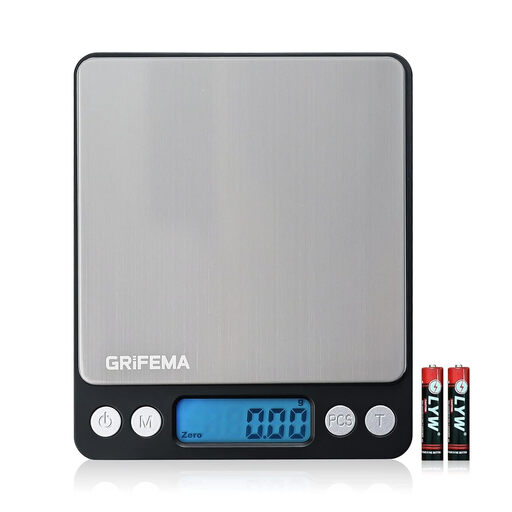
Why We Recommend It The Grifema scale specialises in high precision. With a measurement accuracy of 0.01g and a maximum capacity of 500g, it's designed for users who need to measure minute quantities with exactness. The additional piece-counting function (PCS) and compact, pocket-sized design expand its utility beyond that of a simple baking scale.
Pros
Who It's For This model is suitable for baristas who weigh coffee beans with gram-level accuracy, for ambitious bakers working with precise amounts of yeast or salt, and for individuals who need to weigh jewellery or other small items.
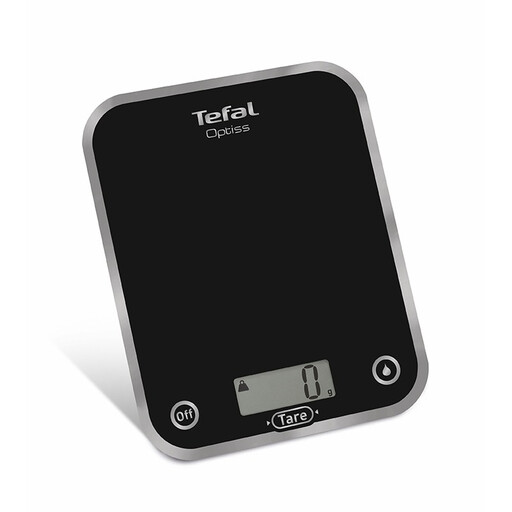
Why We Recommend It The Tefal Optiss BC5005 is a versatile, all-around model for daily kitchen use. Its weighing capacity of up to 5kg in 1-gram increments meets the demands of most cooking and baking recipes. The glass surface and integrated liquid measurement function make it a practical and low-maintenance tool.
Pros
Who It's For This model is a great choice for home cooks and families who need a reliable and easy-to-use scale for everyday food prep, from baking a cake to portioning meals.
While ingredient precision is a cornerstone of success in the kitchen, physical stability during long periods of standing also plays a role in overall well-being. To promote balance and coordination, incorporating short exercises can be beneficial. Products like a Balance Board are designed for such purposes.
1. What does the tare function on a scale mean? The tare function allows you to reset the weight display to zero after placing an empty container on the scale. This ensures that only the weight of the ingredients added subsequently is measured. This simplifies weighing multiple ingredients in a single container.
2. What accuracy does a kitchen scale need for baking? For most standard baking recipes, a scale with an accuracy of 1 gram is sufficient. For recipes that call for very small amounts of potent ingredients like dry yeast, salt, or special leavening agents, a high-precision scale with an accuracy of 0.1g or even 0.01g is recommended to achieve consistent results.
3. How do you calibrate a digital kitchen scale? Most digital kitchen scales for home use are factory-calibrated and do not require manual recalibration. Should calibration be necessary, manufacturers detail the process in the user manual. It typically involves placing a reference weight (calibration weight) on the scale to adjust the measurement. It is important to always use the scale on a flat, stable surface to avoid measurement inaccuracies.