People with limited storage space
If you weigh grains for lunch and want to put the scales away in a drawer or hang them up afterwards, their height and overall dimensions are important points to compare.


If you regularly portion grains into a bowl, start by checking the tare function, whether you can see the display with the bowl in place, and how much room the scales take up when stored. A flat scale saves space; a larger weighing platform or bigger digits can make it easier to use. A kinetic scale avoids batteries, but you’ll need to activate it before weighing.
If you weigh grains for lunch and want to put the scales away in a drawer or hang them up afterwards, their height and overall dimensions are important points to compare.
The tare function lets you offset the weight of an empty bowl. Also check whether you can see the display clearly while adding ingredients and whether the bowl sits securely on the weighing platform.
A kinetically powered scale doesn’t need its batteries replaced. However, you’ll need to activate it before weighing and check that its operating time suits your routine.
First, check that the scales will fit in your storage space and work with your bowl. The display, tare function and power supply can then help you find a model that suits your everyday needs.
| Criterion | What to look for | Who is this important to? |
|---|---|---|
| Storage in a small space | Compare the overall dimensions and height with your drawer or shelf, and check that the weighing platform is suitable for your bowl. | If I have little worktop space after lunch, I want to be able to put the scales away without moving other things around. Around 36% of consumers prioritise keeping the amount of space they take up to a minimum. |
| Portioning with the tare function | Check the tare function and maximum capacity for the bowl and its contents together. A 1 g graduation does not automatically mean a measurement deviation of no more than 1 g. | If I weigh grains directly into my bowl, I want to zero the scales and read the weight as I add the ingredients. Around 29% of consumers prioritise portioning with a tare function. |
| Display and ease of use | Check the digit height and display position with your bowl in place. Clean surfaces according to the care instructions for the specific model. | If the bowl might partly cover the display, I need one that’s easy to read from where I stand at the worktop. Around 21% of consumers prioritise readability and ease of use. |
| Power supply | For battery-powered models, check the battery type. With kinetic operation, bear in mind that you’ll need to activate the scales before weighing. | If I don’t want to replace batteries, a kinetic scale could suit me, provided activating it fits into my routine. Around 14% of consumers prioritise avoiding batteries. |
A stated graduation or display increment doesn’t automatically tell you the device’s actual measurement deviation.
Distinguish between the specification and a measurement test. If small differences in weight matter, look for a test of the specific model.
A small scale saves space, but the bowl still needs to sit securely and the display must remain visible while you’re adding ingredients.
Compare the base of your bowl with the weighing platform, and check whether you can read the display clearly with the bowl you usually use.
CASO says the Kitchen EcoMate can operate for up to three minutes after you move the lever.
Choose this type only if activating it fits into your routine. Otherwise, check out a battery-powered model and find out which battery it needs.
The Page Compact 300 and Page Comfort 300 Slim combine a slim design with a tare function. The models differ in areas including their overall dimensions and display.
The KS 19 Black is a slim digital glass scale with a tare function for weighing ingredients in a bowl.
The Kitchen EcoMate is a digital, kinetically powered option for anyone who wants to avoid replacing batteries.
The digital kitchen scale Black, CMMF 3201000339, is an option if a stable weighing platform and easy-to-reach buttons matter more than the smallest possible design.
Digital kitchen and coffee scales to compare with your needs for a tare function, worktop space and storage.
 No image available
The tare function is handy if you weigh grains straight into a bowl. Compare the dimensions with your available storage space.
Product details: 205 × 150 × 20 mm, LCD display, tare function and maximum capacity of 5 kg. Don’t place hot items on the glass surface or immerse the scales in liquid.
 No image available
The tare function is useful for weighing ingredients in a bowl. Compare the compact footprint with the space you have for storing the scales.
Product details: 18 × 14 × 2 cm, stainless steel platform, LCD display, tare function and maximum capacity of 5 kg. Don’t place hot items directly on the platform or immerse the scales in liquid.
 No image available
The tare function is useful for portioning ingredients into a bowl. The description says its compact design makes it suitable for storing in a drawer.
Product details: stainless steel surface, LCD display, tare function and maximum capacity of 5 kg. The product title states a measurement accuracy of 1 g.
 No image available
The tare function and stated maximum capacity are useful if you weigh grains in a bowl. Check the dimensions against your storage space.
Product details: 21 × 15.5 × 2.9 cm, LCD display with large digits, stainless steel and plastic platform, tare function and maximum capacity of 10 kg. The product title states a measurement accuracy of 1 g.
 No image available
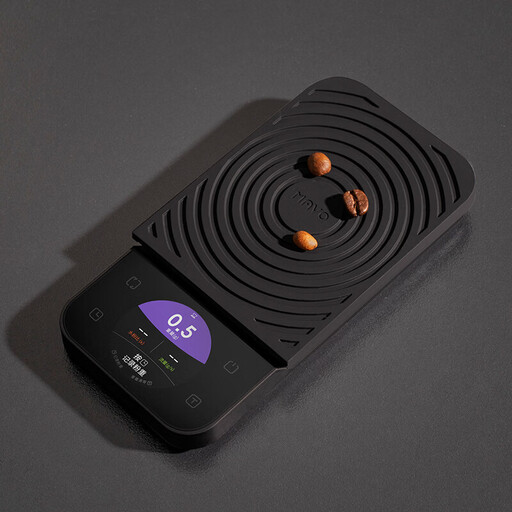
The product title says it’s for weighing coffee and kitchen ingredients. Check whether the standard weighing mode described suits your grain portions.
The product description calls it portable and ultra-slim, and mentions a silicone mat. No other measurement details are provided here.
Place the empty bowl on scales with a tare function and reset the display before adding the grains. Check that the bowl and its contents are within the maximum capacity and that you can see the display.
An easy-clean surface doesn’t mean the whole device is dishwasher-safe. Check the instructions for the specific model; details about glass surfaces or sensor-touch buttons don’t mean the scales are suitable for the dishwasher.
For a battery-powered model, check the battery type and the cost of replacing it. Soehnle lists one CR2430 battery for both the Page Compact 300 and Page Comfort 300 Slim. Beurer gives the KS 19 Black a five-year manufacturer’s warranty; check the terms for the version you choose. CASO says the kinetic Kitchen EcoMate doesn’t use batteries.
Germany’s Federal Ministry for the Environment recommends taking waste electrical equipment to an authorised collection point. Removable batteries should be taken out before disposing of the appliance; old batteries must not go in household rubbish and can be dropped off at suitable collection points. Whether a retailer has to take back an old appliance when you haven’t bought a new one depends, among other things, on the retailer’s size and the appliance’s dimensions.