Batch cooks who plan set portions
If you weigh dry lentils for several lunches, the tare function lets you exclude the weight of the bowl. The German Nutrition Society distinguishes between dry and cooked pulses when giving portion sizes.


If you regularly weigh dry lentils directly into a bowl, a digital kitchen scale with a gram display and tare function is a good place to start. Make sure the bowl and its contents together stay within the maximum capacity, and that the display remains visible. A 1 g graduation alone does not prove a measurement deviation of no more than 1 g.
If you weigh dry lentils for several lunches, the tare function lets you exclude the weight of the bowl. The German Nutrition Society distinguishes between dry and cooked pulses when giving portion sizes.
With a large or heavy bowl, consider the weighing platform, how clearly you can see the display and the maximum capacity for the bowl and its contents together.
If you put the scale away after weighing, check its dimensions against the space you have available. Also make sure the display remains visible beside your bowl.
For portioning lentils, a scale with a tare function and gram display is a practical place to start. If you use a heavy bowl, check the total load and platform size first. In a small kitchen, dimensions and readability matter too.
The proportions refer to consumers choosing a digital kitchen scale for this kind of lentil-soup cooking. Each person is assigned to one row based on their main buying priority.
| Buying priority | What to look for | Who is it important for? |
|---|---|---|
| Portioning lentils | Tare function and gram display; check whether recipe quantities refer to dry or cooked weight. | When I weigh dry lentils for several lunches, I want to subtract the bowl’s weight and keep track of the recipe quantity. Around 40% of consumers put portion planning first. |
| Weighing a large bowl | Compare the weight of the bowl and its contents together with the maximum capacity; check that the bowl fits on the platform. | When making a large batch of soup, I want enough room for my bowl and to be able to see the display. Around 30% of consumers prioritise bowl size and capacity. |
| Saving space and reading the display | Compare the scale’s dimensions with your storage space and check whether the display stays visible when a bowl is on the platform. | When I have limited kitchen space, I want to put the scale away easily after cooking and read it clearly while weighing. Around 20% of consumers put storage and readability first. |
| Considering the power supply | Check the battery type, what’s included and, if applicable, the charging port for the specific model. | If I want to avoid changing batteries or having to charge the scale regularly, the right power supply matters to me. Around 10% of consumers prioritise the power supply and ongoing effort. |
A finer display increment does not automatically prove a corresponding level of measurement accuracy. For lentil portions, it also matters whether a recipe refers to dry weight or weight after cooking.
The graduation describes the increments shown on the display. It does not prove the result of an independent test of the scale.
Use the graduation to compare the displays on different models, but don’t take it as confirmation of measurement accuracy.
Even after taring, the bowl and its contents still put weight on the scale. A large bowl may also obscure the display or buttons.
Compare the combined weight of the bowl and planned contents with the maximum capacity. Check that the bowl fits on the platform and doesn’t block the display.
A separate precision-weighing range or high capacity isn’t automatically necessary for everyday portions of lentils.
Choose these features only if you regularly weigh small ingredients or heavy containers as well.
The Page Compact 300 and Page Comfort 400 cater for different space and capacity requirements.
The KS 19 Black is a slim everyday model for weighing ingredients in a bowl.
The 3201000339 digital kitchen scale has a 23 × 15 cm weighing platform.
The KitchenDuo is designed for households that want to weigh very small amounts, such as spices, as well as everyday ingredients.
The PW501 is positioned as a portion scale with a stainless steel platform, making it an alternative to slim household models.
This Joybuy selection features digital kitchen scales for kitchen use. For each model, check that the tare function, readability and capacity suit your bowl and the portions of lentils you plan to weigh.
 No image available
The tare function is useful when weighing ingredients in a bowl; compare the bowl’s base with the scale’s platform.
The product name lists a maximum capacity of 5 kg, a tempered glass platform and a tare function.
The stated dimensions are 205 × 150 × 20 mm.
 No image available
The product name lists a tare function. Before weighing, check that you can use it in a way that works with your bowl.
The product name lists a maximum capacity of 5 kg, a stainless steel platform, an LCD display and a Bluetooth connection to an app.
Check whether the extra app features are useful for your kitchen routine.
 No image available
The tare function can be useful when weighing ingredients in a bowl; remember to include the bowl’s weight when considering the maximum capacity.
The product name lists a stainless steel surface, an LCD display and a maximum capacity of 5 kg.
The 1 g figure in the product name is not independent proof of a measurement deviation of no more than 1 g.
 No image available
A higher maximum capacity may be useful with a heavy bowl; compare the combined weight of the bowl and its contents.
The product name lists a tare function, a maximum capacity of 10 kg, 1 g increments, and stainless steel and plastic construction.
The stated dimensions are 21 × 15,5 × 2,9 cm. The 1 g figure alone does not prove independent measurement accuracy.
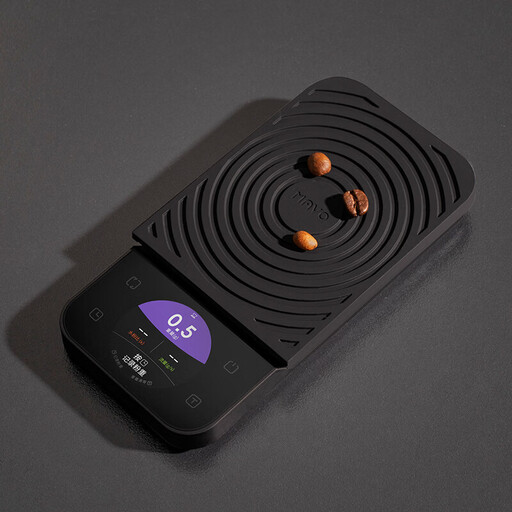 No image available
The product name describes this model as a portable coffee scale. For weighing lentils, check that its weighing mode and controls suit your recipe.
The product name describes a kitchen scale for pour-over coffee in a portable design.
Place the bowl on the scale, use the tare function to reset the display to zero, then add the dry lentils. Check whether the recipe refers to dry or cooked pulses: the German Nutrition Society gives 60 to 70 g of dry pulses or 125 g of cooked pulses as a serving.
Keep leftovers in the fridge and eat them within two to three days. This is the advice of the German Federal Institute for Risk Assessment for leftovers kept at home.
Weighing ingredients for home batch cooking does not involve selling them by weight. Germany’s National Metrology Institute distinguishes household scales from scales subject to legal requirements for commercial or official use; those requirements do not automatically apply to a home kitchen. Selling food by weight is a different matter.
As the consumer advice centre explains, your statutory rights with the seller are separate from any voluntary guarantee. Waste electrical equipment must be collected separately. According to the German Environment Agency, used batteries from appliances can be taken to suitable collection points.