Bread bakers with a long prove
If your recipe calls for a proving period lasting several hours or overnight, compare its duration with the timer’s countdown range in hours.


Choose a timer based on the longest period you want to track in one go. For a prove lasting several hours or overnight, you’ll need a countdown that covers hours, while a minute timer may be enough for shorter stages. If your dough is proving while you prepare other things, look for multiple independent timers and a signal you’ll notice where you plan to keep it. The alarm reminds you to check the dough, but it can’t confirm that it has finished proving: the Federal Centre for Nutrition describes proving in terms of a clear increase in the volume of the yeast dough.
If your recipe calls for a proving period lasting several hours or overnight, compare its duration with the timer’s countdown range in hours.
If you’re preparing other dishes while the dough proves, independent timers can help you keep track of several finish times separately.
A minute timer may be enough for a single, shorter proving period. Also make sure the display and alarm suit the place where you’ll keep it.
First, compare the longest uninterrupted stage in your recipe with the timer’s range. If you’ll be preparing other things at the same time, also check how many independent countdowns it offers and whether you’ll hear or see the signal in your kitchen.
| What you need | What to check before buying | Who is this important for? |
|---|---|---|
| Proving time | Compare the longest stage in your recipe with the stated countdown range; check whether you can set the timer in hours. | If my dough needs to rest for several hours or overnight, I need a timer that keeps running without having to reset it. Around 36 % of consumers put a sufficiently long run time first. |
| Multiple timings at once | Check the instructions or product specifications to see how many timers can run at once and the run time available for each. | If the dough is proving while I prepare other things, I want to track their finish times separately. Around 29 % of consumers prioritise independent timers. |
| A signal you’ll notice | Check the type of signal and volume settings; consider whether you’ll be able to see a light signal where you plan to keep the timer. | If I’m busy preparing food and can’t keep looking at the display, I need to be able to notice when the time is up in my kitchen. Around 21 % of consumers put an easy-to-notice signal first. |
| Display and positioning | Check the display and controls, as well as the magnet or stand; also check the battery type and what’s included. | If I want to check the time left as I walk past, a clear display and a suitable place to put the timer matter to me. Around 14 % of consumers prioritise visibility and positioning. |
A recipe may call for a longer resting period than a countdown of up to 99 min. 59 sec. can cover. You’ll then need to reset the timer or make other arrangements.
Compare the timer’s range with every stage of your recipe before choosing a model.
A wide range in hours doesn’t mean that two countdowns can run independently of each other.
If you want to track several tasks at once, check exactly how many timings can be used simultaneously.
According to TFA Dostmann, the TFA 99HOURS keeps its LED warning light active as a visual signal in silent mode. It’s only useful if you can see the timer.
Before the first time-critical prove, check that you’ll notice the signal where you plan to keep the timer.
What’s included varies by model; two AAA batteries are not included with the TFA timers mentioned here.
Check the battery type and what’s included with the specific version before you plan to use the timer.
If batteries aren’t included, make sure you have the right ones ready before using the timer for the first time.
The 99HOURS and 38.2025 models meet different needs: a long single countdown or two timings at once.
The CONTARE 12330 is suited to individual, shorter countdowns.
The Silit Attimo is an option if a large touch display and flexible positioning are important to you.
The KT 300 is designed for keeping track of several tasks at once.
The Heyo Rotation is worth considering if you prefer a rotary control for individual countdowns.
This selection at Joybuy includes digital timers for individual stages, including models with a short countdown limit and options for keeping the timer in view.
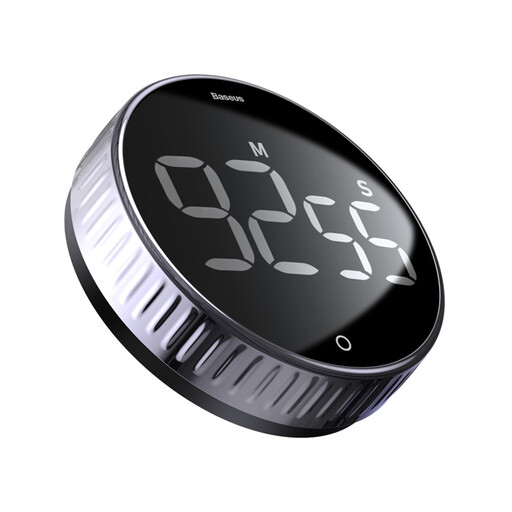 No image available
For a single timing, if you want to stand or attach the timer somewhere visible.
The product description specifies count-up and countdown functions, a large LED display, a magnet and a stand.
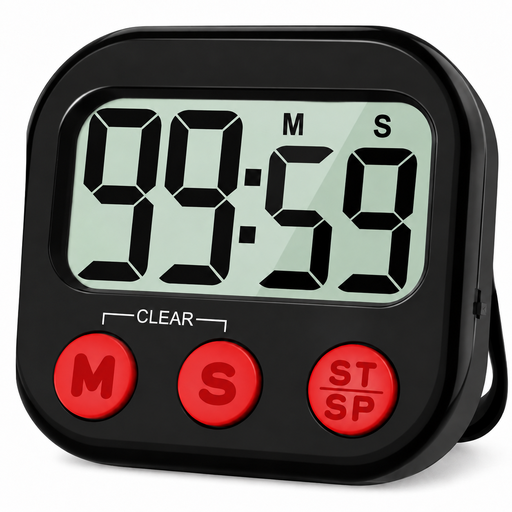 No image available
For a single, shorter proving or preparation stage that falls within the stated countdown limit.
The maximum time is 99 min. 59 sec. The product description specifies adjustable volume, a magnet, a stand and a hanging option. This maximum time isn’t enough for a continuous prove lasting several hours.
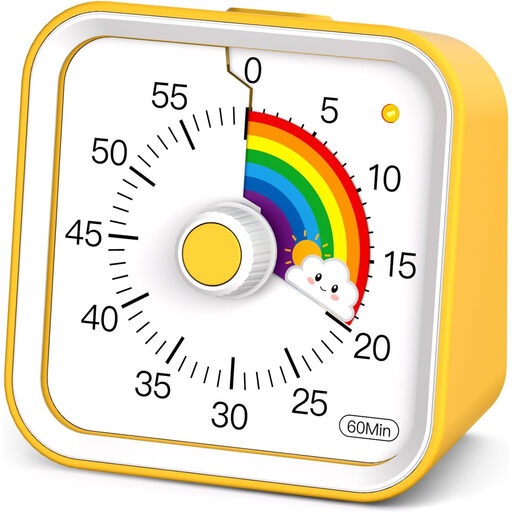 No image available
For a single, shorter period when visual and audio cues are important to you.
The title specifies a 60-minute countdown and pause function; the product description mentions visual and audio cues. The stated run time won’t cover a continuous prove lasting several hours.
No, the alarm only reminds you to check the dough. The Federal Centre for Nutrition describes yeast dough as having proved when its volume has increased noticeably; the recipe time alone can’t confirm the state of the dough.
Whether a timer has a magnet or stand depends on the model. Choose a spot where you can see it and check beforehand that you’ll notice the signal there. Don’t put the GEFU CONTARE in the dishwasher, as the manufacturer says it isn’t dishwasher safe.
Check whether the required batteries are included: the manufacturer says two AAA batteries are not included with the TFA 38.2025. If an item is faulty, your statutory rights against the seller are separate from any voluntary guarantee. According to consumer information from the European Union, consumer purchases in the EU have a minimum two-year legal guarantee from the date the goods are received.
No. The German Environment Agency recommends taking old electrical equipment to suitable collection points for separate disposal. Removable batteries should be taken separately to battery collection points.