Bread bakers with long proving times
If you want to set a longer interval between checks, use the alarm as a reminder to take a look. King Arthur Baking points out that time alone isn’t a reliable way to tell when dough is ready.


If you only run one timer at a time, choose a single countdown that covers the longest interval you plan to leave between checks. Two independent countdowns make sense if you have another task to time while the dough is proving. The alarm reminds you to check the dough, but it doesn’t tell you whether it’s ready to bake.
If you want to set a longer interval between checks, use the alarm as a reminder to take a look. King Arthur Baking points out that time alone isn’t a reliable way to tell when dough is ready.
If you set a series of short timers, a simple minute timer may be enough. Technoline states that the KT 200 has a countdown of up to 99 minutes and 59 seconds.
If you need to time a second task while the dough is proving, look for timers that explicitly offer parallel countdowns. ADE and TFA Dostmann describe this feature on certain models in their ranges.
First, compare the longest interval you want to leave running without resetting the timer. Then decide whether you actually need to time two things at once.
| What matters when buying | What to check | Who it matters most to |
|---|---|---|
| Countdown duration | Compare the model’s maximum countdown with the longest interval you plan to leave between checks. | If you want to cover a long proving time in one go, you’ll need a countdown that runs for long enough. Around 36 % of consumers say long single intervals are their main priority. |
| Easy to set | Check how to set and reset a timer, and whether saved times can only be recalled or can run in parallel. | If you set a series of short timers, you’ll want to enter the next one without fuss. Around 29 % of consumers need simple intervals that run one after another. |
| Alarm and placement | Check the placement options, such as a magnetic surface or stand, and the audible or visual alerts available on the model. | If you have limited worktop space or the timer is out of sight, you need to be able to notice its alarm from where you are. Around 21 % of consumers prioritise this. |
| Two running timers | Look for two explicitly independent countdowns that can run at the same time; two saved times are not the same thing. | If you need to time another task while checking the dough, two displays can save you having to reset the timer. Around 14 % of consumers actually need parallel timers. |
A countdown measures elapsed time, not how the dough is developing. King Arthur Baking explains that factors such as temperature, humidity and the amount of dough can affect how quickly it proves.
Set a time to check the dough, then judge it by the recipe and how it looks.
The three saved settings on the TFA 99HOURS 38.2049.02 are not the same as the two measurements that can run at the same time on the TFA 38.2025.
If you want to track two tasks at once, check that the manufacturer confirms two parallel countdowns for the specific model.
A beep won’t help much if you can’t hear it from where you usually are. A visual alert needs to be in your line of sight, too, and the magnet or stand needs to suit the spot you have in mind.
Before buying, check where you’ll place the timer, whether there’s a suitable magnetic surface and which alert settings are available.
According to the manufacturers, batteries are not included with the TFA 99HOURS 38.2049.02 or the Technoline KT 200.
Check the battery type and what’s included with the specific model.
If you’re considering one of these models, have the right batteries ready before you plan to use the timer.
The models covered here include single and dual timers for different durations.
The TD2100 is a dual timer, while the TD1600 is a single timer for shorter countdowns.
The KT 200 is a digital timer for individual, shorter checks.
The Attimo is a digital timer that counts both up and down.
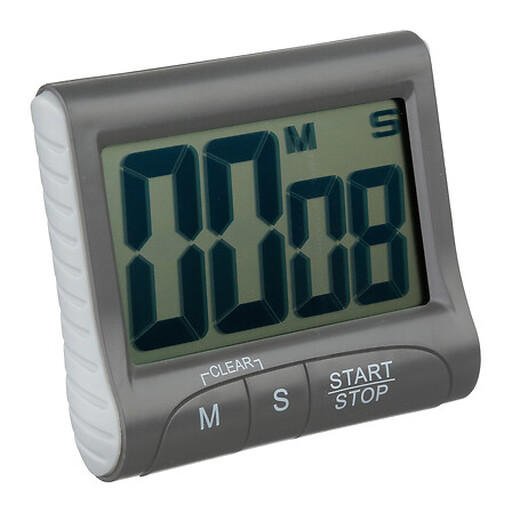
These digital Joybuy timers are intended for individual dough checks. For longer proving times, the stated maximum countdown is key.
 No image available
A digital countdown timer with an audible alarm could work well for individual checks; check the maximum run time for the specific model before setting longer intervals.
It can be placed on a worktop or hung up. Keep it away from water and extreme heat.
 No image available
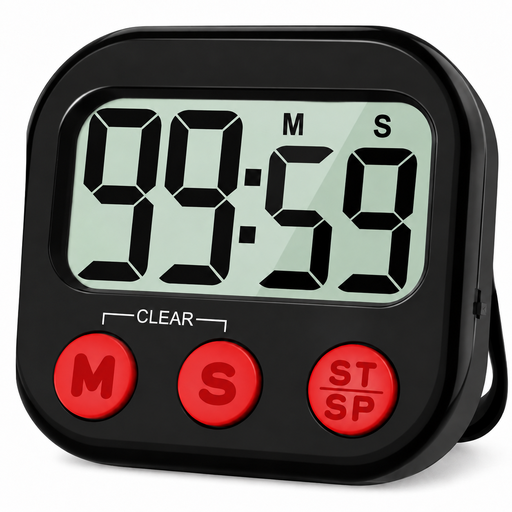
For individual check intervals of up to 99 minutes and 59 seconds, one countdown can cover the stated maximum duration.
A countdown and end-of-timer alarm are listed. Features include a stand, magnet and hanging option, as well as an adjustable alarm.
 No image available
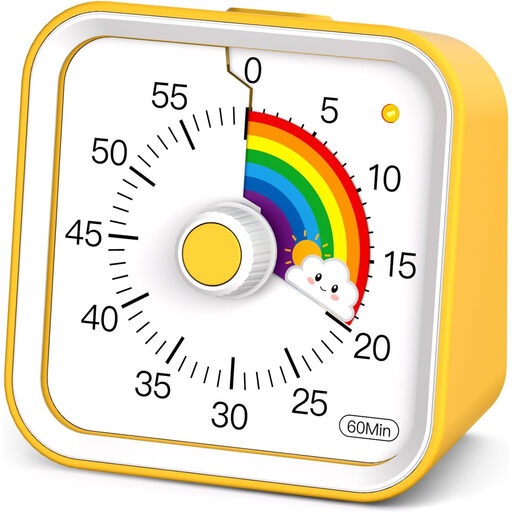
For short checks of up to 60 minutes, the visual display shows how much time has passed. A pause function is also listed.
The countdown is limited to 60 minutes. An audible alarm is listed.
No. Use the alarm as a reminder to check the dough. King Arthur Baking points out that factors including temperature, humidity and the amount of dough can affect how quickly it proves. So treat the recipe’s timing as a guide and check how the dough is developing, too.
Check whether there’s a magnetic surface where you want to put it, or whether a stand or hanging loop would work better. TFA Dostmann lists all three options for the 99HOURS 38.2049.02. Make sure you’ll be able to hear or see the alert from that spot.
Check what’s included: according to the manufacturer, the TFA 99HOURS 38.2049.02 needs two AAA batteries, which are not included. If there’s a fault, remember that your statutory rights against the seller are separate from any voluntary guarantee.
Take electrical waste to a separate collection point rather than putting it in your household rubbish. The German Environment Agency recommends removing any batteries that can be taken out before handing the timer in, then disposing of them separately at a battery collection point.
In Germany, online orders generally have a 14-day cancellation period from the day you receive the goods; exceptions and the terms of your specific order may apply. Cancelling an order is separate from making a claim about a faulty product.