
Lieferung heute & morgen

Qualitätsgarantie

Willkommens-Angebote freischalten: KOSTENLOSE Lieferung | Bis zu 80 % RABATT | Kostenlose 30-Tage-JoyPlus-Testphase
App herunterladen
A digital scale should be reliable in everyday use, easy to read and suited to the job you need it for. Yet product photos, unclear accuracy claims and long lists of features often lead to the wrong purchase. Digital bathroom scales have different requirements from digital kitchen scales or coffee scales with a timer.
This buying guide explains which details really matter, which marketing claims to treat with caution and which models suit different types of user.
A claim such as ‘precise’ doesn’t tell you much on its own. What matters is the measurement increment, minimum load and maximum capacity. A 100 g increment is standard for everyday bathroom scales. By contrast, kitchen scales with 1 g increments are better suited to baking ingredients, portion control or coffee.
The surface you place the scale on can also affect the result. Soft carpets, uneven tiles or an unstable floor can distort the reading. As a rule, always place a digital scale on a hard, level and stable surface.
Depending on the model, body fat scales or body composition scales measure additional values using bioelectrical impedance analysis, or BIA. These values are affected by factors such as hydration, time of day, skin contact and posture. They can help you track changes over time, but they are no substitute for a medical examination.
If you only want to measure your body weight, you don’t need an app, Bluetooth or a body composition feature. Extra technology is most useful if you want to save readings regularly and compare them over a longer period.
Glass platforms look modern, but can become slippery when wet and shouldn’t be subjected to hard impacts. The platform should also be large enough. Compact models are easy to store, but leave less room for your feet.
With a large display, size isn’t the only thing that matters. Check that the numbers are easy to read during normal use and whether the scale switches on automatically. Bathroom scales with a step-on function are usually more convenient for everyday use than models that need to be switched on manually.
The maximum capacity should suit your household. Scales with a capacity of up to 180 kg cover many everyday needs. If you need a higher weight limit, consider scales with a capacity of up to 250 kg. Capacity and platform size aren’t the same thing: a large model can still have a lower weight limit.
Also check the units:
Safety glass is common on many glass scales. Keep it free from cracks and chips. The surface is best cleaned with a soft, slightly damp cloth. Harsh cleaning products and immersing the scale in water can damage the casing or electronics.
When using scales in the bathroom, keep your feet and the platform dry. Anyone with balance difficulties should use the scales with suitable support. Children shouldn’t climb on the scales or play with them.
A Bluetooth scale or smart scale with an app can automatically send readings to a smartphone. Before buying, check:
For body composition scales with a BIA function, you should also follow the manufacturer’s safety advice. Anyone with an implanted medical device should consult a doctor before use.
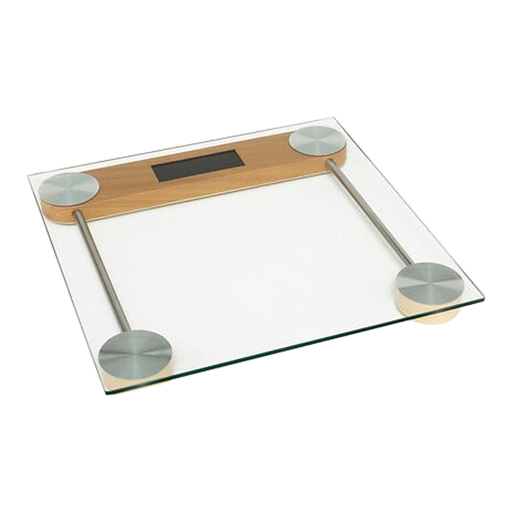
Why it suits this type of user: These digital bathroom scales focus on displaying your weight, with no app or set-up required. At 28 x 28 cm, they’re compact and easy to store.
The feature set is refreshingly simple: no unnecessary body composition readings and no hidden reliance on an app. The maximum capacity is 180 kg.
Digital weight display, glass platform, 180 kg capacity and two AAA batteries for power.
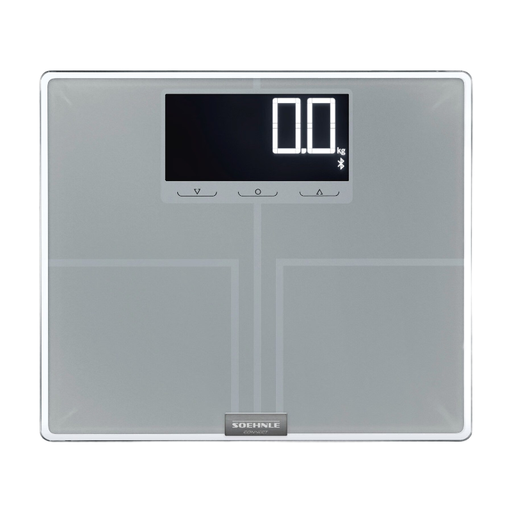
Why it suits this type of user: This model combines body weight readings with BIA-based body composition analysis, Bluetooth and app connectivity. It can automatically recognise up to eight users.
The specifications clearly state the 100 g increments, 200 kg capacity, backlit LCD display and dedicated MyScale app. Body composition readings are best used to track changes over time, not as a medical diagnosis.
Bluetooth connectivity, user recognition for up to eight people, athlete mode and a safety glass platform.
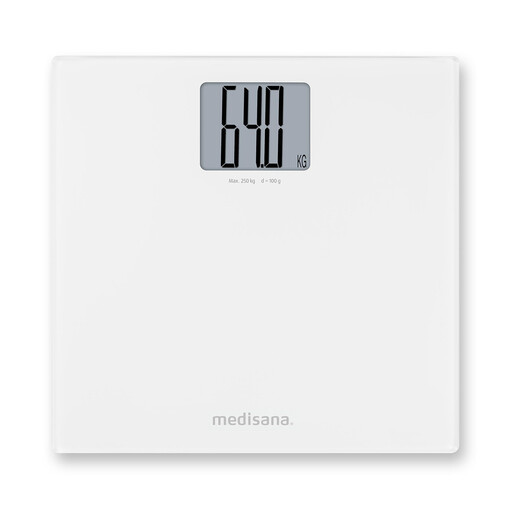
Why it suits this type of user: These bathroom scales have a capacity of 250 kg and a 71 mm-high display. They’re a good choice if you need a higher weight limit and a display that’s easy to read.
The maximum capacity is clearly stated. An overload indicator, automatic switch-off and step-on activation also make everyday use easier.
250 kg maximum capacity, 100 g increments, kg/lb/st switching and an extra-large LCD display.
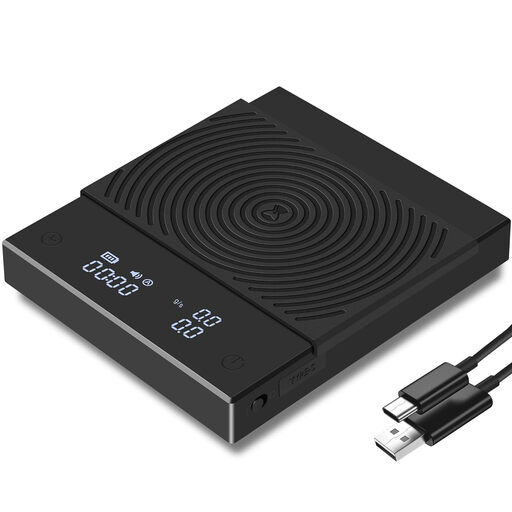
Why it suits this type of user: These coffee scales with a timer are designed for anyone who wants to keep track of brewing time, weight and flow rate when making pour-over coffee.
The features are tailored to making coffee and kitchen tasks, rather than promising body composition analysis. The scales measure in 0.1 g increments, up to 2,000 g.
Built-in timer, flow-rate function, 0.1 g resolution, USB-C rechargeable battery and silicone protective mat.
We’ve put together a comprehensive, regularly updated list of products that meet these strict selection criteria and fully comply with the safety regulations in force in the EU.
Place the scales on a hard, level floor, such as tiles or wooden flooring. Avoid carpets and damp surfaces. For comparable readings, try to weigh yourself under similar conditions each time. If you have glass scales, keep the platform and your feet dry.
Their lifespan depends on build quality, battery care and how they’re handled. Impacts, moisture, overloading and harsh cleaning products can damage the sensors or glass. If the manufacturer recommends it, remove the batteries if you won’t be using the scales for an extended period. Don’t continue using the scales if they’re cracked or showing incorrect readings.
It depends on the power supply and how often the scales sync. Models with automatic switch-off use less battery power. Scales with a built-in rechargeable battery charge via USB, while Bluetooth or Wi-Fi features may use extra power. If you only want to check your weight, a model without an app is usually more economical.