
Lieferung heute & morgen

Qualitätsgarantie

Willkommens-Angebote freischalten: KOSTENLOSE Lieferung | Bis zu 80 % RABATT | Kostenlose 30-Tage-JoyPlus-Testphase
App herunterladen
Finding the right digital scale can quickly become overwhelming. Whether for the kitchen or the bathroom, the market is flooded with models promising a wide array of features. But not every feature is worth the money, and behind some marketing claims lie design flaws that can quickly render a device useless. As your Joybuy Product Recommendation Officer, I'll help you identify the crucial criteria and find a scale that is precise, durable, and perfectly suited to your needs.
Before you make a decision, you should be aware of the typical problems that lead to frustration and unnecessary expense.
To avoid a bad buy, focus on the following three core aspects. These determine the performance and longevity of your future scale.
Precision is the most important criterion if you want to buy a precise scale. Pay attention to the increment, which is the smallest unit of weight a scale can display.
Reliable measurement is ensured by four high-precision strain gauge sensors, distributed evenly under the weighing platform. This provides consistent results, regardless of where exactly you stand on the scale.
The material affects both durability and hygiene.
Extra features are only useful if they meet a specific need.
Here are some models that represent a smart choice for different user profiles, based on objective features.
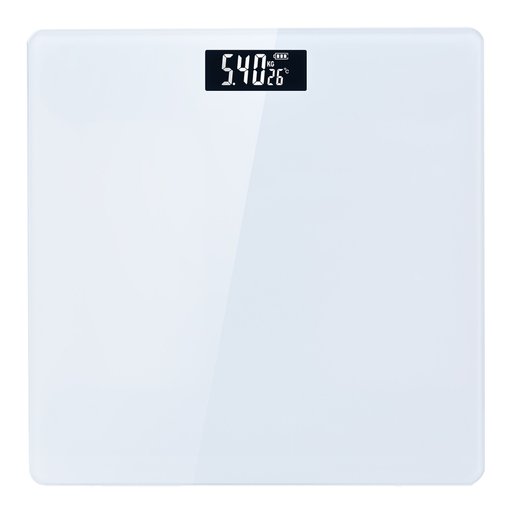
Why This Fits Their Persona: This model is ideal for households looking for a reliable and easy-to-use bathroom scale without unnecessary extras. It focuses on the core function: accurately measuring body weight.
It bypasses the trap of overloaded "smart" features by focusing on precise weight measurement with an accuracy of 0.05 kg. No app, no complicated setup.
High-precision sensor system, a high weight capacity of 180 kg, and an easy-to-read LCD display. It runs on standard AAA batteries, making it ready to use out of the box.
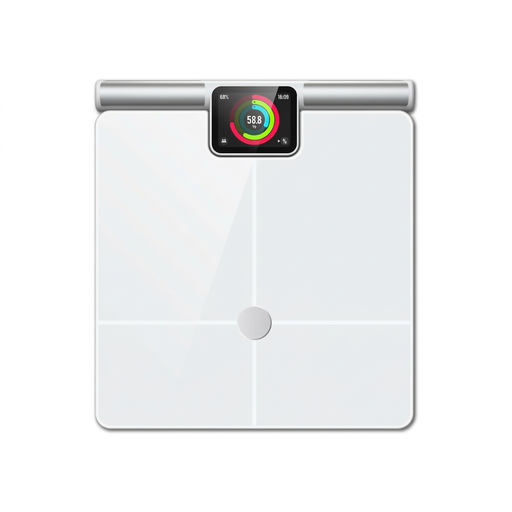
Why This Fits Their Persona: For users who want detailed insights into their body composition to optimise training and nutrition. The 8-electrode technology allows for a segmented analysis of arms, legs, and torso.
While it is "smart," its features are based on more advanced technology (8-electrode, dual-frequency BIA) for higher data quality, thus avoiding the pitfall of unreliable gimmick metrics found in simpler models.
The 8-electrode technology delivers a segmented body analysis. Dual connectivity via Wi-Fi and Bluetooth ensures automatic and seamless data synchronisation.

Why This Fits Their Persona: Perfect for individuals who need to accurately track macros, calories, or specific nutrients for diet, health, or fitness goals. It integrates nutritional analysis directly into the cooking process.
It solves the usability problem of many nutrition apps by displaying key data directly on its large colour screen and syncing seamlessly. This makes tracking efficient and less cumbersome.
An integrated nutrition database with over 1.3 million food items and real-time analysis directly on the scale's display. App synchronisation allows for detailed long-term tracking.
We have compiled a complete, up-to-date list of products that fully meet these strict selection criteria and rigorous safety standards.
1. Does the flooring surface affect the accuracy of a bathroom scale? Yes, significantly. A digital bathroom scale should always be used on a hard, level surface like tile, parquet, or laminate. On carpet or other soft surfaces, the sensors cannot work correctly, leading to inaccurate and fluctuating measurements.
2. How often do I need to calibrate my digital scale? Most modern digital scales for home use calibrate automatically each time they are turned on. It is usually sufficient to place the scale on a flat surface, step on it briefly to activate it, and wait for it to display "0.0". Manual calibration is typically not necessary or possible on these models.
3. What is the difference between a 4-electrode and an 8-electrode body fat scale? A standard 4-electrode body fat scale measures electrical resistance (impedance) only through the lower half of the body (legs and pelvis) and extrapolates the values for the entire body. An 8-electrode scale—four for the feet and four in a handlebar—measures the upper and lower body separately. This allows for a segmented analysis (arms, legs, torso) and generally provides more nuanced and accurate body composition data.