
Lieferung heute & morgen

Qualitätsgarantie

Willkommens-Angebote freischalten: KOSTENLOSE Lieferung | Bis zu 80 % RABATT | Kostenlose 30-Tage-JoyPlus-Testphase
App herunterladen
A digital scale should work reliably in everyday life: a digital bathroom scale should display your body weight clearly, while a digital kitchen scale should measure ingredients for bread, coffee or meals accurately. However, not every scale is suitable for every purpose. Misleading feature claims, unsuitable surfaces or missing information about the power supply can lead to a disappointing purchase.
A display showing 0.05 kg or 1 g may initially sound highly precise. However, the result also depends on the surface, calibration and correct use. A bathroom scale placed on a soft carpet can show fluctuating readings, even if the display uses very fine increments. For a digital bathroom scale, a hard, level and dry floor is therefore essential.
With a digital kitchen scale, the minimum load is also important. A scale that only measures reliably from 3 g is less suitable for weighing very small quantities of certain ingredients than a model with a correspondingly lower measuring range.
Bluetooth, app connectivity and body analysis may seem attractive. However, if you only want to check your weight occasionally or weigh ingredients, you may not need these features. With a Bluetooth scale, you should check whether your smartphone, app and preferred operating systems are compatible, as well as which data is actually collected.
A body fat scale can provide additional readings. These are not equivalent to a medical examination and should not be used as the basis for diagnosis or treatment. If you only want to record your body weight, a simple digital bathroom scale is often the clearer choice.
A scale made from toughened glass is usually easy to wipe clean and fits in with many bathroom styles. However, glass remains vulnerable to impacts, falling objects and incorrect handling. A slippery surface when wet can also pose a safety risk. Before buying, you should therefore consider the dimensions, feet, maximum weight capacity and care instructions.
For a digital bathroom scale, a maximum weight capacity of 180 kg, for example, is relevant to many households. An increment of 0.05 kg or 0.1 kg describes the steps in which the weight is displayed. It is not automatically proof that every measurement will be exact under all conditions.
A kitchen scale with a capacity of up to 5 kg covers typical quantities for cooking, baking and portioning. For everyday use, 1 g increments, an easy-to-read LCD display and a tare function are particularly practical. The tare function lets you deduct the weight of a bowl without having to transfer its contents.
A high-contrast LED or LCD display makes readings easier to see in different lighting conditions. On bathroom scales, switchable units such as kg, lb and st can be useful. Kitchen scales may offer g, oz, lb:oz or ml. When using ml measurements, check whether they refer to water or milk, as liquids have different densities.
Battery-powered scales can be placed wherever convenient. Before buying, check whether AAA batteries are included. Some models come with them, while others require you to purchase them separately. An automatic switch-off function can help reduce battery consumption. A nutrition scale with an app and USB-C charging avoids regular battery changes, but it does require a charging cable and the appropriate app.
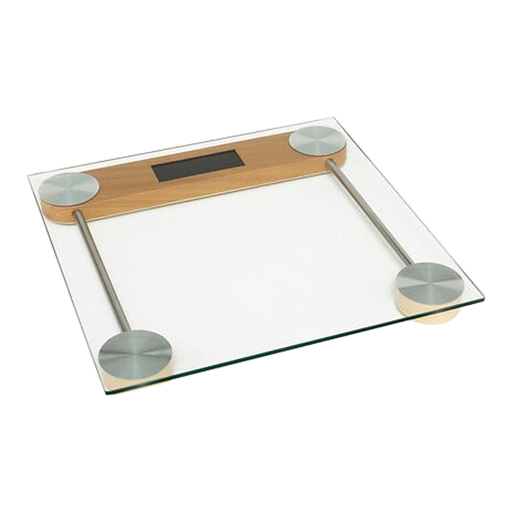
Why this product suits this profile: This digital bathroom scale focuses on displaying your weight clearly and does not require a connection to other devices. At 28 × 28 cm, it remains compact and is suitable for straightforward bathroom use.
There is no need for analysis or app features that you may not use. The product specifications explicitly state that it does not offer body analysis.
Digital weight display, maximum capacity of 180 kg and compact dimensions.
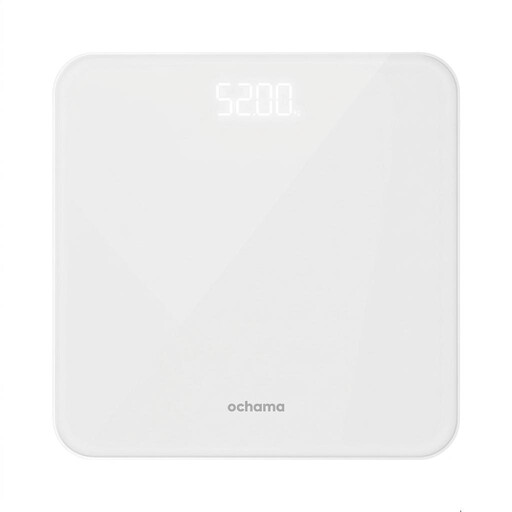
Why this product suits this profile: This digital bathroom scale combines a 5 mm toughened glass platform with a high-contrast LED display and a measuring range of 5 to 180 kg.
The key technical specifications for capacity, platform thickness, dimensions and display are clearly stated. This makes it easier to assess whether the scale is right for you before buying.
5 mm toughened glass, LED display and, according to the product description, battery life of up to 180 days.

Why this product suits this profile: For users who want to weigh ingredients and record nutritional data, this nutrition scale with app offers a Bluetooth connection, nutritional information and USB-C charging.
The app is designed for specific nutrition and portion tracking. Before buying, you should consider whether you really want to use this additional setup.
Measuring range of 3 to 5,000 g in 1 g increments, tare function, multiple units and USB-C rechargeable battery.
We have put together a complete, regularly updated list of products that fully meet these strict selection criteria and the safety regulations applicable in the EU.
The displayed increment may be 0.05 kg or 0.1 kg, for example. For comparable results, however, a firm surface, a centred standing position and as consistent measuring conditions as possible are more important than an especially fine display.
Battery life depends on the model, battery quality, frequency of use and automatic switch-off function. Some models run on two AAA batteries. Rechargeable nutrition scales are powered via USB-C. Stated runtimes should be treated as manufacturer or product specifications.
For regular cooking, baking, preparing coffee or portioning, a tare function is highly practical. It lets you reset the scale to zero while the bowl remains on the platform. This means you can weigh several ingredients one after another without needing additional containers.