
Lieferung heute & morgen

Qualitätsgarantie

Willkommens-Angebote freischalten: KOSTENLOSE Lieferung | Bis zu 80 % RABATT | Kostenlose 30-Tage-JoyPlus-Testphase
App herunterladen
A digital thermometer is a staple in many household medicine cabinets. But when choosing one, it’s not just big promises such as “fast” or “especially comfortable” that matter. Key considerations include measurement time, hygienic cleaning, ease of use and suitability for the intended measuring site. Families often need different features from individuals or carers.
The stated measurement time is based on the product’s technical specifications and can vary depending on the measuring method, body site and correct positioning. A fast thermometer that takes ten seconds is useful when children or restless people can’t keep still for long. With a digital thermometer that takes longer, it may be especially important to follow the instructions carefully.
When choosing a water-resistant thermometer, check which parts can actually be cleaned with water. On many models, the tip can be rinsed, but the display and battery compartment must not be fully submerged. Unclear cleaning advice can make it harder to maintain good hygiene or even damage the device.
A thermometer with a fever alarm, memory function or colour-coded display can make readings easier to interpret. But these features don’t automatically tell you whether the thermometer was used correctly. The body site, positioning, rest time and correct cleaning all affect the result. Seek medical advice if symptoms persist or are concerning.
A thermometer for children should be suitable for the intended use and supervised by an adult. Models with a flexible tip may be more comfortable for oral, underarm or rectal readings. The instructions explain how to position the tip. Take extra care when taking a rectal reading; children must never use the thermometer unsupervised.
A typical measuring range for a medical thermometer is around 32 to 42.9 °C. A resolution of 0.1 °C allows for a more precise display, but it doesn’t mean the thermometer is equally accurate across the entire range. A thermometer with an LCD display that’s easy to read is useful in low light and for older people. Switching between °C and °F may be helpful when travelling or if you’re used to a different scale.
The following features are useful for regular household use:
Check the product description and instruction manual to understand the alarm thresholds. A colour-coded display or signal is not a medical diagnosis.
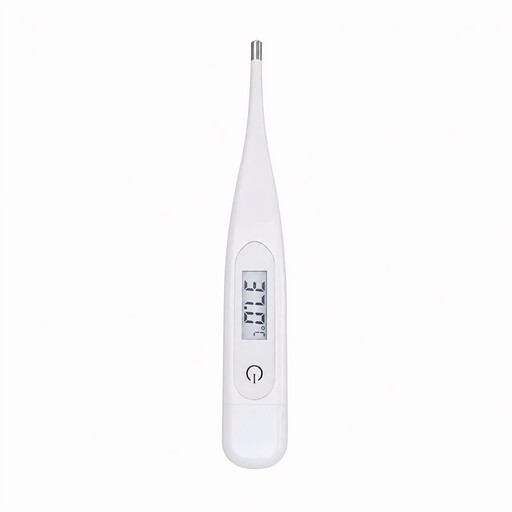
Why this product suits this profile: This pen-style digital thermometer focuses on the essentials for a household medicine cabinet and is compact enough to carry in a bag when you’re out and about.
The product details specify a measuring range of 32.0 to 42.9 °C, a display in 0.1 °C increments, and automatic shut-off and signal functions. This makes the key technical specifications clear.
Mercury-free casing, °C/°F switch and LR41 battery operation, according to the product description.
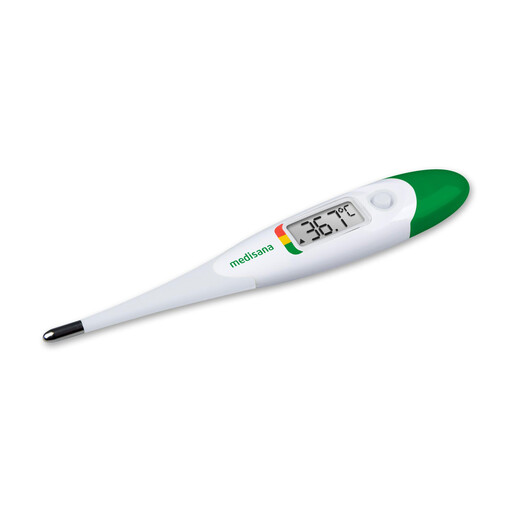
Why this product suits this profile: This model combines a stated measurement time of around ten seconds with a flexible tip, an LCD display and colour coding to help you interpret the reading.
The product description clarifies how the thermometer can be cleaned and notes that the main body must not be immersed. This helps avoid confusion when caring for the device.
Fever alarm, automatic storage of the last reading, °C/°F switch and storage case, according to the manufacturer.
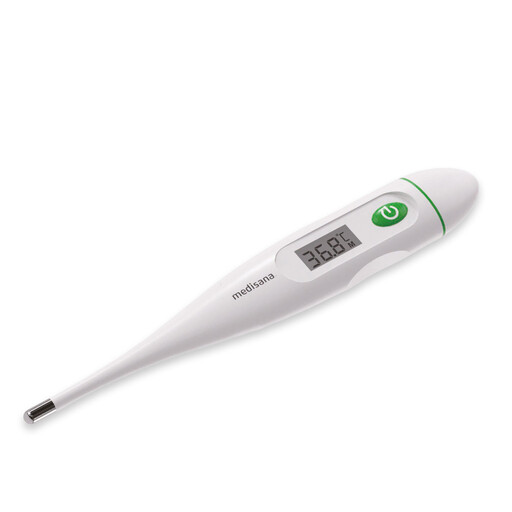
Why this product suits this profile: A measurement time of around 20 seconds, three stated measuring methods and automatic storage make it suitable for regular checks in a family home.
The flexible tip, cleaning options for the intended surface and storage case help avoid an awkward design that’s difficult to care for.
Oral, underarm and rectal readings, audible alarm, LCD display and battery included, according to the product details.

Why this product suits this profile: The flexible tip and easy-to-read LCD display are designed to make use more comfortable for children and people who are sensitive to discomfort.
The product details distinguish between the rinseable measuring tip and the main body, which isn’t fully waterproof. This makes clear which parts can be cleaned with water.
Fever warning signal, memory function, protective case and LR41 battery are included, according to the product description.
We’ve put together a comprehensive, regularly updated list of products that meet these strict selection criteria and fully comply with the safety regulations in force in the EU.
Before taking a reading, make sure the tip is clean and dry. If taking an oral reading, it’s best to wait a short while after eating or drinking. When measuring under the arm, place the tip centrally and hold it firmly against the skin. Try to keep as still as possible while the reading is taken. Babies and children must be supervised by an adult.
After each use, clean the measuring tip according to the instructions and store the thermometer dry in its protective case. Used batteries should be taken to the appropriate collection point, not put in household waste.
Battery life depends on how often the thermometer is used, the type of battery and whether it switches off automatically. Many stick thermometers use an LR41 or AG3 button cell. A dim LCD display or slow start-up may indicate that the battery needs replacing. Keep spare batteries out of reach of children, as button cells can be dangerous if swallowed.
That depends on the model, the measuring method and the instructions. A flexible tip may make it easier to use, but it doesn’t replace adult supervision. Take particular care when taking a reading from babies and young children. If you’re unsure or get an unusual reading, seek medical advice.
Clean the measuring tip after every use. Check the manufacturer’s instructions to see which cleaning products are suitable. As a rule, the body should only be wiped clean unless the manufacturer specifically states that it can be rinsed fully. Avoid abrasive cleaners, solvents and immersing the display.