
Lieferung heute & morgen

Qualitätsgarantie

Willkommens-Angebote freischalten: KOSTENLOSE Lieferung | Bis zu 80 % RABATT | Kostenlose 30-Tage-JoyPlus-Testphase
App herunterladen
When a family member has a fever, one thing matters above all else: a fast and reliable temperature reading. But the market for clinical thermometers is crowded and confusing. Between high-tech promises and budget-friendly deals lie pitfalls that can lead to inaccurate results and frustration. As your Joybuy Product Recommendation Officer, I'll help you separate the wheat from the chaff and find a device that truly fits your needs.
An unreliable measurement is more than just an annoyance—it can complicate the assessment of a person's health. Before you make a decision, you should be aware of the three most common purchasing traps:
To make an informed choice, focus on the technical fundamentals. Three features are crucial for the reliability and practicality of a clinical thermometer.
The type of measurement determines speed, comfort, and application.
The reliability of a measurement is the most important criterion. Look for the CE marking, ideally followed by a four-digit number. This indicates that the product has been tested as a medical device by a notified body and meets the strict EU regulations for safety and accuracy. High-quality sensors and factory calibration are the technical basis for precise values.
Some extras offer real added value in everyday life:
Instead of presenting a confusing list, we have selected models that meet specific requirement profiles and purposefully avoid the pitfalls mentioned.

Why it's a great fit: For families looking for a straightforward, reliable, and affordable secondary or basic thermometer. It focuses on the core function: an accurate contact measurement. The flexible tip increases comfort for oral or axillary readings.
This model is declared as a clinically tested medical device. It bypasses the trap of uncertified budget devices by being verifiably tested for accuracy and meeting fundamental safety standards.
The combination of a flexible tip, waterproof design for easy cleaning, and an acoustic fever alarm offers a high degree of practicality at a very accessible price point.
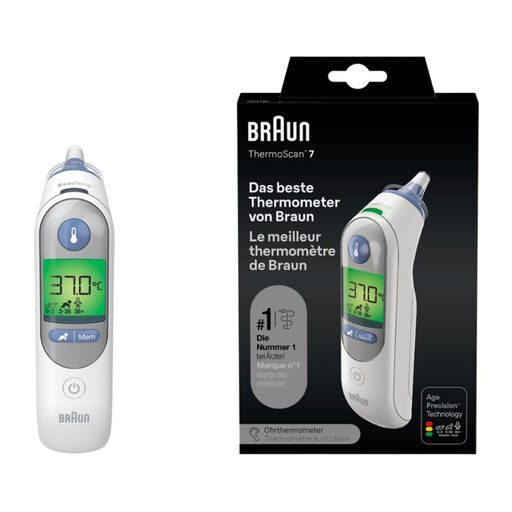
Why it's a great fit: When it comes to children's health, precision and easy interpretation of results are crucial. This ear thermometer was specifically designed for use with babies and children, taking into account age-related differences in the definition of fever.
It solves the problem of misinterpretation with its Age Precision technology. Instead of just displaying a number, the colour-coded display helps to correctly classify the result based on the child's age (0-3 months, 3-36 months, 36+ months).
The pre-warmed tip minimises the cooling effect in the ear and contributes to higher measurement accuracy. The ExacTemp positioning system also confirms the correct placement in the ear canal—a critical factor for reliable ear measurements.
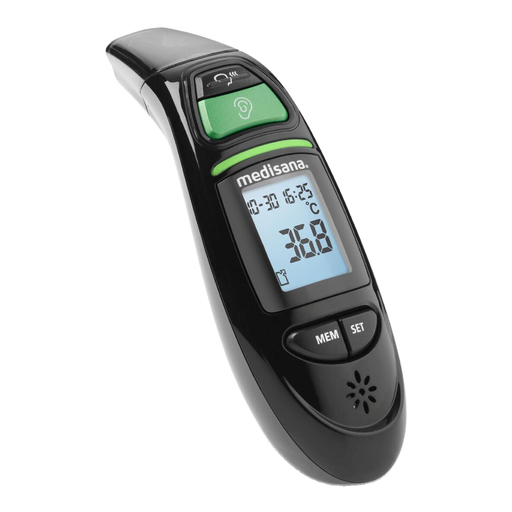
Why it's a great fit: For households that need a flexible device for different family members and situations. It combines the advantages of a forehead and ear thermometer and also offers useful additional measurements for everyday life.
This model avoids the feature overload trap by integrating meaningful modes into a well-thought-out design. Instead of unnecessary gimmicks, it offers the practical ability to measure the temperature of surfaces, liquids, and the ambient room temperature in addition to body temperature.
The 6-in-1 functionality makes it a true all-rounder. Whether it's body temperature on the forehead or in the ear, the temperature of a baby bottle, or the bathwater—everything can be checked quickly and easily with one device. The visual fever alarm provides a rapid assessment.
We've compiled a full, up-to-date list of products that fully meet these strict selection criteria and German safety regulations.
The sensor lens is the most sensitive component. Clean it carefully with a soft cotton swab lightly moistened with a bit of rubbing alcohol (isopropanol). Afterwards, wipe it with a dry, clean cotton swab. The housing can be wiped with a slightly damp cloth. Never use aggressive cleaning agents or immerse the device in water.
Both methods can provide very accurate results when used correctly. For newborns in the first few months of life, a forehead thermometer may be easier to handle as their ear canals are still very narrow. For older babies and toddlers, an ear thermometer often provides very reliable readings because it measures the temperature of the eardrum, which correlates closely with the body's core temperature. With either method, it is important to follow the manufacturer's instructions precisely.
The CE marking confirms that the product meets the European Union's requirements for safety, health, and environmental protection. For medical devices like clinical thermometers, it is an essential feature indicating that the device is subject to quality control and has been deemed safe and effective for its intended purpose.