
Lieferung heute & morgen

Qualitätsgarantie

Willkommens-Angebote freischalten: KOSTENLOSE Lieferung | Bis zu 80 % RABATT | Kostenlose 30-Tage-JoyPlus-Testphase
App herunterladen
A digital thermometer is a staple in many household medicine cabinets. There’s plenty of choice, from classic stick thermometers and flexible digital thermometers to contactless infrared models. But price isn’t the only consideration for families, older people, travellers and carers. The measurement method, cleaning requirements, ease of use and features all affect how well a device suits everyday needs.
A contactless thermometer can display a temperature in about a second. That’s useful when taking a reading from a sleeping baby or measuring several people in a row. However, the result depends on the correct distance and position, the ambient temperature and the body area being measured. So it’s important to follow the instructions carefully.
A classic medical thermometer can take longer, but it uses a defined measurement site, such as the armpit, mouth or rectum. Speed alone isn’t enough to make your choice.
Depending on the model, an infrared thermometer with an object mode can also measure the temperature of a room, liquid or surface. This can be useful for checking milk or bath water. If you only want to check your body temperature occasionally, you may not need this feature.
Memory, colour-coded displays and a mute function are useful extras, but should suit the way you plan to use the thermometer. A fever alarm is no substitute for medical advice and does not provide a diagnosis.
A thermometer used by the whole family should be easy to clean hygienically. And water-resistant doesn’t mean fully waterproof: with many models, only the probe can be rinsed, while the casing must be kept dry.
It’s important to follow the safety instructions for button and AAA batteries. Keep batteries out of the reach of young children and dispose of them at an appropriate collection point in Germany.
A display showing 0.1 °C indicates the display’s resolution; it doesn’t automatically mean the reading itself is accurate to that level. The manufacturer’s stated error limits, measurement range and conditions for correct use are what matter.
For example, the Treesmile T11 has a stated display range of 32.0 to 42.9 °C. According to the product description, the margin of error varies with the temperature range and is approximately ±0.1 °C to ±0.3 °C. Always consider these details alongside the instructions for use.
A thermometer with an LCD display that’s easy to read is useful for older people and anyone with impaired vision. Many stick thermometers beep when a reading is complete. For taking a temperature at night, however, a model with a mute function may be more comfortable.
Also look for:
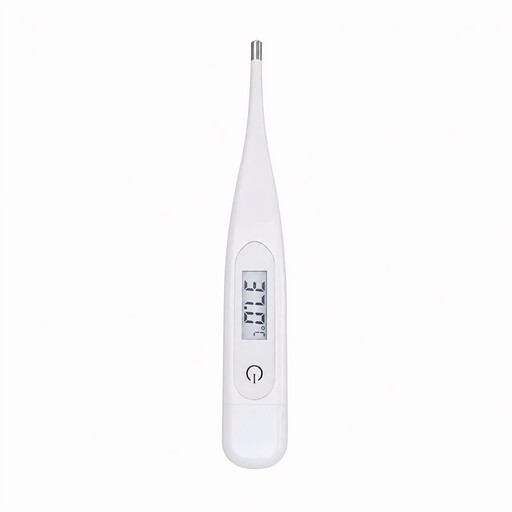
Why it suits this type of user: This slim stick thermometer is designed for use at home or on the go. It displays readings in 0.1 °C increments and switches between °C and °F.
The product description lists the measurement range, resolution and temperature-dependent error limits, so you can check the key details before buying.
Mercury-free design, audible signal and compact pen shape; LR41 battery and switchable Celsius and Fahrenheit readings.
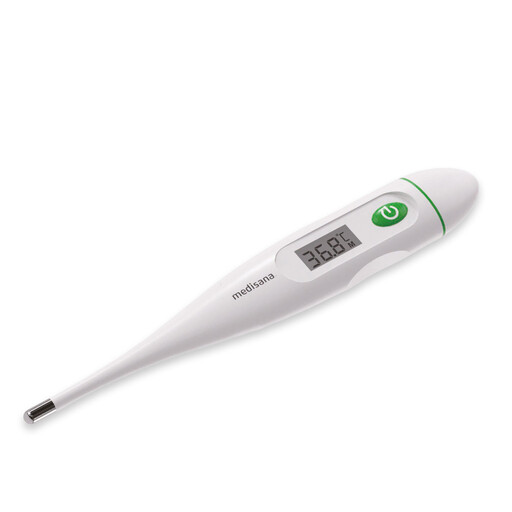
Why it suits this type of user: This model is designed for oral, underarm and rectal readings, and features a flexible tip and digital LCD display.
The water-resistant tip makes cleaning easier. However, the instructions state that the casing must not be immersed in liquid.
Takes a reading in around 20 seconds, stores the last reading, has an audible fever alarm and comes with a storage case.
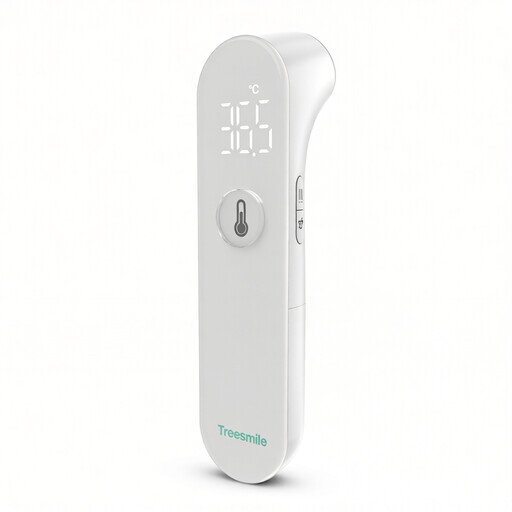
Why it suits this type of user: Contactless forehead readings and a large LED display make it suitable for quick checks. Object mode also lets you measure the temperature of liquids and surfaces.
The product details list the measurement modes, power supply, memory capacity and automatic shut-off, making it easier to compare with basic stick thermometers.
Contactless readings, 35 memory slots, silent operation and two AAA batteries included.
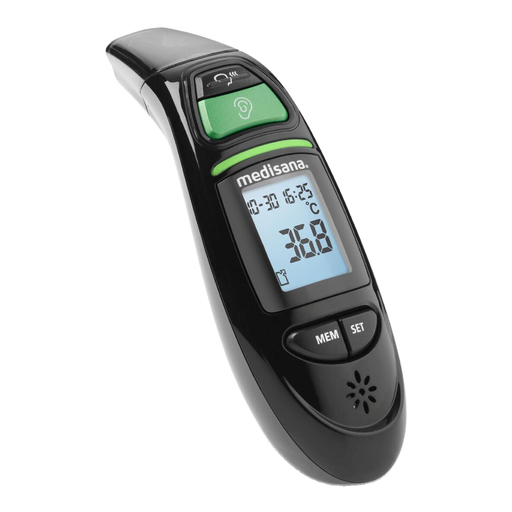
Why it suits this type of user: This model combines forehead and ear readings with modes for surfaces, liquids and room temperature. It’s designed for households with a range of different uses.
The different modes are clearly separated by what they measure, helping you avoid confusing an object reading with a body temperature reading.
Six measurement functions, a visual fever indicator, date and time display, and a memory function.
Before taking a reading, read the instructions for your device and use the recommended measurement site. Correct positioning is particularly important with a forehead or ear thermometer. Clean a stick thermometer after every use and disinfect it according to the manufacturer’s instructions.
Readings are for guidance only and are no substitute for a medical diagnosis. Seek medical advice if a raised temperature persists, symptoms are unusual or you’re unsure what to do. It’s especially important to keep a close eye on babies, young children, older people and anyone who needs care.
We’ve put together a complete, regularly updated list of products that meet these strict selection criteria and fully comply with the safety regulations in force in the EU.
How long it lasts depends on the battery, cleaning, storage and how much wear and tear it experiences. If the display becomes faint or the device won’t start, first try replacing the battery according to the instructions. Don’t continue using the thermometer if it’s damaged or not working properly.
A contactless thermometer can make it easier to take a reading from a sleeping baby. The key is to use the correct distance and measurement site, and to follow the instructions. If a reading seems unusual, it may be worth checking it with another suitable method. Speak to a GP practice if you have medical concerns.
Stick thermometers often need a single LR41 or AG3 button cell. Infrared models usually use two AAA batteries. Running costs depend on how often you take readings, whether the device switches off automatically and how long the batteries last. If you’ll be taking regular readings, check the battery size and replacement cost before you buy.