
Lieferung heute & morgen

Qualitätsgarantie

Willkommens-Angebote freischalten: KOSTENLOSE Lieferung | Bis zu 80 % RABATT | Kostenlose 30-Tage-JoyPlus-Testphase
App herunterladen
A digital thermometer for babies and adults is a staple in many home medicine cabinets. The options range from classic fever thermometers to infrared thermometers and contactless models that measure temperature at the forehead, ear, liquids or surfaces. However, not every extra feature is necessarily useful in everyday life.
Three common buying mistakes often lead to poor decisions:
A forehead thermometer usually measures without contact, making it ideal for sleeping children or situations where you want to avoid close contact for hygiene reasons. The device often needs to be held at a specific distance from the forehead. Sweat, draughts, headwear or recent physical activity can affect the reading.
An ear thermometer measures the temperature in the ear canal. Extra care is needed with babies and young children. The probe must not be forced in; always follow the instruction manual for your specific model.
A contactless thermometer with an object mode can also measure liquids, food, bath water or room temperature. However, this doesn't automatically use the same measurement method as body temperature. Before buying, check which modes you actually need.
With infrared devices, measuring distance and alignment are important technical parameters. Some models use a distance sensor or positioning aid. This can reduce operating errors, but doesn't replace correct usage.
For family use, the following features are also practical:
A classic digital stick thermometer can be a straightforward alternative if you only need to measure body temperature. With the Treesmile T11, for example, readings are shown in 0.1 °C increments; the error ranges stated by the manufacturer vary depending on the temperature range. Such information should always be assessed in conjunction with the instruction manual.
The casing of a digital thermometer should be cleanable with a soft cloth. Many infrared models must not be immersed in water. With ear thermometers, also ensure the probe is clean and, where applicable, use suitable protective caps.
Battery-operated devices are practical for travel. Check whether AAA batteries, button cells or a USB-C connection are used. Batteries must always be kept out of reach of children. A travel case or storage box protects the sensor and display from dust and damage.
The following models differ in measurement types, operation and usage scenarios. The information is based on the respective product descriptions.
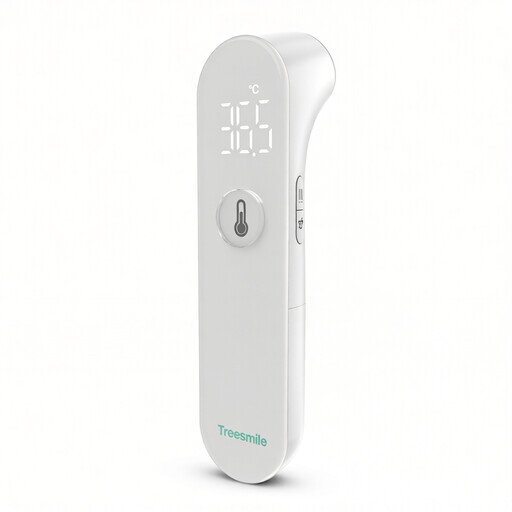
Why this product fits the profile: This model offers forehead and object measurement, a large LED display and a compact design for home use or on the go.
The two clearly named modes avoid unnecessarily complex function selection. The manual also provides guidance on distance, cleaning and the reference nature of the readings.
1-second display, 35 memory slots, mute function and measurement of forehead and object temperature.

Why this product fits the profile: The combination of contactless and contact-based forehead measurement, positioning aid and age-adjusted display appeals to users who value structured operation.
PositionCheck with targeting aid, distance sensor and on-screen instructions addresses the common error of incorrect placement.
3-in-1 measurement for body, liquids and food, plus colour display and Silent Mode.
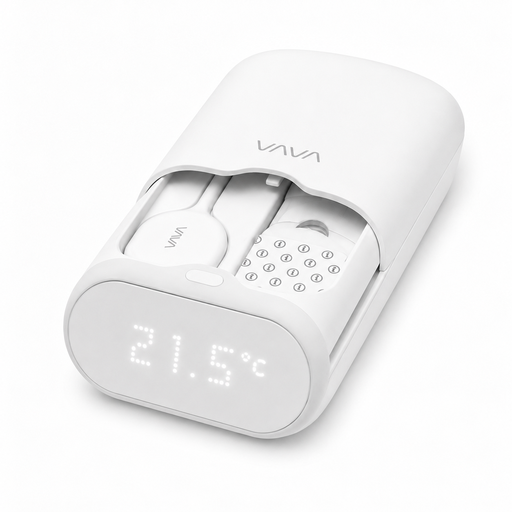
Why this product fits the profile: The wearable underarm sensor transmits readings to a separate display and is designed for rest periods and longer observation phases at home.
The display also alerts you to connection interruptions, a loose sensor and low battery. This means status issues aren't only visible through the temperature reading.
Up to 24 hours of sensor operation, up to 15 metres stated wireless range and USB-C charging without an app or Wi-Fi.
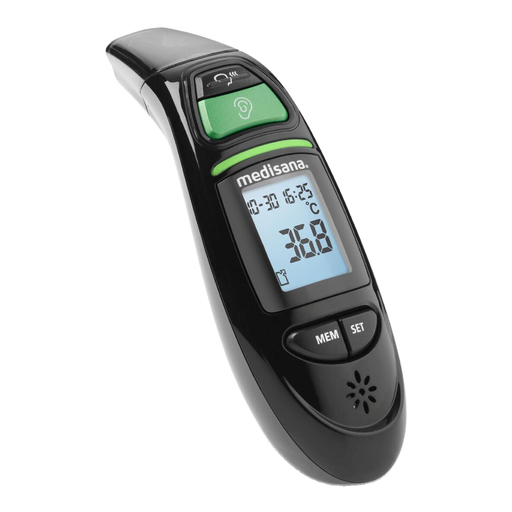
Why this product fits the profile: The 6-in-1 thermometer covers forehead, ear, surface, liquid and room temperature measurements, and is aimed at households with different usage scenarios.
The different measurement types are clearly named in the product description. This allows you to check before buying whether the extra versatility is actually needed.
Visual fever alarm, date and time display, and multiple measurement ranges in one device.
We've put together a complete, regularly updated list of products that fully meet these strict selection criteria and the safety regulations in force in the EU.
Hold the forehead thermometer at the specified distance and point the sensor at a dry, bare forehead. Read the instructions regarding ambient temperature, distance and waiting time. If readings seem unusual, it may be worth taking another measurement after a short rest period.
The lifespan depends on the batteries, sensor, cleaning and storage. A device should be stored in a dry, protected place according to the manufacturer's instructions. If the casing is damaged, the display is unreliable or the buttons are faulty, the device should no longer be used.
With battery-operated models, the main costs are for replacement batteries. Devices with automatic shut-off or a rechargeable sensor can reduce ongoing costs. Additional consumables such as disposable patches or probe covers should be factored into your buying decision.
The readings shown are for guidance only and do not replace a medical diagnosis. For infants, persistently unusual readings or if you are unsure about your health, seek medical advice.