
Lieferung heute & morgen

Qualitätsgarantie

Willkommens-Angebote freischalten: KOSTENLOSE Lieferung | Bis zu 80 % RABATT | Kostenlose 30-Tage-JoyPlus-Testphase
App herunterladen
A digital thermometer is part of the medicine cabinet in many households. The range extends from simple fever thermometers and contactless forehead thermometers to 6-in-1 infrared thermometers with object measurement. However, the wide variety of features can make choosing the right product more difficult.
Not every advertised extra feature is relevant in everyday use. The key considerations are the right measurement method, easy-to-understand operation and clear information about the intended use. The following advice will help you compare a fever thermometer for babies, children and adults objectively.
Claims such as ‘measurement in one second’ initially describe only the speed. The result also depends on the measurement site, the distance from the forehead, the position in the ear, the ambient temperature and correct use.
An infrared thermometer should therefore always be used in accordance with the instructions. With a contactless thermometer, for example, you must maintain the specified distance. An ear thermometer must also be positioned correctly. A fast reading is no substitute for careful measurement.
A 3-in-1 or 6-in-1 thermometer can measure not only body temperature but also milk, bathwater, food, surfaces or room temperature. This is useful for family households if these functions are genuinely needed.
If you only want to check body temperature, a flexible digital thermometer or a simple ear thermometer may be sufficient. Additional modes should not distract you from checking important basic information such as the measurement range, cleaning requirements and power supply.
A thermometer with a fever alarm can indicate a preset threshold with a beep, vibration or colour display. This is intended as guidance, not a medical diagnosis. Thresholds may vary depending on the product and measurement method.
For babies, children, older people or unusual symptoms, you should follow the instructions and seek medical advice where appropriate. A thermometer reading should not be the sole basis for health-related decisions.
A display with 0.1 °C resolution means that the temperature is shown in increments of one tenth of a degree. This does not automatically mean that the measurement deviation is equally small. You should therefore check the accuracy stated by the supplier for the relevant temperature range.
A memory function for seven, 32 or 35 readings can be helpful if you want to document changes. Also check whether the date and time are stored and whether Celsius and Fahrenheit can be selected.
The probe or measurement surface should be cleaned according to the instructions. A water-resistant sensor is not the same as a completely waterproof housing. As a rule, the thermometer must not be immersed in water.
Check what is included: batteries, a storage pouch, protective cap and instructions can make the device more convenient to use. Medical devices should include clear manufacturer details or details of the EU responsible person. A CE marking indicates that the manufacturer has declared conformity; however, it is not blanket proof of every advertised performance claim.
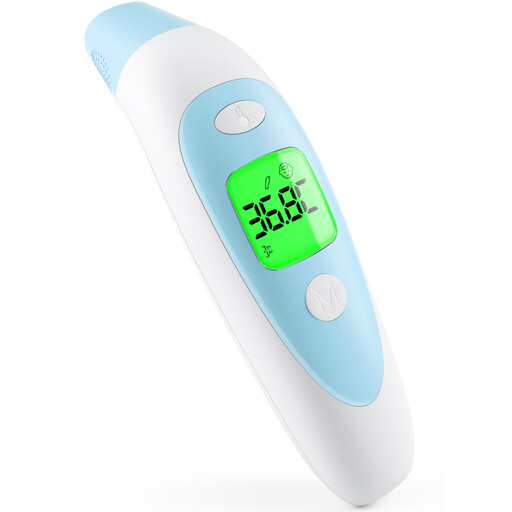
Why this product suits this profile: According to the product details, the device combines forehead, ear and object measurement. This makes it suitable for households that want to check body temperature as well as milk, food or room temperature, for example, using one device.
The three measurement modes are clearly identified. A silent mode, memory function for 32 readings and switchable temperature unit are also specified.
Forehead, ear and object modes; fever indication via a colour display and beep; storage pouch included according to the product description.
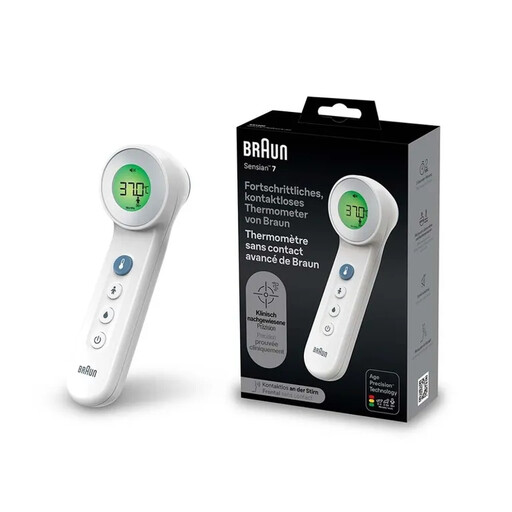
Why this product suits this profile: According to the product description, this forehead thermometer offers contact and contactless measurement, as well as an age-based guidance display. This can be practical for families with babies, children and adults.
The PositionCheck function is designed to support correct positioning. A silent mode reduces audible signals when taking measurements during periods of rest.
Contact and contactless forehead measurement; measurement of liquids and food; colour-coded LCD display and AAA batteries included according to the product details.
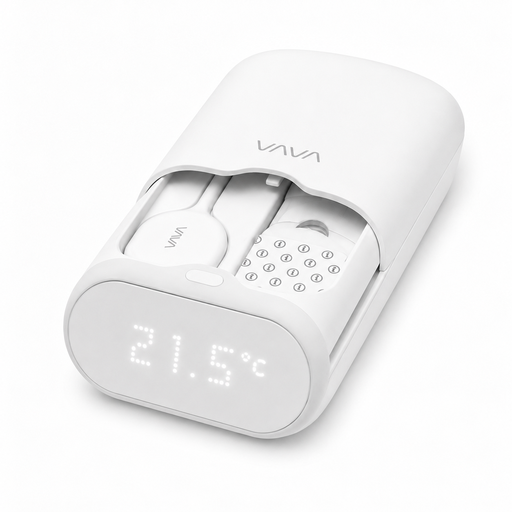
Why this product suits this profile: This wearable temperature monitor transmits underarm readings to a separate LED display. It is designed for carers who want to monitor temperature regularly during sleep or rest without taking a separate measurement each time.
The product description lists status notifications for a lost connection, a detached sensor and low battery level. This means it takes not only temperature readings into account, but also the condition of the device.
Up to 24 hours of sensor operation according to the supplier; separate display without an app or Wi-Fi; USB-C charging and a stated wireless range of up to 15 metres indoors.
We have put together a complete, regularly updated list of products that fully meet these strict selection criteria and the safety regulations applicable in the EU.
Before taking the first measurement, the thermometer should have reached room temperature, where this is specified in the instructions. For forehead and infrared measurements, take perspiration, headwear and direct sunlight into account. Wherever possible, take multiple readings under the same conditions.
For milk and bathwater, use only an object or liquid mode intended for this purpose. A room or surface temperature reading is not automatically comparable with body temperature. A silent thermometer can be more comfortable at night, but the visual display should still be checked.
Batteries and button cells must be kept out of children’s reach. The device should be stored in a dry, clean place in accordance with the manufacturer’s instructions. If the probe is damaged, the readings are unusual or the results repeatedly contradict one another, stop using the device and consult the instructions or the supplier.
Its lifespan depends on the design, batteries, cleaning and storage. A simple pen thermometer often requires a button cell, while infrared models generally use AAA batteries. A wearable temperature monitor has a rechargeable battery and should be charged according to the manufacturer’s instructions. No single general service life can be specified for all models.
This depends on the child’s age, tolerance and the intended measurement site. A contactless forehead thermometer can allow for a quick check. An ear thermometer requires suitable positioning. A flexible digital thermometer can be comfortable for certain measurement methods. The age recommendation and instructions for the particular product are always decisive.
Power consumption is normally low, as many devices switch off automatically after taking a measurement. Actual battery life depends on how often the thermometer is used, display lighting, alarms and battery type. If the device is stored for a longer period, follow the manufacturer’s guidance.