
Lieferung heute & morgen

Qualitätsgarantie

Willkommens-Angebote freischalten: KOSTENLOSE Lieferung | Bis zu 80 % RABATT | Kostenlose 30-Tage-JoyPlus-Testphase
App herunterladen
A digital thermometer for babies and adults should work quickly, clearly and appropriately for the situation when it matters most. Parents often look for contactless measurement, carers value an easy-to-read display, and families want a device that is simple to use when out and about. However, many product claims reveal little about whether a particular model is genuinely suitable for your everyday needs.
As a Joybuy Product Recommendation Officer, I therefore filter the relevant details according to clear, understandable criteria. The following advice will help you avoid common mistakes when buying a digital fever thermometer.
Claims such as “measurement in one second” refer to the technical display time. To obtain a useful result, however, the measuring distance, position, measurement site and ambient temperature must all be correct. An infrared thermometer can display inaccurate readings if it is aimed incorrectly or used immediately after spending time outdoors.
A clear instruction manual, positioning guide or clearly defined measuring distance is therefore essential. Before taking a measurement, the device should be allowed to adjust to room temperature.
Depending on the model, a 3-in-1 or 6-in-1 thermometer can measure body, object, room, liquid or surface temperatures. This is useful if you genuinely need those functions. For a straightforward measurement when someone is unwell, however, an additional menu can make the device unnecessarily complicated.
Check whether it is clear which mode is selected for forehead, ear or object measurements. A magnetic cover or separate mode button can help reduce operating errors.
A coloured display or audible signal is for guidance only. Thresholds vary between devices and may be interpreted differently for babies, children and adults. The measurement site and method also affect the result.
A thermometer with a fever alert should therefore not be chosen based solely on the display colour. Read the instructions and, if a reading appears unusual, take the person’s overall condition and advice from healthcare professionals into account.
A contactless thermometer usually measures temperature at the forehead and is suitable for situations where a child should not be woken or touched. An ear thermometer measures in the ear canal and may be suitable for older children and adults, but it requires correct positioning. For babies, the specified age range and usage instructions are particularly important.
A traditional probe thermometer is typically used at the intended measurement site. It is often compact and easy to assess in terms of price, but it takes longer to use and requires direct contact.
Look out for:
A display showing several decimal places does not, by itself, prove greater accuracy. Specific information about the deviation within the normal body-temperature range is more meaningful.
The cleaning process should be clearly explained for any baby thermometer. Contactless devices must be kept clean around the lens and sensor; probe and ear thermometers require particularly careful cleaning, depending on their design. Devices with a reusable probe can reduce the consumption of disposable covers, provided this is permitted according to the instructions.
A silent operation mode, automatic switch-off and memory function are also useful. Depending on the model, devices may store 7, 20, 32 or 35 readings, for example. Greater memory capacity is helpful when monitoring several family members over time, but it does not replace written records when receiving medical care.
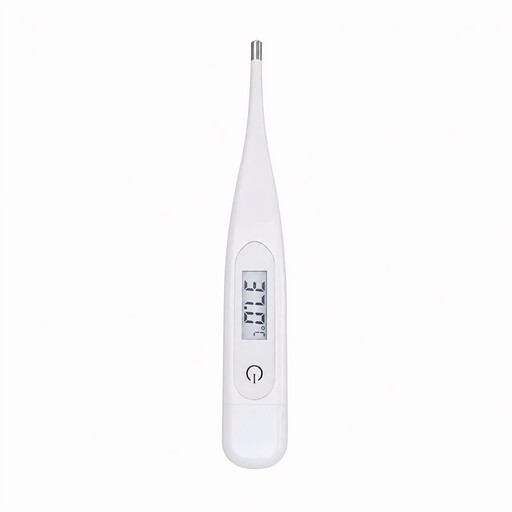
Why this product suits this profile: This pen-shaped model is designed for basic body-temperature measurements at home and is easy to store in a medicine cabinet or travel bag.
It focuses on one measurement function rather than offering rarely needed additional modes. The product details specify a resolution of 0.1 °C, °C/°F switching and a mercury-free casing.
Compact probe design, audible measurement signal and stated measurement tolerances for different temperature ranges.
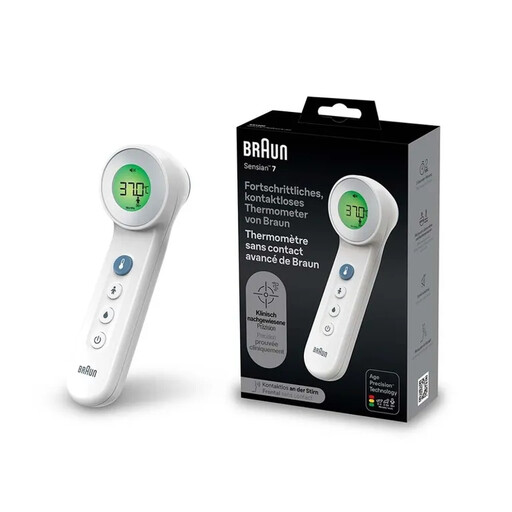
Why this product suits this profile: This model combines forehead measurement, positioning guidance and age-based display options for households with people of different ages.
The PositionCheck function is designed to help with correct placement. The stated Silent mode prevents unnecessary beeps when children are resting.
Contact and contactless forehead measurement, colour-coded display and 3-in-1 mode for body, liquid and food temperatures.
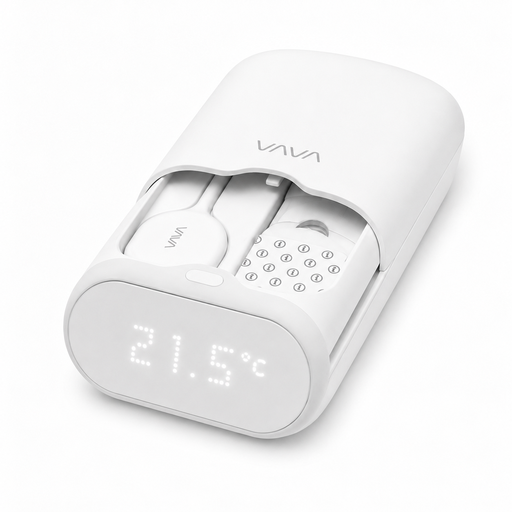
Why this product suits this profile: The wearable underarm sensor is designed for care situations where temperature needs to be monitored over a longer period while the baby is resting.
It is not designed solely for brief individual readings. The sensor, separate LED display and connection warning make the device status visible; the stated wireless range is up to 15 metres.
Up to 24 hours of sensor operation, USB-C charging, separate display and use without an app or user account.
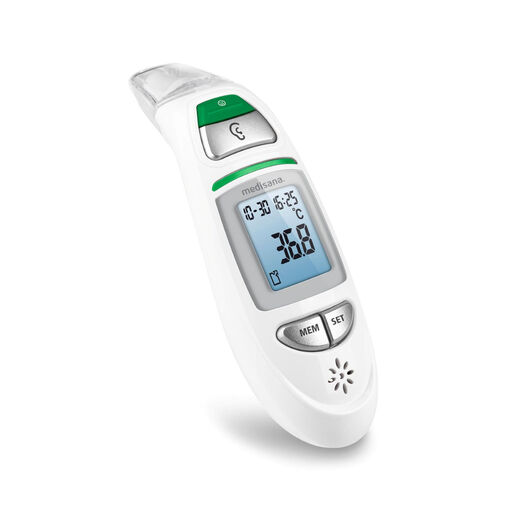
Why this product suits this profile: This infrared thermometer supports several measuring methods, making it suitable for different tasks in a household with babies, children and adults.
The measuring modes are clearly separated into body, surface, liquid and room temperature. This makes it possible to check that the correct mode has been selected before measuring.
6-in-1 functionality, visual fever indication and date and time display, according to the product description.
We have put together a complete, regularly updated list of products that fully meet these strict selection criteria and the safety regulations applicable in the EU.
This depends on the intended measurement site and the instructions for use. A contactless forehead thermometer can provide a quick reading without touching a sleeping baby. Wearable underarm sensors are designed for longer-term monitoring. For any thermometer for children, check the approved age range, measuring method and cleaning instructions.
The service life depends on the batteries, storage, cleaning and mechanical wear. Automatic switch-off helps reduce energy consumption. For rechargeable devices, charging time and battery life are also relevant. Replace the device if the sensor, display or casing is damaged, or if readings appear implausible despite correct use.
Battery-powered models usually incur ongoing costs for replacement batteries. Devices using AAA batteries are easy to replenish; a rechargeable sensor, on the other hand, requires a charging source and potentially consumables such as disposable patches. When comparing products, therefore, consider more than just the purchase price: check the battery type, accessories and, for wearable baby monitors, the sensor attachments required.