
Lieferung heute & morgen

Qualitätsgarantie

Willkommens-Angebote freischalten: KOSTENLOSE Lieferung | Bis zu 80 % RABATT | Kostenlose 30-Tage-JoyPlus-Testphase
App herunterladen
As a DIY enthusiast or ambitious home mechanic, you know how crucial the correct torque is for the safety and longevity of components on your car, motorcycle, or bicycle. A digital torque adapter promises to turn your existing ratchet into a precision measuring instrument—a space-saving and cost-effective alternative to buying multiple torque wrenches. However, the market is crowded, and not every device delivers on its promise.
This guide will help you avoid common pitfalls and find a model that meets your demands for precision and versatility.
Many users invest in a digital torque adapter only to discover in practice that the tool is unsuitable. Two problems are particularly common:
To make an informed decision, you should check three core technical parameters. These are key determinants of your tool's functionality and reliability.
Accuracy is the most important criterion. Look for a specified bidirectional measurement deviation. A value of ±2% clockwise and ±2.5% counter-clockwise is considered a solid standard for semi-professional applications. This specification describes the maximum tolerated deviation from the set target torque. Such a torque measuring device must maintain its precision over time. Check if the manufacturer provides information on calibration. After a hard impact or drop, recalibration is essential to restore accuracy.
The right torque range is crucial for versatility. Think carefully about the jobs you want to perform:
A 1/2-inch torque adapter is the most common standard for automotive applications. Models that also include adapters for 3/8-inch and 1/4-inch drives offer maximum compatibility with your existing socket sets and significantly expand the range of use.
A modern electronic torque wrench or adapter should offer various operating modes to simplify the work process:
An audible and visual alarm function (e.g., a beep and an LED indicator) is not a luxury, but an essential feature. It signals when the target torque is reached, allowing you to focus on the bolted connection without constantly looking at the display—a major advantage in poorly lit or tight workspaces.
Based on the criteria mentioned, we have identified some products that represent a suitable solution for specific requirement profiles.
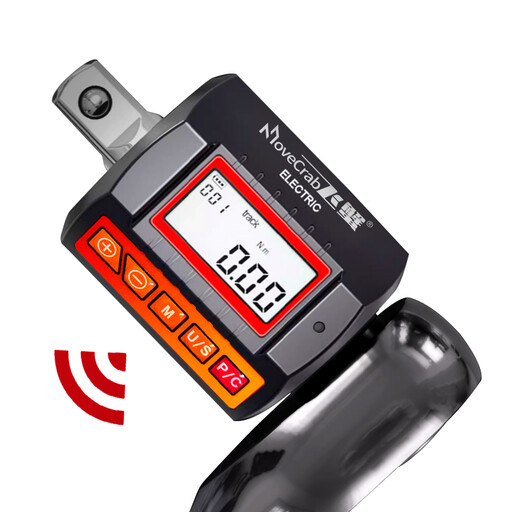
Why This Fits Their Persona: Ideal for users who work on cars as well as bicycles or motorcycles. The torque range of 4.05 to 135 Nm covers a wide spectrum from delicate to robust fastening jobs.
Avoids the trap of poor compatibility with the included adapters for 3/8" and 1/4" drives. The specified accuracy of ±2% addresses the concern of unreliable measurements.
High flexibility thanks to a wide torque range and three drive sizes in one package. Audible and visual alarm for precise work.
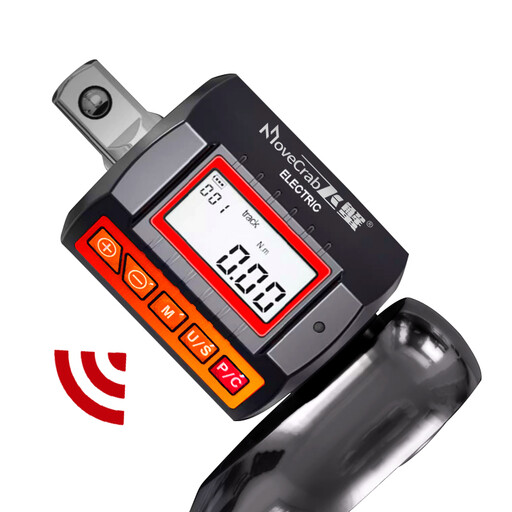
Why This Fits Their Persona: Designed for users who focus on work on cars and motorcycles. The extended range up to 200 Nm is designed for safety-critical fasteners such as wheel nuts, chassis, and engine components.
Solves the problem of an insufficient torque range. With up to 200 Nm, this model offers the necessary power reserves for typical automotive applications where weaker adapters reach their limits.
High maximum torque value for demanding tasks. Also includes adapters for 3/8" and 1/4", which maintains versatility despite its specialisation in high torque.
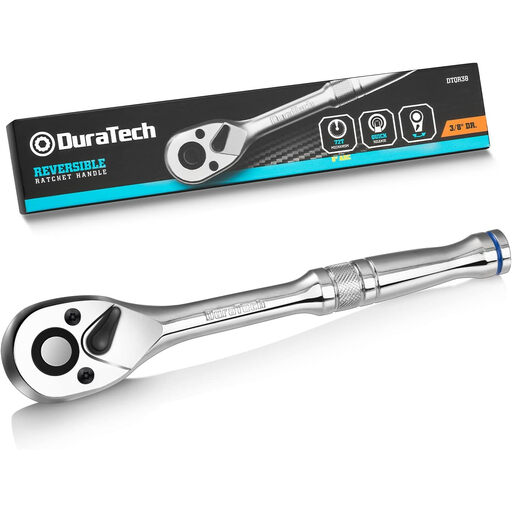
Why This Fits Their Persona: For users who have already considered a digital adapter but need a suitable, robust, and flexible ratchet. This tool serves as the ideal foundation for any torque adapter.
Prevents the problem of buying an adapter and then finding that the existing ratchet doesn't fit or can't withstand the load. The 3-in-1 design ensures compatibility with all common adapters.
Maximum compatibility with integrated 1/4", 3/8", and 1/2" drives in a single tool. The 72-tooth mechanism allows for precise work even in tight spaces.
We have compiled a complete, up-to-date list of products that fully meet these strict selection criteria and UK safety regulations.
Most manufacturers recommend professional calibration once a year with regular use. However, the crucial point is: if the device has been subjected to a strong impact or has been dropped, it should be checked and recalibrated immediately, as the internal sensors could be damaged, leading to inaccurate measurements.
For many users, yes. An adapter is more space-saving, more flexible due to its use with different ratchets, and offers additional digital functions like data storage. However, a mechanical torque wrench is more robust against impacts and does not require batteries. The choice depends on personal priorities: flexibility and digital precision (adapter) versus mechanical robustness (classic wrench).
The real-time mode (often called "Track") shows the torque being applied to the bolt at that exact moment. It is useful for observing the build-up of force. The peak value mode ("Peak") freezes the highest torque value reached on the display after the force is released. This mode is crucial for verifying that the final tightening torque has been correctly achieved without having to read the value during tightening.