
Lieferung heute & morgen

Qualitätsgarantie

Willkommens-Angebote freischalten: KOSTENLOSE Lieferung | Bis zu 80 % RABATT | Kostenlose 30-Tage-JoyPlus-Testphase
App herunterladen
When working on modern vehicles, precision isn't an option—it's a necessity. The wrong torque setting can lead to damaged components, loose connections, and, in the worst-case scenario, serious safety hazards. A digital torque wrench promises to solve this, but the market is flooded with models whose performance claims often don't hold up in practice. Many users invest in a tool that later proves to be inaccurate or impractical.
As your Joybuy Product Recommendation Officer, I'm here to help you identify the common pitfalls and make an informed decision. We'll focus on the objective criteria that define a reliable tool, cutting through the overblown marketing claims.
The 3 Most Common Mistakes When Buying an Electronic Torque Wrench:
To avoid these mistakes, you should check three core technical features before buying. These will determine if an electronic torque wrench is right for your needs.
The drive size, specified in inches, determines which sockets you can use and the torque ranges the tool is designed for.
The torque wrench's Nm range must match your intended jobs. A wrench designed for 300 Nm will be inaccurate at 10 Nm. Check the manufacturer's specified torque settings for the bolts you work on regularly.
Choose a model whose working range covers your most common applications in the middle of its measurement scale, as this is where accuracy is typically highest.
Precision is the most critical quality feature. A deviation of ±2% or ±3% is considered a good standard for precise work. Pay attention to whether this accuracy applies to the entire measurement range or only a portion of it.
A torque wrench with a digital display offers the advantage of an exact reading. However, the crucial factor is how it signals that the target value has been reached. Modern devices combine three signals, thereby bypassing the "inaudible alert" trap:
This triple-feedback system ensures you perceive the signal under any condition—whether in a noisy workshop or in a hard-to-see location.
Based on the objective criteria above, we have identified several models that represent a suitable solution for specific user profiles.
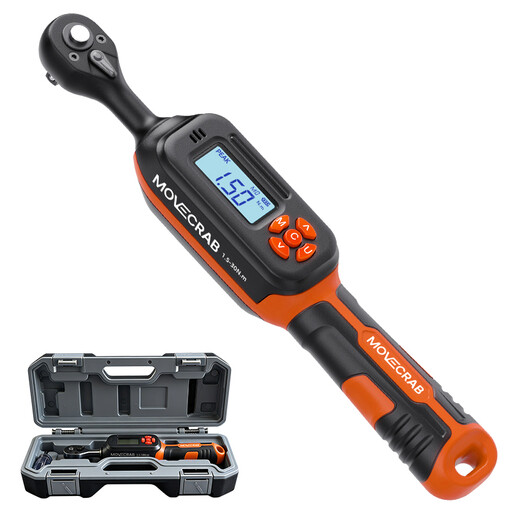
Why This Fits Their Persona: Ideal for bicycle mechanics and technicians working on delicate carbon frames, cockpit components, or fine engine parts where extremely low and precise torque is required.
The triple-alert system (vibration, sound, LED) solves the problem of missing the target torque during quiet jobs. Its specialised, low Nm range prevents accidental over-tightening of the most sensitive fasteners.
High accuracy of ±2% in the very low torque range. The 1/4-inch drive is perfect for small bits and sockets.
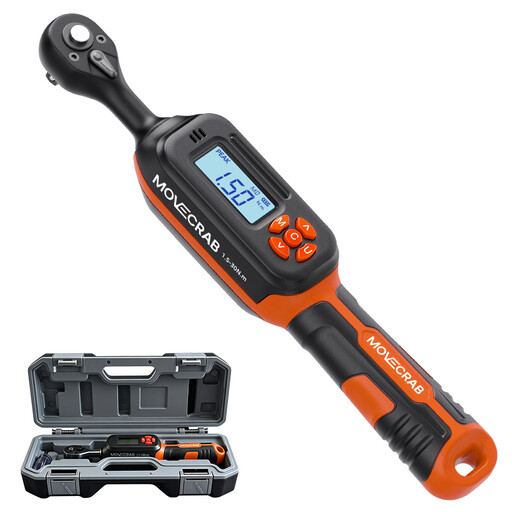
Why This Fits Their Persona: A versatile tool for home mechanics who regularly work on their motorcycle or car. The torque range is ideal for many common maintenance tasks, from brakes to engine accessories.
Addresses the "impractical operation" trap. With 10 memory presets for pre-set values and easy one-button unit conversion, it speeds up workflow and minimises sources of error.
A wide, practical torque range for diverse applications. Peak and Track modes offer advanced control options.
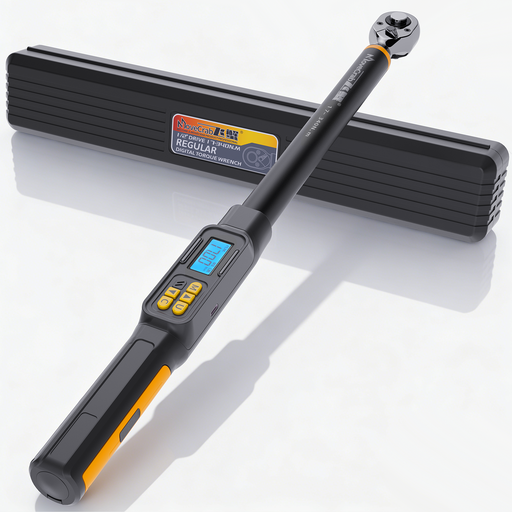
Why This Fits Their Persona: Designed for heavy-duty use in a professional garage or for the serious home mechanic. Perfect for wheel changes, suspension, and frame work where high and precise torque values are essential.
Bypasses the "misleading accuracy claims" trap. The certified accuracy of ±2% across a high torque range up to 340 Nm ensures that manufacturer specifications are met precisely, even on safety-critical, high-load bolts.
Very high maximum torque value for demanding tasks. The robust 1/2-inch drive is built to handle high forces.
We have compiled a complete, real-time list of products that fully satisfy these strict selection criteria and UK safety regulations.
Calibration recommendations vary by manufacturer and frequency of use. As a general guideline for professional use, an annual check is recommended. For occasional home use, an interval of two to three years, or after the tool has been dropped, is advisable. Some models come pre-calibrated, which will be noted on the product packaging or in the description.
These two modes are a core feature of many digital torque wrenches.
A torque wrench is a precision measuring instrument and should never be used to loosen seized bolts. The high, uncontrolled forces can damage the internal mechanism and its calibration. To loosen bolts, you should always use a standard wrench or an impact driver. While some digital models with a two-way ratchet can be used for left-hand threads, they are still not designed as a "breaker" tool.