
Lieferung heute & morgen

Qualitätsgarantie

Willkommens-Angebote freischalten: KOSTENLOSE Lieferung | Bis zu 80 % RABATT | Kostenlose 30-Tage-JoyPlus-Testphase
App herunterladen
When performing precision work on vehicles or machinery, applying the correct tightening torque to fasteners is crucial. A bolt that is too loose can work its way free due to vibrations, while an over-tightened bolt can damage the thread or even cause the component to fail. Both scenarios pose a significant safety hazard and can result in expensive repairs.
A digital torque wrench offers a reliable solution. Unlike mechanical models, it allows for precise settings and provides clear feedback upon reaching the target torque. This article serves as a guide to help you understand how they work and the key criteria for choosing the right one. We will also present a selection of models suited for various applications.
Choosing the right tool depends on the specific requirements of your projects. Three criteria are of particular importance.
The required torque range, measured in Newton-metres (Nm), is the most important criterion.
A key advantage of an electronic torque wrench is its high accuracy. Look for models with a specified measurement tolerance, typically in the range of ±2% to ±3%. This ensures repeatable and precise results.
In addition to the digital display, the signal functions are important. Modern devices alert the user upon reaching the target torque through a combination of:
This triple feedback system ensures process reliability, even in noisy or poorly lit workshop environments.
Advanced models offer useful additional features that streamline the workflow.
Based on the criteria mentioned, we have compiled a selection of tools suitable for different users and applications.
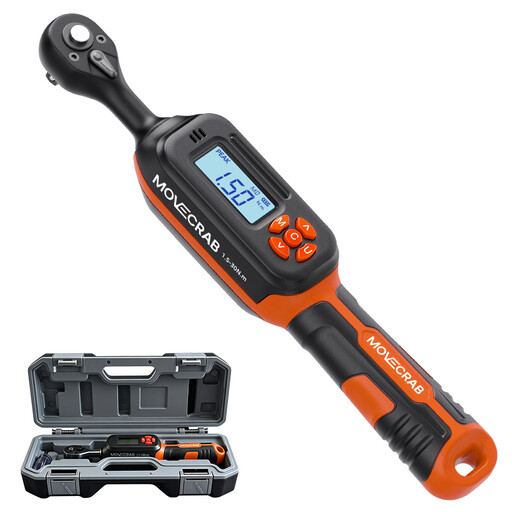
Why it stands out: This model combines a versatile torque range with an advanced triple alarm system (vibration, sound, light). This ensures safe operation even in noisy workshops or in hard-to-see areas.
Advantages:
Who is it for? Ideal for ambitious DIY enthusiasts and professional mechanics who need a reliable tool for work on motorcycles, car engines, and other applications in the medium torque range.
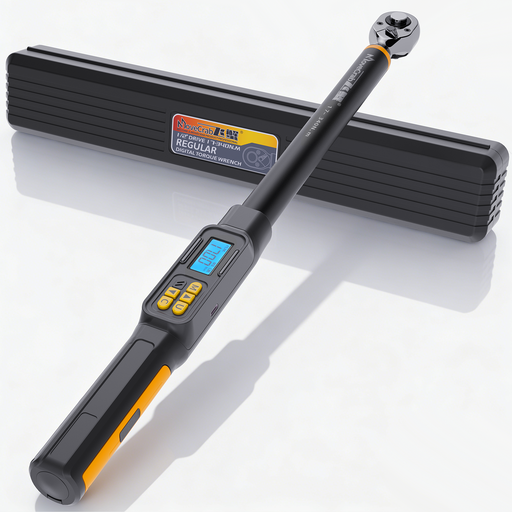
Why it stands out: With its high torque range of up to 340 N.m, this wrench is designed for demanding automotive tasks. Its robust construction and 1/2" drive make it the right tool for wheel changes and suspension work.
Advantages:
Who is it for? A great choice for automotive workshops and DIYers who regularly perform maintenance and repair work on cars where high tightening torques are required.
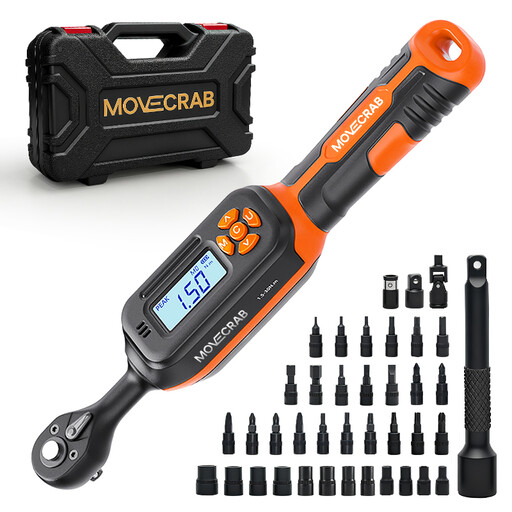
Why it stands out: This product is more than just a wrench—it's a complete torque wrench set. With 40 pieces, including numerous bits and sockets, it covers a wide range of precision mechanical tasks and is ready to use right out of the box.
Advantages:
Who is it for? Perfect for bicycle mechanics (especially for carbon components), motorcycle enthusiasts, and anyone performing precise fastening tasks in the low torque range on sensitive components.
Didn't find the right model for your specific project? A digital display torque wrench is available in many other versions and for various budgets. Browse our selection to find the tool that perfectly matches your requirements.
Discover our full range of digital torque wrenches and find the right tool for your project.
The frequency of calibration depends on the intensity of use. For professional daily use, annual calibration is often recommended to ensure accuracy. For occasional hobbyist use, the intervals can be longer. Refer to the manufacturer's recommendations for specific guidance.
Track mode displays the real-time torque being applied to the fastener. In contrast, Peak mode stores and displays the maximum torque value reached during the tightening process. This is useful for verifying the final result.
It is generally not recommended to use a torque wrench to loosen seized bolts. The internal sensors are calibrated for precise tightening. High breakaway torque can decalibrate or damage the tool. Use a standard ratchet or a breaker bar for loosening. While some models have a reversing switch, manufacturers typically only guarantee accuracy for the tightening direction (clockwise).