
Lieferung heute & morgen

Qualitätsgarantie

Willkommens-Angebote freischalten: KOSTENLOSE Lieferung | Bis zu 80 % RABATT | Kostenlose 30-Tage-JoyPlus-Testphase
App herunterladen
A digital torque wrench is essential for precision fastening on cars and bicycles. However, the market is flooded with models whose performance claims often don't hold up to reality. The wrong choice can lead not only to wasted money but, in the worst-case scenario, to damaged components or serious safety risks. As your Joybuy Product Recommendation Officer, I'm here to help you identify the common pitfalls and make an informed decision.
The three most common mistakes when buying are:
To avoid these mistakes, you should check three core technical features before buying. These will determine a model's suitability for your specific needs, whether you're working on a car, motorcycle, or bicycle.
The torque range, measured in Newton-metres (Nm), is the most important criterion. It must match the manufacturer's specifications for the fasteners you'll be working on. Closely linked to this is the square drive size:
Choosing the wrong range makes the torque tool either ineffective or dangerous.
A high-accuracy torque wrench is a fundamental prerequisite for safe work. Look for a specified tolerance of ±2% to ±3%. Professional models come pre-calibrated.
An electronic torque wrench offers the advantage of clear feedback over mechanical models. A good automotive tool with a display should feature a triple-alert system:
This combination ensures the correct torque is applied under all working conditions.
Modern digital torque wrenches offer additional features that significantly streamline your workflow. The two most important modes are:
Additional memory slots for preset torque values (presets) save time on repetitive tasks, such as tightening lug nuts to the same specification.
Based on these criteria, we have identified several models that are particularly well-suited for specific user groups.
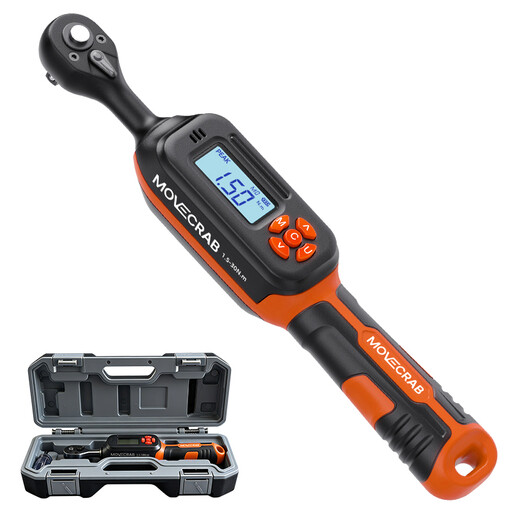
Why This Fits Their Persona: Ideal for bicycle mechanics and technicians working on delicate carbon or aluminium parts. The extremely low measurement range is designed for modern bicycle components where precision is critical.
This tool avoids the trap of an unsuitable torque range by specialising in the lowest Nm spectrum. An all-purpose wrench would be too inaccurate and coarse for this work.
Measurement range of 0.6 to 12 Nm; triple-alert system (vibration, sound, LED) for reliable feedback at low values.
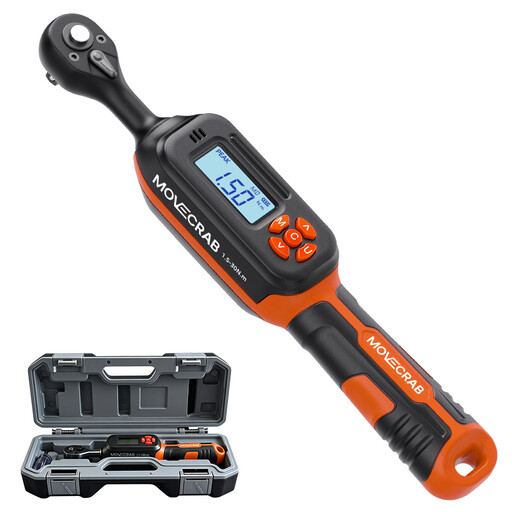
Why This Fits Their Persona: A versatile tool for the ambitious home mechanic or professional workshop. Its wide torque range covers most common jobs on engines, brakes, and suspension systems for cars and motorcycles.
The triple-alert system is designed for use in noisy workshops, ensuring the target torque notification is never missed or overlooked.
Wide and practical torque range (4.2-85 Nm); ±2% accuracy as per manufacturer specs for reliable results.
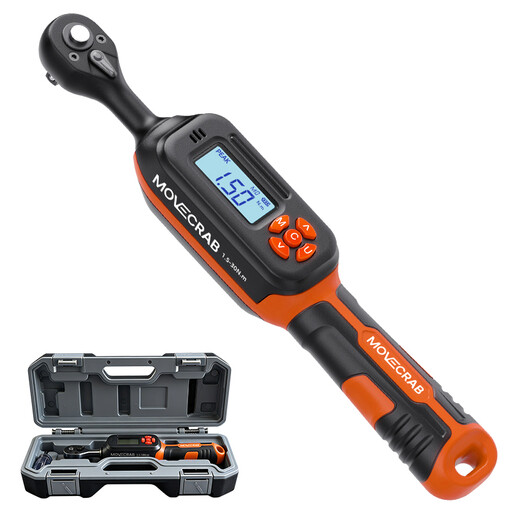
Why This Fits Their Persona: Perfect for technicians and DIYers who frequently switch between different, recurring tasks. The memory function for 10 preset values significantly speeds up the workflow.
This model solves the problem of cumbersome operation. Instead of having to set the value anew for every change, the 10 most common values can be recalled instantly.
Memory for 10 preset values; Peak and Track modes for process control and documentation.
We have compiled a complete, up-to-date list of products that meet these strict selection criteria and comply with industry standards.
1. How often does a digital torque wrench need to be calibrated?
For professional use in workshops with documentation requirements, annual calibration is recommended. For private use, the necessity depends on the frequency of use and how carefully the tool is handled. The models featured here are delivered pre-calibrated. A check-up every few years is generally sufficient for home mechanics.
2. What is the difference between Peak and Track mode?
Track mode shows you in real time how much torque you are currently applying to the fastener. This is helpful for developing a feel for the tightening process. Peak mode, on the other hand, freezes the highest value reached on the display. This mode is crucial for documenting that the manufacturer's specified value has been precisely met.
3. Can I use a digital torque wrench to loosen bolts?
This is strongly discouraged. Although many models have a reversible ratchet for both directions, they are designed as precision measuring instruments. The high breakaway torque required to loosen a seized bolt can overload the internal sensor and permanently damage the calibration. Always use a breaker bar or an impact wrench for loosening.