
Lieferung heute & morgen

Qualitätsgarantie

Willkommens-Angebote freischalten: KOSTENLOSE Lieferung | Bis zu 80 % RABATT | Kostenlose 30-Tage-JoyPlus-Testphase
App herunterladen
When repairing a car, motorcycle, or bicycle, precision isn't an option—it's a necessity. An incorrect tightening torque can lead to damaged components, loosened bolts, and significant safety risks. A digital torque wrench promises a solution with its precise settings and clear feedback. However, the market is flooded with models whose advertised features often fail to deliver in practice.
As your Joybuy Product Recommendation Officer, I'll help you recognise the typical pitfalls and make an informed decision. We will focus on the objective features that define a reliable torque tool.
Many users invest in a tool that later proves to be impractical or unreliable. These three problems are particularly widespread:
To avoid these pitfalls, you should check three core aspects before buying. These define the real-world usability and reliability of a digital torque wrench.
These three factors are inextricably linked. High accuracy is only useful if the torque range and drive size match your field of application.
A good electronic torque wrench offers more than just a digital display. Two modes are crucial for professional work:
Additionally, memory presets for pre-set values make work significantly easier when you frequently need to switch between different torque settings, such as when tightening cylinder head bolts in a specific sequence.
For maximum process reliability, the tool should have a triple-alert system:
This combination ensures that you reliably perceive the signal under all working conditions—whether loud, dark, or in hard-to-reach places.
Based on the criteria mentioned, we have identified some models that represent a suitable solution for specific user groups.
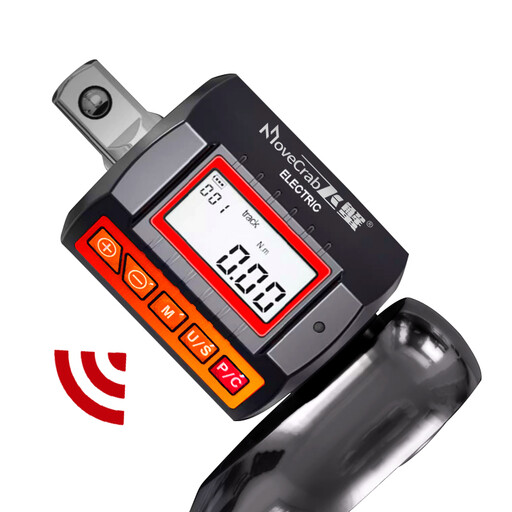
Why This Fits Their Persona: Ideal for users who already own a good ratchet and want to cost-effectively upgrade it to a precise torque tool. The wide torque range covers most jobs on cars and around the house.
This digital torque adapter provides clear feedback with audible and light alerts. It transforms an existing tool into a precise measuring device, thus avoiding the purchase of a complete but inaccurate budget wrench.
High flexibility thanks to included adapters for 1/4" and 3/8" drives; memory for 1,000 measurements for documentation.

Why This Fits Their Persona: Perfect for bicycle and motorcycle mechanics working on sensitive carbon or aluminium parts. The low torque range of 1-20 Nm provides the necessary finesse for stems, seat posts, and derailleur components.
The triple-alert system (vibration, sound, light) is essential at low torque values where over-tightening happens quickly. It provides unmistakable feedback that goes far beyond a simple beep.
High accuracy of ±2% in the relevant low range; 10 memory presets for common torque values on bicycles or motorcycles.
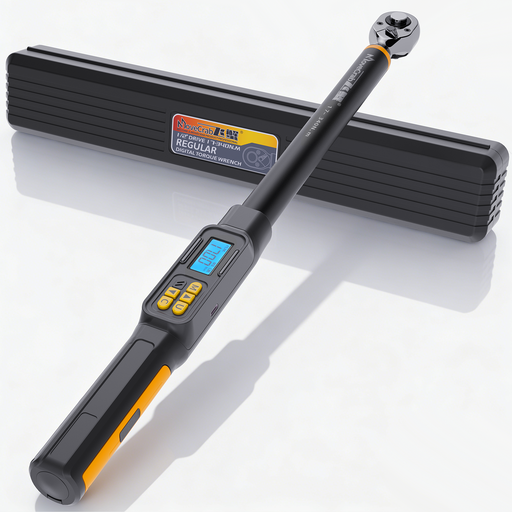
Why This Fits Their Persona: Designed for demanding use in the automotive workshop. The high torque range up to 340 Nm is engineered for lug nuts, suspension, and engine components where high forces must be applied with precision.
The combination of vibration, a loud tone, and light is indispensable in a noisy workshop environment. The robust construction and calibrated sensor ensure reliable accuracy even with intensive use.
Very high torque range for heavy-duty fasteners; Peak and Track modes, plus data storage for 500 values for quality control.
We have compiled a complete, up-to-date list of products that fully meet these strict selection criteria and UK safety regulations.
1. How often does a digital torque wrench need to be calibrated? A general recommendation is to have it calibrated annually or after approximately 5,000 load cycles. An immediate check is mandatory if the tool has been dropped or overloaded. Always observe the manufacturer's specific instructions.
2. What is the difference between Peak and Track mode? The Track Mode (also real-time mode) shows the torque you are applying to the bolt at that exact moment. It is useful for observing the build-up of force. The Peak Mode (peak hold mode) freezes the highest reached torque value on the display. This is the standard mode for confirming that the specified value has been reached.
3. Can I also use a digital torque wrench to loosen bolts? This depends on the model. Many digital torque wrenches are designed for measurement in both directions (bidirectional) and can therefore also be used for controlled loosening. However, it is generally not recommended to use a torque wrench as a conventional wrench to loosen stuck bolts, as the high breakaway torque can damage the sensitive measuring sensor. Check the manufacturer's specifications for this.