
Lieferung heute & morgen

Qualitätsgarantie

Willkommens-Angebote freischalten: KOSTENLOSE Lieferung | Bis zu 80 % RABATT | Kostenlose 30-Tage-JoyPlus-Testphase
App herunterladen
A digital torque wrench is essential for precise, safety-critical fastener connections on vehicles and machinery. However, the market is flooded with models whose advertised features often fail to deliver in practice. False promises not only lead to financial losses but, in the worst-case scenario, to damaged components or dangerous defects. This guide will help you separate the wheat from the chaff and find a tool that reliably serves its purpose.
Before making a purchase, you should be aware of the typical marketing traps that often lead to unsuitable or short-lived tools.
To avoid a bad purchase, focus on the following technical features. These determine the performance and reliability of your tool.
The required torque range in Newton-metres (Nm) and the size of the square drive are directly linked and must match the application.
As a rule of thumb, a torque wrench operates most accurately in the middle third of its specified range.
An electronic torque wrench offers higher precision and better control than mechanical models. Look for a certified accuracy of ±2% or better in the clockwise direction. An included calibration certificate is an indicator of the manufacturer's quality control.
The type of alert system is crucial for application safety. Modern devices use a triple alarm system:
Digital models often offer modes that simplify work. Peak mode (peak value display) saves the highest value reached, while Track mode (real-time display) shows the currently applied value live. Memory slots for preset torque values are particularly useful when frequently switching between the same tightening torques. A cost-effective alternative can be a torque adapter, which turns an existing ratchet into a digital measuring tool. However, it should not be confused with a cordless impact wrench, which is used for quick loosening and tightening but does not provide precise torque control.
Here are some recommendations tailored to specific requirement profiles that avoid the pitfalls mentioned.
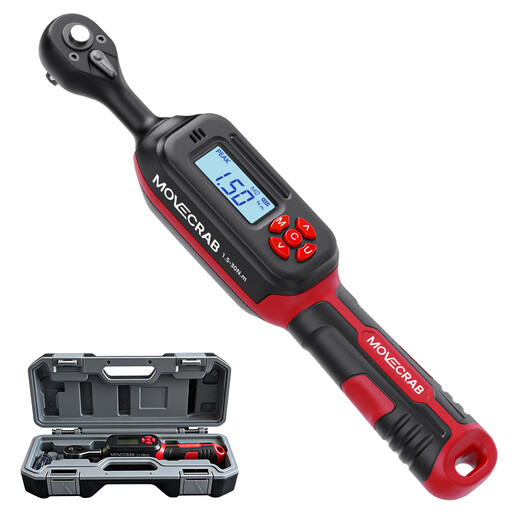
Why This Fits Their Persona: The extremely low torque range is ideal for highly sensitive fasteners on carbon bicycles, motorcycle fairings, or in model making, where precision is critical to prevent material damage.
This tool bypasses the "unsuitable torque range" trap by specialising in low values. The triple alarm system (vibration, sound, LED) ensures the target value is not exceeded, even during delicate work.
Specialised range of 0.6-12 Nm; ±2% accuracy according to the manufacturer; triple alarm system for maximum process safety.
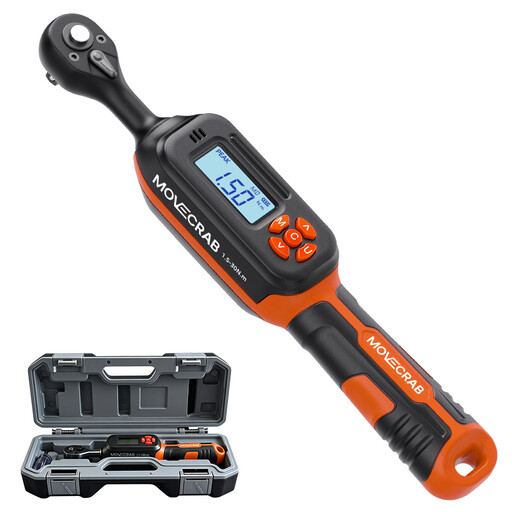
Why This Fits Their Persona: The 4.2 to 85 Nm torque range with a 3/8" drive covers the majority of common maintenance and repair jobs on a car—from spark plugs and oil filter housings to many suspension components.
This model solves the problem of poor real-world usability. The clear display, memory function for 10 values, and reliable alarm system make work more efficient and safer than with simple mechanical or poorly designed digital wrenches.
Practical torque range; memory for 10 presets; Peak and Track modes for full control.
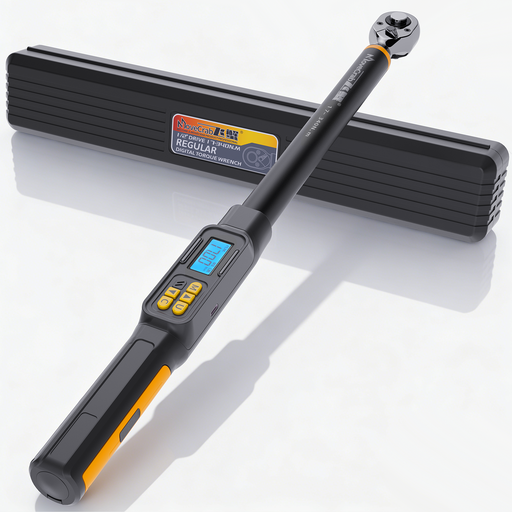
Why This Fits Their Persona: With a torque range up to 340 Nm and a robust 1/2" drive, this tool is designed for professional workshop use. It is the right choice for seasonal tyre changes and heavy-duty work on suspension and frames.
It addresses the accuracy trap by being optimised for high torque values, where precision is crucial for the safety of wheel nuts. The robust construction and loud alarm system are designed for the demanding daily routine of a workshop.
High torque range up to 340 Nm; robust 1/2-inch drive; suitable for continuous professional use.
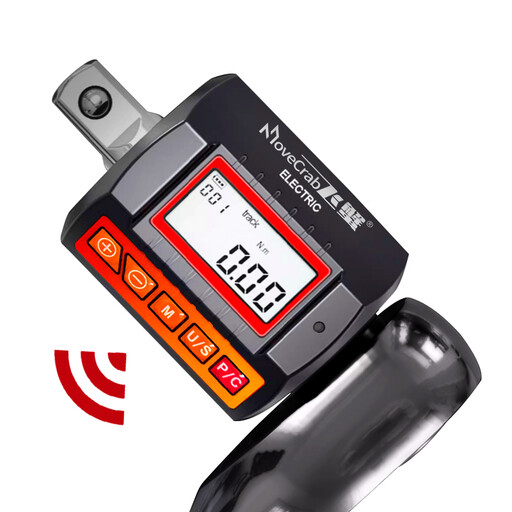
Why This Fits Their Persona: For users who already own a high-quality collection of ratchets and sockets and want to cost-effectively add precise digital measurement capabilities without having to buy several new tools.
This solution offers the core benefits of a digital wrench—precise measurement, various units and modes, alarms—without the investment in a complete tool. With the included adapters for 1/4" and 3/8", it is extremely versatile.
Converts any standard ratchet into a digital torque tool; wide torque range; includes adapters for 1/4", 3/8", and 1/2" drives.
We have compiled a complete, up-to-date list of products that fully meet these strict selection criteria and UK safety regulations.
For professional use in a workshop, annual calibration is recommended to ensure consistent accuracy. For ambitious home mechanics, a check every two years or after approximately 5,000 tightening cycles is usually sufficient. Immediate recalibration is mandatory if the tool has been dropped or misused to apply force beyond its maximum load.
These two tools have different functions. A cordless impact wrench is a power tool that uses rotational impacts to generate very high torque for quickly loosening and pre-tightening bolts. It is not a precision instrument. A digital torque wrench, on the other hand, is a precise measuring tool. It is used to tighten a fastener to an exactly defined, final torque. In practice, the impact wrench is often used for the rough work and the torque wrench for the final, exact tightening.
Although many digital torque wrenches have a reversing switch for both directions of rotation, they are primarily designed and calibrated for tightening (clockwise). Using them to loosen seized bolts, especially with high force, can damage the sensitive internal sensor and permanently impair measurement accuracy. A rigid breaker bar or a standard ratchet should be used for loosening bolts instead.