
Lieferung heute & morgen

Qualitätsgarantie

Willkommens-Angebote freischalten: KOSTENLOSE Lieferung | Bis zu 80 % RABATT | Kostenlose 30-Tage-JoyPlus-Testphase
App herunterladen
When working on vehicles, whether for seasonal tyre changes or precise adjustments to the engine and chassis, applying the correct tightening torque is not a minor detail—it's a necessity. A 1/2-inch drive digital torque wrench provides the precision and control required for these tasks. However, the market is flooded with models whose advertised features don't always hold up in a real-world workshop environment. This guide will help you separate the best from the rest and make an informed decision.
As a Joybuy Product Recommendation Officer, I analyse product data to provide you with objective, practical advice that goes beyond marketing jargon.
Many users invest in a digital tool expecting absolute precision, only to be disappointed by impractical designs or unreliable components. Pay close attention to these three points:
To avoid the issues mentioned above, you should check three core technical parameters before buying. These define the performance and reliability of your future automotive torque wrench.
Accuracy is the most important criterion. Look for models that offer a certified accuracy of ±2% clockwise (CW) and, ideally, a similar tolerance counter-clockwise (CCW). This level of precision is essential for tightening lug nuts, cylinder head bolts, and suspension components.
The 1/2-inch drive is the de facto standard for most automotive work. Pay attention to a wide torque range. A model that goes up to 340 Nm, for example, not only covers the needs of a tool for changing tyres but is also equipped for more demanding tasks on the suspension and engine.
A digital display torque wrench must be easy to read under all conditions. A backlit LCD is a basic requirement here. Even more important is the alert system. Models that offer a combination of three signals have a clear advantage:
This triple-alert system ensures you won't miss reaching the target torque, even in loud or poorly lit environments.
A good electronic torque wrench should offer at least two operating modes:
Additional features like memory slots for frequently used torque values (presets) and the ability to select different units (Nm, ft.lb, in.lb, kg.cm) significantly enhance workflow efficiency.
Based on the criteria above, we have identified a few products from our range that are suitable for specific user profiles.
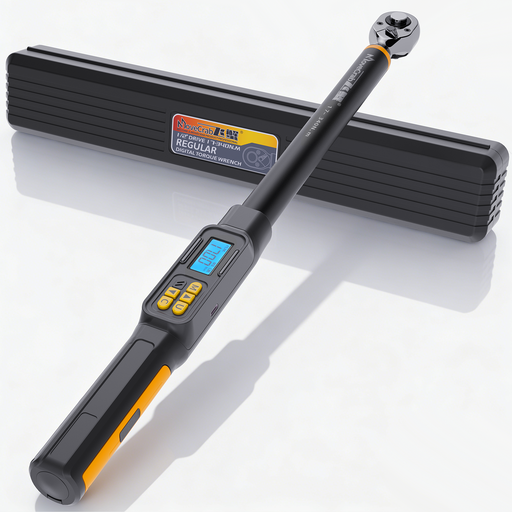
Why This Fits Their Persona: Ideal for professional mechanics and ambitious DIYers who need a single tool for a wide range of tasks, from changing tyres to engine work. The broad torque range makes it extremely versatile.
The triple-alert system (vibration, sound, LED) is impossible to miss, even in noisy workshops. The specified accuracy of ±2% and the Peak/Track modes prevent inaccurate work.
The wide torque range of 17-340 Nm covers almost all common tightening torques in the automotive sector. 10 memory presets speed up repetitive jobs.
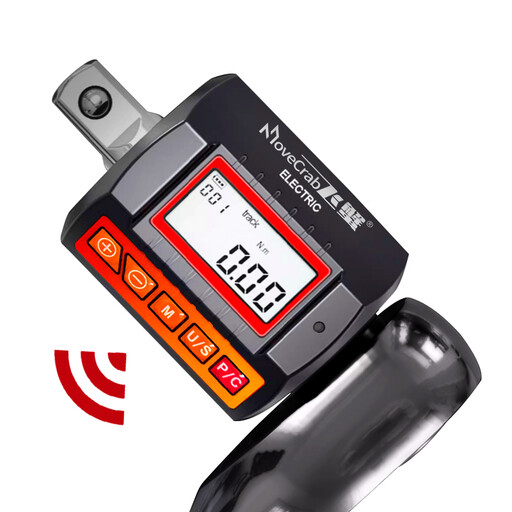
Why This Fits Their Persona: Perfect for users who already own a high-quality 1/2-inch ratchet and want to cost-effectively upgrade it with precise digital torque measurement without buying a completely new tool.
This adapter bypasses the inaccuracy of old mechanical wrenches by adding a digital measurement with ±2% accuracy and clear alerts (sound and light) to an existing tool.
Turns any standard ratchet into a digital precision tool. The included adapters for 3/8" and 1/4" greatly increase its flexibility for different socket sizes.
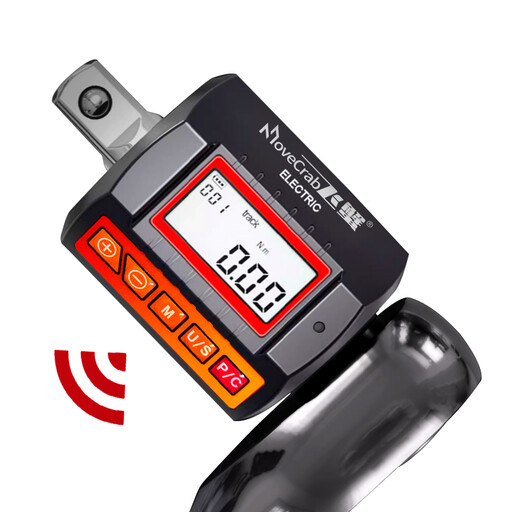
Why This Fits Their Persona: Designed for work on engine and transmission components where lower but highly precise torque values are crucial. Users can use their existing 1/2-inch ratchet for these sensitive tasks.
Provides high precision in a lower torque range where mechanical wrenches are often inaccurate. The digital display prevents misreading a small mechanical scale.
High accuracy of ±2% in the relevant range of 4.05-135 Nm. The memory function for 1,000 data records allows for seamless documentation of the work performed.
We have compiled a complete, up-to-date list of products that fully meet these strict selection criteria and relevant safety standards.
For professional use in a workshop, annual calibration is recommended to ensure consistent accuracy. For hobbyist use, the need depends on the frequency of use. A check every 2-3 years or after the tool has been dropped is good practice. Most devices come pre-calibrated from the factory.
The difference is important for precise application. Track mode (real-time mode) shows you live on the display how much torque you are currently applying. In contrast, Peak mode (peak hold mode) records the highest value reached during the tightening process and holds it on the display. This is useful for verifying that the target torque was correctly achieved.
This is not recommended. Although some models allow for bidirectional measurement, they are designed as precision instruments for tightening. Loosening seized bolts often requires high, sudden forces that can damage the sensitive internal strain gauge and compromise the calibration. It is better to use a sturdy breaker bar or an impact wrench for loosening.