
Lieferung heute & morgen

Qualitätsgarantie

Willkommens-Angebote freischalten: KOSTENLOSE Lieferung | Bis zu 80 % RABATT | Kostenlose 30-Tage-JoyPlus-Testphase
App herunterladen
For safety-critical fasteners on a vehicle, such as during a tyre change or when working on brakes and suspension, applying the correct torque isn't just a recommendation—it's a technical necessity. A 1/2 inch digital torque wrench provides the required precision for these tasks. However, the market is flooded with models whose advertised features don't always live up to their promises in practice. Before you make a purchase, it's crucial to understand the common pitfalls to avoid a bad investment.
Common Pitfalls When Buying an Electronic Torque Wrench:
To find a suitable tool that meets the demands of the automotive sector, you should carefully examine three core aspects.
Accuracy is the most critical parameter. A value of ±2% clockwise (CW) and ±2.5% counter-clockwise (CCW) is considered the industry standard for professional automotive tools. Ensure that this accuracy applies to the largest possible portion of the measuring range, not just a small, ideal segment.
The 1/2-inch drive is the most common size for car maintenance, especially for seasonal tyre changes. However, the torque range is what's truly decisive. While up to 150 Nm is sufficient for many jobs on a motorcycle torque wrench or car brakes, work on suspension components or the wheel nuts of vans and SUVs often requires values up to 340 Nm. A torque wrench with a digital display that covers this range offers the necessary flexibility.
A reliable alert system is essential for process reliability. Modern digital torque wrenches rely on a triple-alert system:
This combination ensures that reaching the target torque is perceived under all working conditions.
For professional use, two operating modes are of central importance:
Additional features like memory presets for torque values significantly increase efficiency, as frequently needed values do not have to be re-entered each time.
Based on the criteria mentioned, we have identified several models suitable for specific requirement profiles.
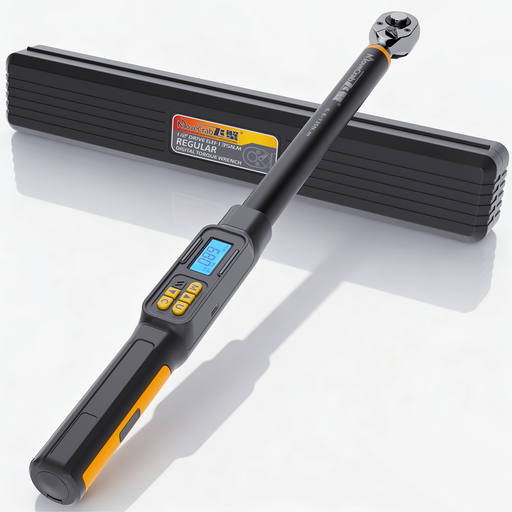
Why This Fits Their Persona: Ideal for regular tyre changes and general maintenance on personal cars or motorcycles. The torque range up to 135 Nm covers the most common tightening torques for wheel nuts and brake components.
The triple-alert system with vibration, sound, and light bypasses the risk of missing the target torque in a home garage.
Offers professional features like Peak/Track modes and 10 presets in a package accessible to the home user.
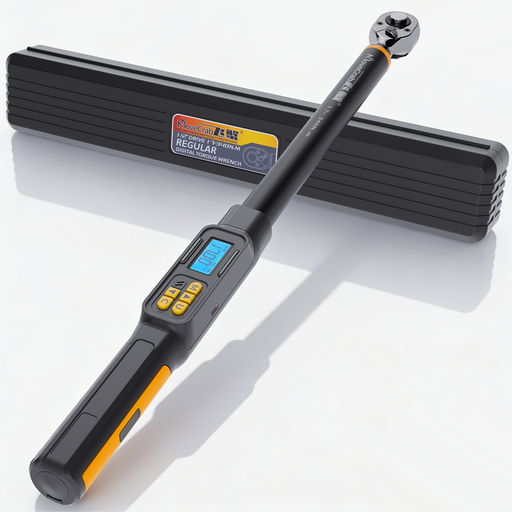
Why This Fits Their Persona: Designed for daily, demanding use in the automotive workshop. The high torque range up to 340 Nm makes it a universal tool for cars, SUVs, and light commercial vehicles.
Solves the problem of limited functionality with 10 presets and data storage for 500 measurements, facilitating documentation and quality assurance.
High accuracy of ±2% and a wide, practical torque range (17-340 Nm) for maximum application versatility.
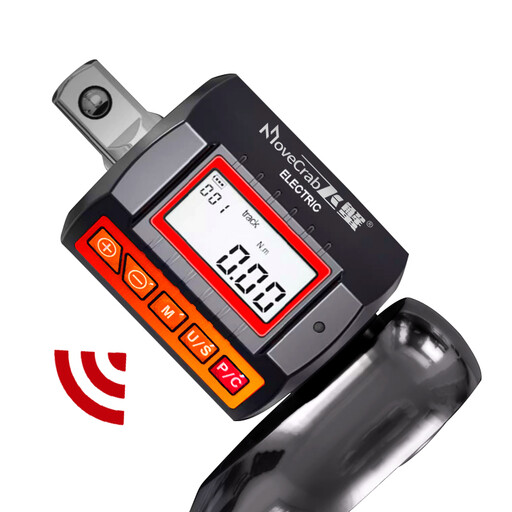
Why This Fits Their Persona: A flexible solution for users who already own high-quality ratchets and want to upgrade them into a precise digital tool. Included adapters for 3/8" and 1/4" vastly expand its range of use.
Provides a cost-effective alternative to buying multiple dedicated torque wrenches without compromising on accuracy (±2%) or torque range (up to 340 Nm).
Compact, versatile, and equipped with data storage for 1,000 values. Transforms existing tools into a modern, digital measuring instrument.
We have compiled a complete, real-time list of products that fully satisfy these strict selection criteria and UK safety regulations.
1. How often does a digital torque wrench need to be calibrated? A general recommendation is to have a professionally used tool calibrated once a year or after approximately 5,000 load cycles. Immediate recalibration is necessary if the tool has been dropped or overloaded (application of more than 120% of the maximum torque).
2. What is the difference between "Peak" and "Track" mode? In Peak mode, the highest torque value reached during the tightening process is displayed and held on the screen. This is the standard mode for tightening a bolt to a target value. Track mode continuously displays the currently applied torque, similar to a mechanical dial torque wrench.
3. Can I also use a digital torque wrench to loosen bolts? Although many digital torque wrenches have a measurement function for both directions of rotation, they are primarily designed as measuring instruments for tightening. Using them as a conventional wrench to loosen stuck bolts (especially with high force) should be avoided, as this can damage the sensitive sensor and affect the calibration. A standard ratchet or an impact wrench should be used for loosening.