
Lieferung heute & morgen

Qualitätsgarantie
App herunterladen
Kategorien
Precise adherence to manufacturer-specified torque settings is crucial for modern automotive and industrial components. A digital torque wrench offers superior accuracy and advanced functionalities compared to mechanical models, making workflows more secure and fully documentable. Selecting the right tool depends on specific technical requirements, which will be analysed in detail below.
The decision for a specific model should be based on an objective analysis of the following parameters.
The drive size, measured in inches, defines the tool's compatibility with sockets and its typical application scope.
High accuracy is the core feature of a professional torque wrench. Accuracy is specified as a percentage deviation from the set value. Professional digital models typically offer an accuracy of ±2% to ±3% clockwise, which complies with the DIN EN ISO 6789 standard. This level of precision is crucial to prevent material fatigue or damage to threads and components.
A professional torque wrench with a display offers significant advantages over analogue scales.
Based on the technical criteria above, we present three models with different drive sizes and torque ranges.
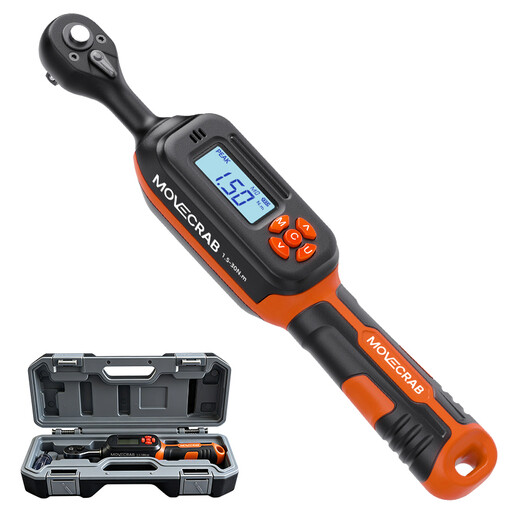
Why we recommend this product: This model combines a torque range of 0.6 to 12 N.m, designed for precision work, with a high measurement accuracy of ±2%. The triple alarm system (vibration, sound, LED) ensures that reaching the target torque is clearly signalled under all working conditions—whether in noisy or poorly lit environments.
Pros:
Who it's for: Ideal for bicycle mechanics, motorcycle technicians, and engineers working on sensitive components like carbon parts, sensors, or plastic fairings at very low torque settings.
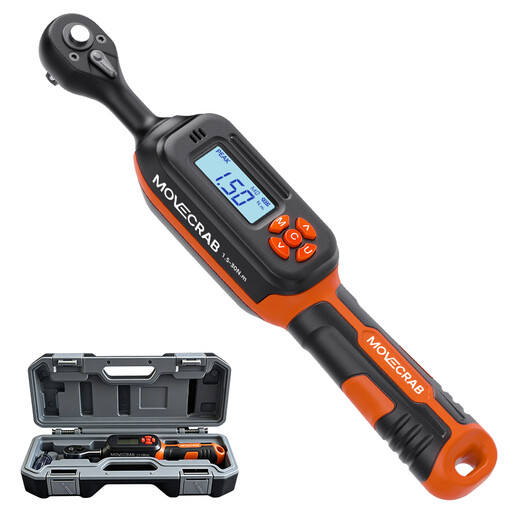
Why we recommend this product: With a versatile torque range of 4.2 to 85 N.m, this 3/8-inch model covers the majority of common maintenance and repair jobs on cars and motorcycles. It features the same professional characteristics as the 1/4-inch version, including ±2% accuracy and the comprehensive alarm system.
Pros:
Who it's for: An excellent choice for automotive technicians and ambitious DIY mechanics looking for a single, precise tool for most jobs on motorcycles and cars.
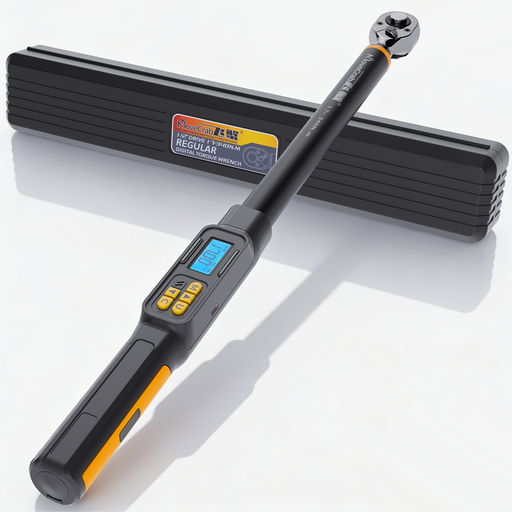
Why we recommend this product: This model is designed for high torque up to 340 N.m, making it the specialised tool for safety-critical fasteners on chassis and wheels. The high accuracy of ±2% and the reliable alarm system are essential at these force levels to prevent over-tightening and its associated risks.
Pros:
Who it's for: Indispensable for professional workshops and users who regularly change tyres or work on chassis and suspension parts of cars, SUVs, and light commercial vehicles.
For users who regularly face varying torque requirements, purchasing a set can be a practical solution. A set that covers multiple drive sizes and torque ranges ensures that the appropriate and calibrated tool is available for every task.
A selection of other tools can be found in our Torque Wrench Set category.
1. What is the difference between a digital and a mechanical torque wrench? The main difference lies in the measurement and signalling methods. A mechanical torque wrench (also known as a "click-type" wrench) indicates that the target torque has been reached with an audible and tactile click. A digital torque wrench measures the force electronically via a strain gauge, shows the value on a display, and often signals reaching the target torque through a combination of sound, light, and vibration. Digital models generally offer higher accuracy and additional features like data storage.
2. Which torque wrench is best for changing car tyres? For changing tyres on a typical passenger car, a 1/2-inch drive torque wrench is recommended. The tightening torque specified by the vehicle manufacturer for lug nuts or bolts is usually between 110 N.m and 180 N.m. A wrench with a range of, for example, 40-200 N.m or 60-340 N.m will safely cover this application.
3. How is an electronic torque wrench calibrated? Calibration is a process where the tool's measurement accuracy is checked and adjusted. This should be performed at regular intervals (e.g., annually or after a specific number of load cycles, as per the manufacturer's specifications) by a professional calibration service provider using certified testing equipment. Self-calibration without the proper equipment is not recommended, as it can compromise the tool's accuracy.