
Lieferung heute & morgen

Qualitätsgarantie

Willkommens-Angebote freischalten: KOSTENLOSE Lieferung | Bis zu 80 % RABATT | Kostenlose 30-Tage-JoyPlus-Testphase
App herunterladen
A precision torque wrench isn't a luxury; it's a necessity for anyone working on modern vehicle or bicycle technology. The correct tightening torque determines the safety and longevity of components. Yet, the market is flooded with tools whose promises often fall short in practice. Before you buy a new digital torque wrench, you should understand the common pitfalls that lead to bad purchases and potentially expensive damage.
As your Joybuy Product Recommendation Officer, I'll help you distinguish the important features from the trivial ones. This guide focuses on the three most common sources of error and shows you what really matters when making your selection.
To avoid these mistakes, you should focus on three objective core parameters. These define the functionality and reliability of any electronic torque wrench.
The most important factor is matching the tool to your primary tasks. Manufacturers specify a unique Newton-meter value for every bolted connection.
A precision torque wrench is characterized by a low, verifiable measurement tolerance. A common value for high-quality models is an accuracy of ±2%. This means that for a target value of 50 Nm, the actually applied value will be between 49 and 51 Nm.
Equally important is the type of feedback. A reliable tool should have a multi-stage alert system to ensure that reaching the target value is perceived under all conditions:
This triple-alert system provides maximum process reliability, whether in a noisy workshop or in a poorly visible location.
A good electronic torque wrench with a digital display offers more than just measurement. Two operating modes are particularly practical:
Additional features like memory presets for frequently used torque values can significantly speed up the workflow for repetitive tasks.
Based on the criteria above, we have identified several models that represent an ideal solution for specific user profiles.
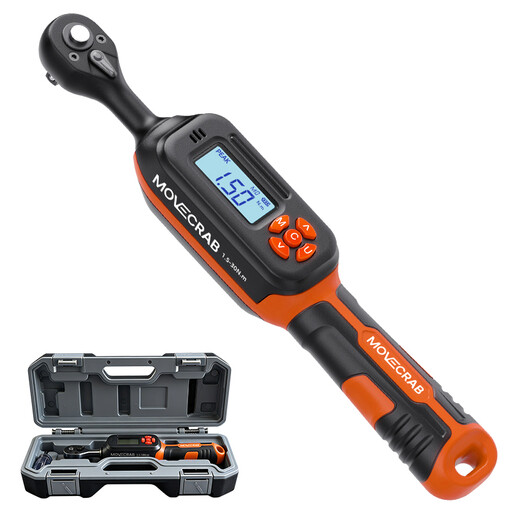
Why this model is a great fit: With a torque range of 1.5 to 30 Nm and a 1/4-inch drive, this tool is precisely tailored to the requirements of modern bicycles, especially those with carbon components, and other fine mechanical work.
It avoids the "wrong torque range" trap by specializing in low values. The triple-alert system (vibration, sound, light) ensures that reaching the target value is never missed.
High accuracy of ±2% in the relevant low-torque range and 10 memory presets for pre-set values accelerate repetitive tasks.
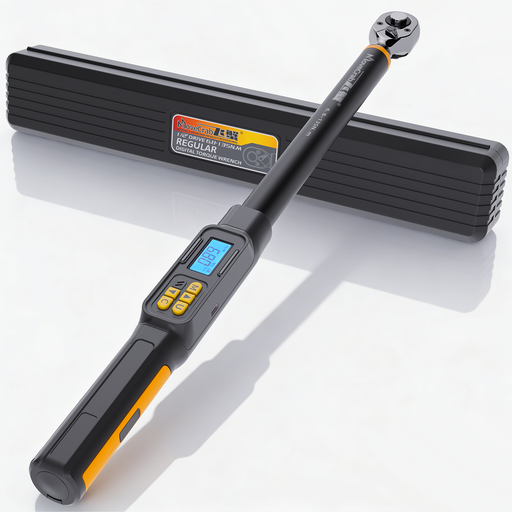
Why this model is a great fit: The 6.8 to 135 Nm range covers an enormous spectrum of common jobs on cars and motorcycles—from engine and transmission components to suspension parts. The 1/2-inch drive is the standard in every auto workshop.
This model offers a very broad and practical application range, preventing the need to buy multiple specialty tools. The digital display is significantly more accurate and easier to read than the scale on a mechanical wrench.
The combination of a versatile torque range, Peak and Track modes, and the triple-alert system makes it a reliable all-rounder for most workshop tasks.
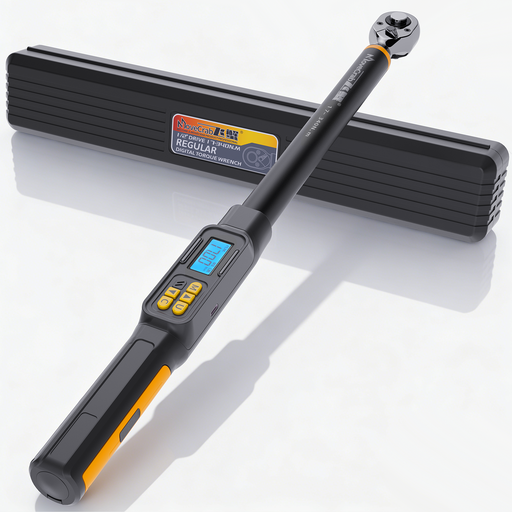
Why this model is a great fit: With a maximum torque of 340 Nm, this tool is designed for the most demanding automotive tasks, such as tightening lug nuts, center-lock wheels, or critical chassis and engine bolts that require high tightening forces.
It is specifically designed for high torque, preventing the overload and damage of a smaller wrench. The ±2% accuracy is maintained even at high forces, which is often a problem with mechanical wrenches.
The extremely high torque range, combined with digital precision and memory functions, allows for the controlled and documentable application of high forces.
We have compiled a complete, up-to-date list of products that fully meet these strict selection criteria and German safety regulations.
For professional or very frequent use, regular calibration is recommended, typically once a year or after approximately 5,000 load cycles, to ensure the specified measurement accuracy. For occasional hobbyist use, this is necessary less often. The models presented here are delivered pre-calibrated and remain accurate for a long time.
Although many models feature a reversible ratchet for both directions, they are primarily precision measuring instruments for tightening. Loosening seized bolts generates high, uncontrolled force spikes that can damage the internal sensor and compromise the calibration. It is recommended to use a separate tool, such as a breaker bar or an impact wrench, for loosening.
Track mode is like a live speedometer: it shows in real-time on the display how much torque you are currently applying to the bolt. Peak mode, on the other hand, remembers the highest value you reached during the tightening process and displays it even after you release the tool. This is particularly useful for verifying and documenting that the correct final value was achieved.