
Lieferung heute & morgen

Qualitätsgarantie

Willkommens-Angebote freischalten: KOSTENLOSE Lieferung | Bis zu 80 % RABATT | Kostenlose 30-Tage-JoyPlus-Testphase
App herunterladen
When performing precision work on vehicles or in industrial settings, applying the correct tightening torque isn't just a detail—it's a necessity. An incorrectly tightened bolt can lead to material fatigue, damaged threads, or, in the worst-case scenario, a critical safety failure. A digital torque wrench promises a solution with its precise measurements and user-friendly operation. However, the market is flooded with models whose advertised features often fail to deliver in practice. Before you make a purchase, you should be aware of the common pitfalls that lead to frustration and unnecessary expenses.
This guide will help you separate the wheat from the chaff. We focus on the objective criteria that define a reliable torque tool and show you how to distinguish marketing hype from genuine functionality.
Many users invest in a digital tool only to discover during use that it's unsuitable for their needs. Two problems are particularly common:
To avoid a bad purchase, you should focus on three core technical features. These define the real-world usability and reliability of any digital torque wrench.
The most important factor is ensuring the tool's torque range matches your intended applications. A single wrench can rarely cover all tasks. Use these common values as a guide:
Check the manufacturer's specified torque values for your specific tasks and choose a tool whose working range comfortably covers them.
Precision is the main reason for purchasing an electronic torque wrench. Professional-grade accuracy is around ±2% clockwise (CW) and often ±2.5% to ±3% counter-clockwise (CCW). Ensure the manufacturer specifies this tolerance and, ideally, includes a calibration certificate. This confirms the device has been factory-tested and adjusted.
A good alert system is multi-sensory. Models with a combination of vibration, an audible signal (buzzer), and an LED light indicator ensure that you reliably perceive reaching the target torque under all conditions—whether it's loud, dark, or both.
Additional modes like "Peak" and "Track" are also highly practical. Peak mode saves the highest value reached, which is useful for documentation and quality control. Track mode displays the torque in real-time, which can be helpful for certain assembly processes.
Based on the criteria above, we have identified a few models that represent a smart choice for specific user profiles.
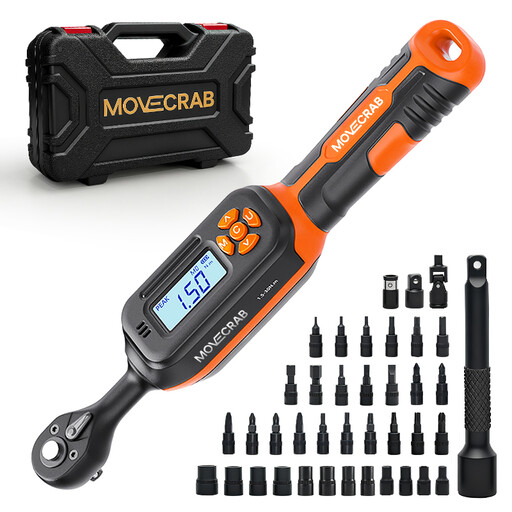
Why This Fits Their Persona: This set is ideal for ambitious mechanics working on bicycles, motorcycles, and minor car repairs. The 1.5-30 Nm torque range covers most delicate tasks, and the extensive accessory kit eliminates the need to buy additional bits and sockets.
The set provides a calibrated system with ±2% accuracy and a clear LED display with an audible alarm. You don't have to rely on untrustworthy individual components.
Comprehensive torque wrench set with 40 pieces; Peak and Track modes, plus 10 preset values for recurring tasks.
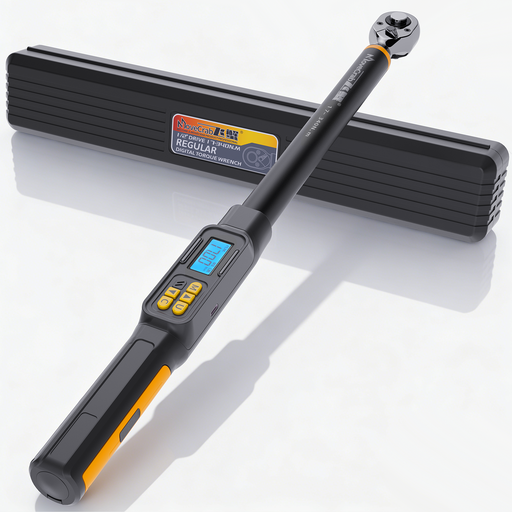
Why This Fits Their Persona: For professional auto mechanics who need a robust tool for daily use. The high torque range up to 340 Nm and the 1/2-inch torque wrench drive are designed for wheel changes, suspension, and engine work on cars.
The triple alert system (vibration, sound, LED) is specifically designed for noisy workshops, ensuring the target torque is never missed. The ±2% accuracy is sufficient for professional demands.
High torque range for heavy-duty jobs; effective triple-alert system; memory for 500 data records for process control.
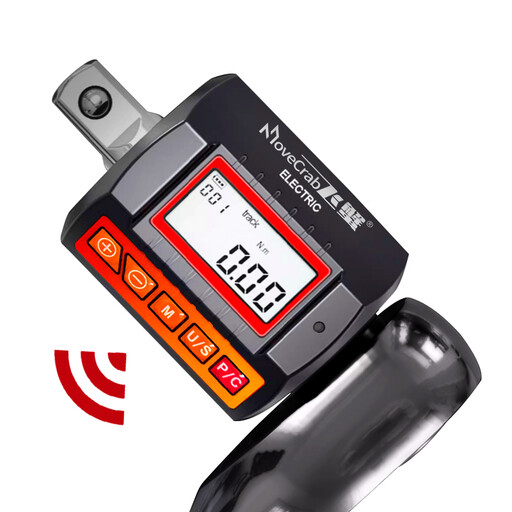
Why This Fits Their Persona: For users who already own a collection of ratchets and sockets and want to add digital torque measurement cost-effectively. This adapter turns any standard ratchet into a precise measuring instrument.
It offers digital precision (±2% accuracy) and a sound-and-light alarm without the need to buy a completely new tool. The included adapters for 3/8" and 1/4" make it extremely flexible.
Very wide torque range (10.2-340 Nm); turns existing tools into a digital torque adapter; highly cost-effective.
We have compiled a complete, up-to-date list of products that fully meet these strict selection criteria and safety regulations.
For professional use in certified shops, annual calibration is often recommended. For home use, it's less frequently required. However, a check is advisable if the tool has been subjected to a significant impact (e.g., being dropped) or if you suspect the readings are off. Always store the tool in a relaxed state (set to the lowest torque value or turned off) and in its case to maximize the sensor's lifespan.
Track mode displays the currently applied torque value on the screen in real-time. This is useful for observing the force as it builds. In contrast, Peak mode captures and saves the highest torque value reached during the tightening process. This value remains on the display even after releasing the tool, which is ideal for verification and documentation.
In general, torque wrenches—whether mechanical or digital—should not be used to break loose stubborn bolts. The high and uncontrolled forces can damage and de-calibrate the sensitive measuring mechanism. Use a standard ratchet or an impact wrench for loosening. While some digital models offer a counter-clockwise measurement function, it is intended for the controlled tightening of left-hand threads, not for loosening.