
Lieferung heute & morgen

Qualitätsgarantie

Willkommens-Angebote freischalten: KOSTENLOSE Lieferung | Bis zu 80 % RABATT | Kostenlose 30-Tage-JoyPlus-Testphase
App herunterladen
When tightening bolts on vehicles or machinery, precision isn't an option—it's a necessity. The wrong torque can lead to damaged components, loose connections, and safety hazards. A digital torque wrench offers a modern solution, but the market is confusing. Many models promise more than they can deliver. This guide will help you separate the wheat from the chaff and avoid the common pitfalls of buying one.
Choosing the right tool is often complicated by marketing promises. Pay attention to these three points to avoid a bad investment:
To find the right automotive tool, you should focus on objective technical parameters. An electronic torque wrench should be evaluated based on the following criteria.
The most important factor is the torque range, measured in Newton-metres (Nm). This must match your field of application.
A precision torque wrench is paramount. Pay attention to the tolerance specified by the manufacturer. A value of ±2% to ±3% clockwise is considered the industry standard for professional applications. Models with such accuracy typically come pre-calibrated and ensure repeatable results, provided the tool is handled properly and not misused as a breaker bar to loosen stuck bolts.
A torque wrench with a digital display offers more than just a readable value. The available modes are crucial:
Additional features like a memory for preset torque values or a multi-modal signalling system (vibration, sound, and light) significantly increase efficiency and safety.
Based on the criteria above, we have compiled a selection of digital torque wrenches for specific requirement profiles.
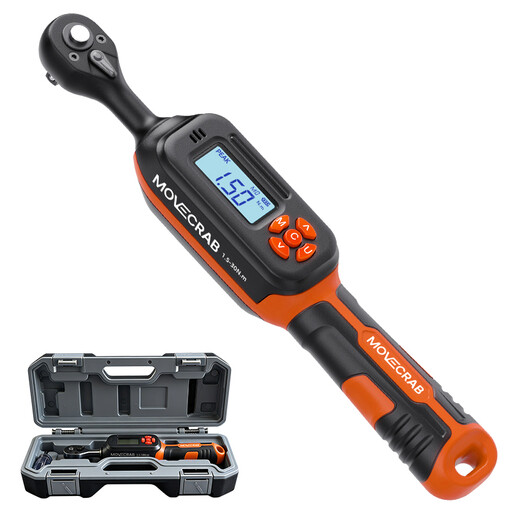
Why This Fits Their Persona: The low torque range of 0.6 to 12 Nm is ideal for sensitive screw connections on carbon components, derailleurs, and lightweight attachments on bicycles and motorcycles, where precision is crucial.
The triple alert system with vibration, sound, and LED light ensures that reaching the target value is not missed, even in noisy or poorly lit environments. The specified accuracy of ±2% prevents over-tightening of sensitive bolts.
Very low starting torque value (0.6 Nm); Peak and Track modes for full control; memory for 10 presets.
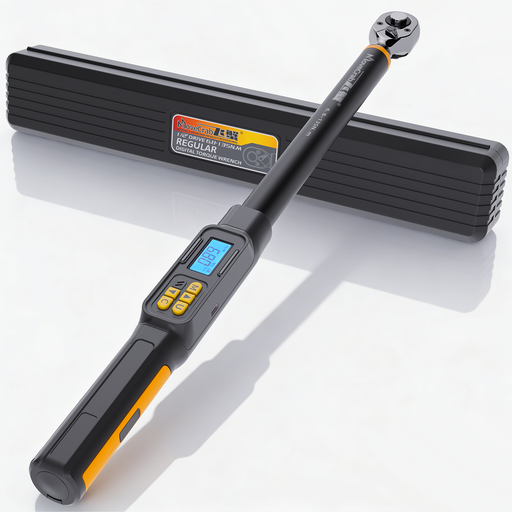
Why This Fits Their Persona: Covering 6.8 to 135 Nm, this wrench spans the most common torque range for DIY enthusiasts and ambitious hobby mechanics. It is perfect for wheel changes, brake system jobs, and many other maintenance tasks on passenger cars.
The digital display is significantly more precise and easier to read than a mechanical scale. The memory function for presets prevents setting errors and speeds up repetitive tasks like seasonal wheel changes.
Practical torque range for most automotive jobs; robust 1/2-inch drive; data storage for up to 500 measurements.
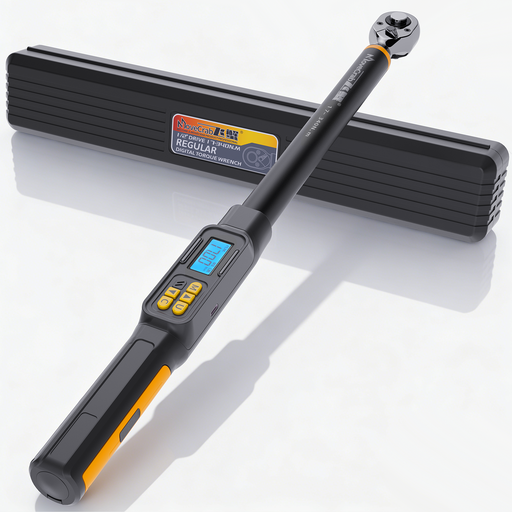
Why This Fits Their Persona: With a very high torque range up to 340 Nm, this tool is designed for professional auto mechanics and demanding jobs on chassis, engine blocks, or axle components that require high tightening forces.
The robust construction is designed for high loads and prevents material fatigue. The reliable alert system ensures exact adherence to specifications even at high torques, which is essential for the safety of critical components.
Very high torque range up to 340 Nm; data storage for 500 measurements for documentation; designed for professional workshop use.
In addition to professional automotive tools, you'll also find innovative products for leisure and family. Discover our selection now.
There is no one-size-fits-all answer, as the need depends on the frequency of use and the care taken in handling. As a general guideline, an annual check and, if necessary, recalibration is recommended for professional use. For occasional hobbyist use, a longer interval is often sufficient. More important is proper handling: always store the tool in a relaxed state (not set to a high value), avoid dropping it, and do not use it to loosen bolts.
Most digital torque wrenches have a reversible ratchet head and can technically be used for loosening. However, it is strongly advised not to use them to "break loose" very tight bolts. The high and uncontrolled force spikes that occur can damage the sensitive internal sensor and compromise the tool's accuracy. Use a conventional breaker bar or an impact wrench to loosen stuck fasteners.
These two modes serve different purposes. In Track mode, the display shows the force you are currently applying in real-time. In Peak mode, the highest torque value reached during the tightening process is captured and held on the display. For precisely tightening a bolt to a specific value, Peak mode is the default setting.