
Lieferung heute & morgen

Qualitätsgarantie

Willkommens-Angebote freischalten: KOSTENLOSE Lieferung | Bis zu 80 % RABATT | Kostenlose 30-Tage-JoyPlus-Testphase
App herunterladen
When performing precision work on vehicles and bicycles, applying the correct tightening torque isn't just a detail—it's a necessity. The wrong value can lead to damaged components, loose connections, and serious safety hazards. A digital torque wrench promises a solution with its high accuracy and user-friendly operation. However, the market is flooded with models whose advertised features often fail to deliver in practice. This guide will help you distinguish quality from mediocrity and find a tool that reliably gets the job done.
As your Joybuy Product Recommendation Officer, I'll filter the essential information for you, so you can make an informed decision without falling for exaggerated marketing claims.
Before you invest, you should be aware of the typical problems that only become apparent after purchasing many of these devices.
To avoid the pitfalls mentioned above, focus on the following objective criteria. These define a truly precise torque tool.
The torque range, specified in Newton-metres (Nm), is the most important selection criterion. It must cover the values specified by the manufacturers of your components.
Look for a certified accuracy tolerance, ideally ±2% clockwise. However, more important than the number itself is the quality of the sensor, which is often reflected in the brand's reputation and build quality.
The drive size determines which sockets you can use. The most common sizes are:
Some models or sets include adapters to increase flexibility. Another option is a digital torque adapter, which turns an existing ratchet into a measuring instrument.
A good electronic torque wrench offers more than just a simple measurement.
Here are some models that represent a smart choice for specific user profiles based on their technical specifications.
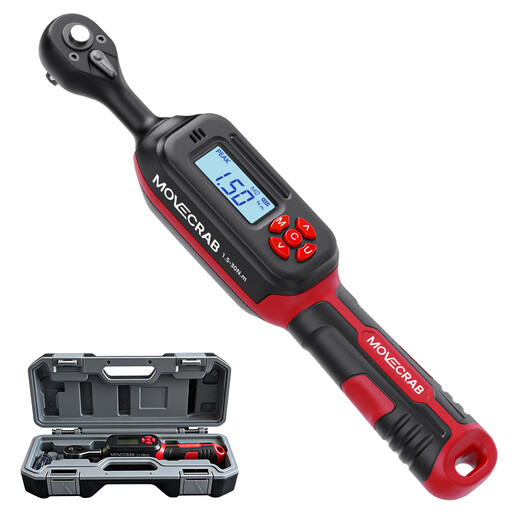
Why This Fits Their Persona: Ideal for avid DIY cyclists and mechanics working on sensitive carbon frames, handlebars, or seat posts. The extremely low torque range is precisely tailored to these delicate components where precision is critical.
This tool avoids the pitfall of an unsuitable torque range by specialising in the low-Nm sector. The triple-alert system (vibration, LED, tone) ensures that the signal is not missed, even during focused work.
Specialised torque range of 0.6–12 Nm. Triple-alert system for maximum process reliability. Stated accuracy of ±2%.
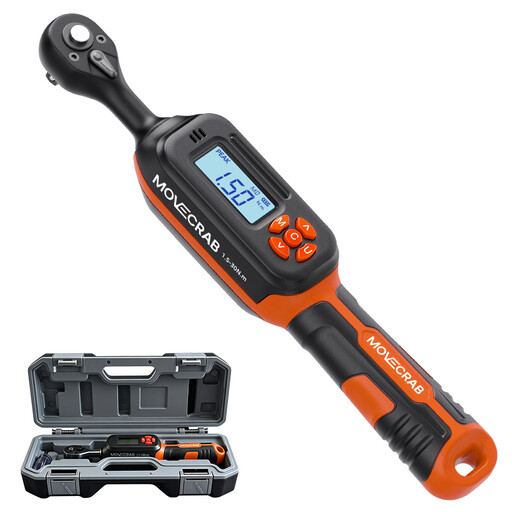
Why This Fits Their Persona: The ideal companion for DIY enthusiasts and professional mechanics looking for a single, versatile tool for most jobs on cars and motorcycles. The 3/8" drive is a common standard, and the torque range covers everything from oil drain plugs to many suspension components.
With its wide and practical torque range of 4.2 to 85 Nm, this model avoids the trap of being too specialised or too weak for common automotive tasks. The combination of a digital display, memory presets, and a triple-alert system ensures efficiency and accuracy.
Highly versatile torque range (4.2–85 Nm) with the common 3/8-inch drive. Features Peak/Track modes and memory for 10 presets.
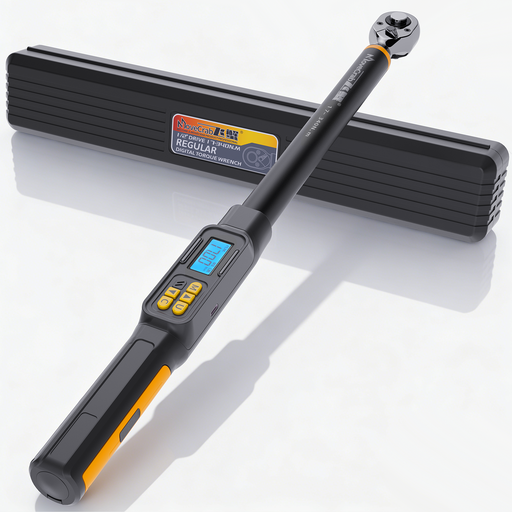
Why This Fits Their Persona: Designed for users who regularly need to apply high forces. Perfect for seasonal tyre changes, work on suspension, frames, or larger machinery where torques well over 100 Nm are required.
This model is explicitly designed for high torque, preventing the overload and damage that would occur with a smaller wrench. The robust 1/2-inch drive is the industry standard for this level of force transfer, ensuring compatibility with common impact sockets.
High torque range up to 340 Nm for demanding tasks. Standardised 1/2-inch drive for maximum compatibility and durability.
We have compiled a complete, up-to-date list of products that fully meet these strict selection criteria and applicable regulations.
For professional use in a workshop, annual calibration is recommended to ensure consistent accuracy. For avid DIYers, a check every two to three years or after the tool has been dropped is advisable. Many models come factory-calibrated, but regular checks will safeguard precision in the long term.
Track mode displays the torque you are currently applying to the bolt in real-time on the screen. It is useful for observing the build-up of force. Peak mode, on the other hand, captures and saves the highest torque value reached during the tightening process. This mode is ideal for verifying and documenting that the target value was correctly achieved.
Although many digital torque wrenches have a reversible ratchet for both directions, they are primarily precision measuring instruments for controlled tightening. Using them to loosen seized bolts, which involves high, uncontrolled forces, can damage the sensitive internal sensor and compromise its calibration. It is recommended to use a sturdy breaker bar or an impact wrench for loosening.