
Lieferung heute & morgen

Qualitätsgarantie

Willkommens-Angebote freischalten: KOSTENLOSE Lieferung | Bis zu 80 % RABATT | Kostenlose 30-Tage-JoyPlus-Testphase
App herunterladen
A digital tyre inflator with compressor can be a practical solution when you need to check the tyre pressure or top up a tyre while out and about. However, the right features vary for car drivers, motorcyclists, and owners of bicycles and e-bikes. A device that is sufficient for a bicycle tyre will not necessarily be suitable for a car tyre.
Many disappointing purchases are not caused by a lack of maximum pressure, but by unclear power-supply specifications, an unsuitable valve connection or limited battery endurance. The following points should therefore be checked before buying.
A 150 PSI or 200 PSI tyre inflator may initially sound powerful. However, the maximum pressure only describes the upper technical limit. It says little about how quickly the device will actually inflate a car tyre or how long it can maintain that performance.
For many car tyres, the required pressure is well below this figure. Specifications for inflation time, recommended vehicle size and maximum operating time are therefore more important. A portable tyre compressor for compact vehicles may be designed differently from a model intended for larger SUV tyres.
A digital tyre pressure gauge or digital tyre pressure tester will generally display the pressure clearly. Even so, the connector must fit the relevant valve. Car tyres and many motorcycle tyres usually use Schrader valves. Bicycles, on the other hand, may be fitted with Presta valves.
A Presta valve adapter or several valve attachments can broaden the range of uses. Before placing an order, it is worth checking the contents and connection type.
A battery-powered air pump for cars and bicycles does not depend on a power socket, but it must be charged in good time. Battery capacity, charging method and the stated continuous operating time are all important. When inflating several tyres in succession, the device may heat up or switch off automatically.
Models with a 12-volt connection are suitable for use in a car, but require a compatible vehicle socket and a sufficiently long cable. A 3-metre cable may be more practical for larger vehicles than a short connection lead.
Look for a clear, easy-to-read display and support for the relevant units, such as PSI, bar or kPa. 150 PSI is approximately 10.3 bar, while 200 PSI is around 13.8 bar. For many everyday applications, these values are well above the recommended tyre pressure. What matters is whether the desired pressure can be set precisely.
Tyre pressure should always be checked in accordance with the vehicle manufacturer’s specifications. These are often found on the door frame, inside the fuel flap or in the owner’s manual. The maximum pressure stated on the tyre sidewall is not automatically the correct everyday pressure.
An automatic tyre inflator stops the inflation process once the pre-set value has been reached. This reduces the need to monitor the process continuously. Before starting, make sure the hose and valve are firmly connected and that the correct unit and target value have been selected.
Automatic shut-off does not replace checking the pressure. After inflating, it may be useful to take a second measurement with a tyre pressure gauge, particularly if the connection was moved during inflation.
The following points are relevant when choosing a model:
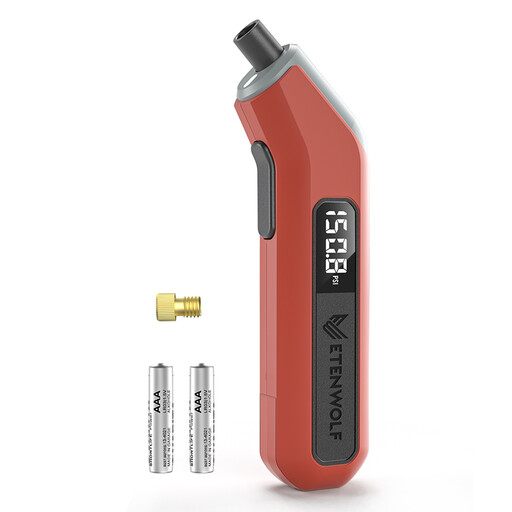
Why this product suits this profile: As a digital pressure gauge, this model is suitable for users who want to check tyre pressure without buying a compressor straight away. According to the product specifications, it runs on two included AAA batteries and features an LED display and a Presta valve adapter.
The 200 PSI figure is not mistaken for pumping performance here: this product is a tyre pressure tester, not an inflating compressor.
200 PSI display, illuminated display, compact dimensions and Presta adapter according to the product description.
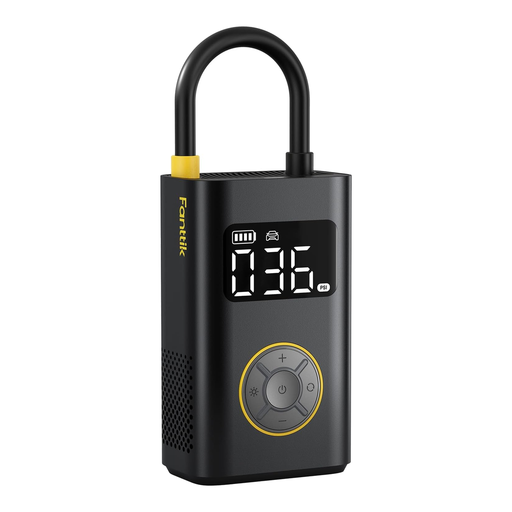
Why this product suits this profile: According to the product specifications, this cordless portable tyre compressor is designed for compact cars, motorcycles, bicycles, e-bikes and balls. Four pre-set modes plus a manual mode make it easier to adapt the device to different applications.
The stated operating time of up to 23 minutes and automatic shut-off once the target value is reached provide practical guidance rather than relying solely on a PSI marketing claim.
Built-in 7.4-volt, 2.5 Ah battery, target-pressure shut-off, 150 PSI and integrated hose storage according to the product description.
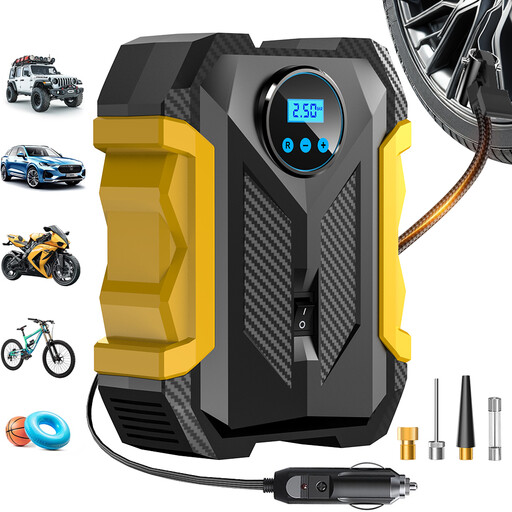
Why this product suits this profile: This electric air pump for cars uses a 12-volt connection and a 3-metre cable. According to the product description, it is intended for cars, motorcycles, bicycles and balls.
The long cable addresses the common limitation of short power leads. At the same time, remember that a 12-volt pump requires a suitable vehicle socket.
150 PSI, digital pressure display, LED light, 3-metre cable and compact design according to the product specifications.
We have put together a complete, regularly updated list of products that fully meet these strict selection criteria and the safety regulations applicable in the EU.
The tyre should be as cool as possible before inflating. Check the recommended pressure and select the correct unit. Then attach the valve fitting straight onto the valve to minimise air loss. If you are using a battery-powered device, it is advisable to charge it fully before longer journeys.
A compressor should be stored in a dry place and protected from excessive heat. After inflating several tyres, cooling breaks may be necessary. Once you have finished using the device, return the adapters, charging cable and hose to the designated compartment or carry case.
Accuracy depends on the sensor, the design and how correctly the device is connected to the valve. A digital reading is not automatically more accurate than every other measuring device. For everyday use, the display should be easy to read and allow measurements without a poorly aligned connection. If there are safety-relevant discrepancies, it is advisable to compare the reading with a second tyre pressure gauge.
This depends on the battery capacity, tyre size, starting pressure and target value. The stated runtime relates to the conditions specified by the particular manufacturer. When inflating several car tyres, the actual operating time may be shorter than when inflating bicycle tyres or balls. Anyone who regularly inflates several tyres should also take charging time and any necessary cooling breaks into account.
For most car applications, the key factors are not the highest possible maximum pressure, but a suitable pressure setting, sufficient runtime and an appropriate connection. A 150 PSI tyre inflator may be sufficient for cars, motorcycles and bicycles, provided the model is designed for the relevant tyre size. A 200 PSI pressure tester, on the other hand, may only measure pressure and does not necessarily have an inflation function.