
Lieferung heute & morgen

Qualitätsgarantie

Willkommens-Angebote freischalten: KOSTENLOSE Lieferung | Bis zu 80 % RABATT | Kostenlose 30-Tage-JoyPlus-Testphase
App herunterladen
A digital bathroom scale is part of the everyday essentials in many households. It should take up little space in the bathroom, display your weight clearly and work reliably for several family members. If you also want to track body fat, muscle mass or other metrics, you will find numerous models marketed as a digital body fat scale, Bluetooth body fat scale or smart bathroom scale.
However, not every advertised feature is useful for every household. Before buying, it is therefore worth checking the technical specifications, maximum weight capacity and how the scale actually operates.
Specifications such as 0.05 kg increments describe the steps in which the display shows values. They do not automatically mean that every measurement will differ by exactly this amount under all conditions. Hard, level floors, a centred stance and dry feet have a significant effect on the comparability of results.
A digital bathroom scale should therefore always be placed on a firm surface. Carpets, bath mats and uneven tiles can lead to fluctuating results.
A body analysis scale generally determines additional readings using bioelectrical impedance analysis, or BIA for short. Depending on the model, it may estimate body fat percentage, muscle mass, BMI or basal metabolic rate. These readings are affected by factors including hydration, time of day, skin contact and body position.
The readings are intended for monitoring personal trends and do not replace a medical examination. According to the relevant product descriptions, the body analysis function must not be used by people with implanted electronic devices such as pacemakers or defibrillators. Depending on the model, measuring weight alone may still be possible. The manufacturer’s safety instructions are the deciding factor.
A glass scale is usually easy to wipe clean and suits many bathroom interiors. However, glass remains a delicate material. Impact, falling objects or use on a wet floor can increase the risk of breakage and slipping. The platform and feet should be dry before every weighing. If there are cracks or sharp edges, the scale must not be used again.
For many families, a bathroom scale up to 180 kg is sufficient. If you need a higher weight limit, look specifically for a bathroom scale up to 200 kg. The maximum weight capacity must not be exceeded, as this could damage the sensors and compromise stability.
Platform size is also important. Compact models measuring around 26 to 28 cm on each side save storage space. Larger platforms of around 30 × 30 cm can provide more room to stand on when stepping onto the scale. The key point is that both feet should be positioned fully and securely on the surface.
A scale with an LED display or backlit LCD may be easier to read in a poorly lit bathroom. Check whether the figures are large enough and whether the display activates as soon as you step onto the scale. Models with a step-on function generally do not need to be switched on beforehand.
Many basic models use two AAA batteries. With a Bluetooth body fat scale or a scale with Wi-Fi connectivity, it is also important to check compatibility with the intended app. Automatic synchronisation can be useful for keeping regular records, but it requires a smartphone and, in some cases, a 2.4 GHz Wi-Fi network.
If you only want to monitor your body weight, you do not need an app. For families or fitness users, however, multiple user profiles, trend charts and additional readings can provide genuine added value.
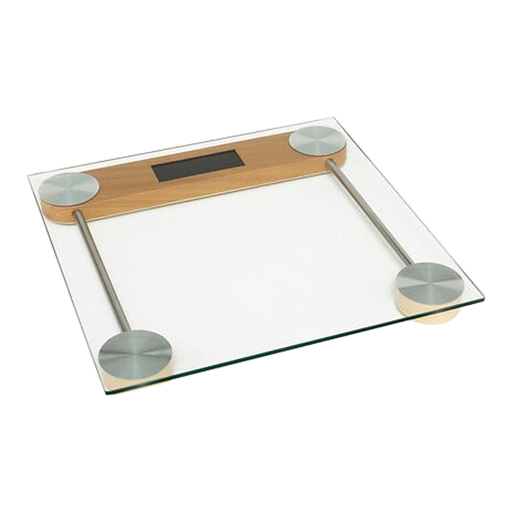
Why this product suits this profile: This compact digital bathroom scale is suitable for users who only want to measure their weight and do not need app connectivity or body analysis features.
The product details clearly state that body analysis and device connectivity are not included. This means buyers do not pay for additional features they will not use.
28 × 28 cm, digital weight display and a maximum weight capacity of 180 kg; the surface is made from glass, stainless steel and ABS plastic.
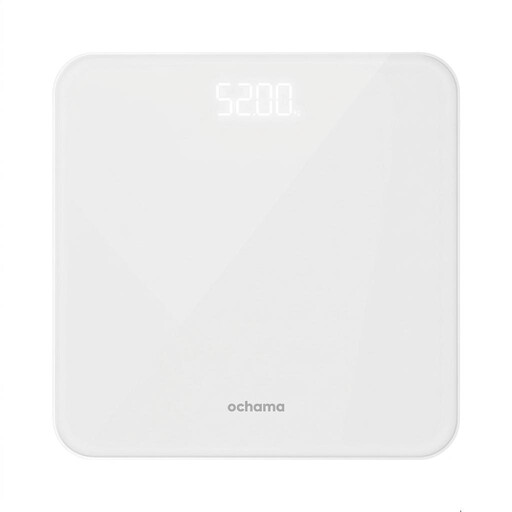
Why this product suits this profile: This model combines a 5 mm tempered glass platform with a high-contrast LED display and is designed for daily weight monitoring at home.
The maximum weight capacity of 180 kg and the platform thickness are clearly specified. This makes it easier to check the details before buying and avoids uncertainty about the suitable load.
Dimensions of 260 × 260 × 24 mm, LED display, 5 mm glass platform and, according to the product details, up to 180 days of battery life.

Why this product suits this profile: This model is aimed at households with several users and families who want to use baby or pet modes and track additional body metrics in an app.
The product data states the limitations of the BIA function and the maximum weight capacity of 200 kg. This lets you check in advance whether the additional measurements and weight capacity suit your household.
25 measurements, up to 10 local user profiles, baby and pet mode, Bluetooth connectivity and a 300 × 300 mm ITO glass platform.
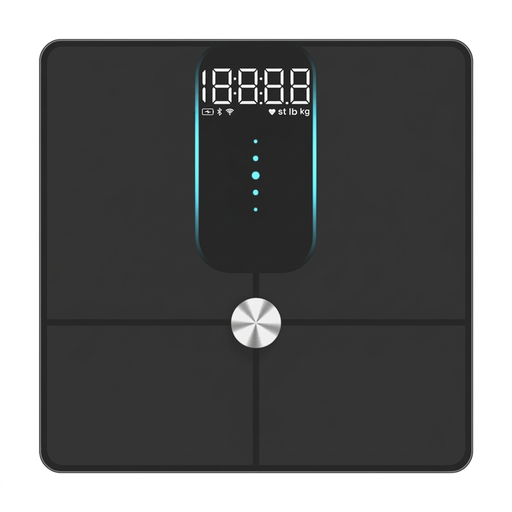
Why this product suits this profile: Users following a training plan can record their weight and other body metrics in the app and monitor their progress over multiple readings.
The connectivity technology and the required Lefu-Health app are specified in the product details. Buyers can therefore check in advance whether a smartphone, Bluetooth and 2.4 GHz Wi-Fi are available.
25 body metrics, Bluetooth 5.0 plus Wi-Fi, 0.05 kg increments and a maximum weight capacity of 180 kg.
We have put together a complete, regularly updated list of products that fully meet these strict selection criteria and the safety regulations applicable in the EU.
For comparable readings, the digital bathroom scale should always be kept in the same place. A hard, level and dry floor is ideal. After moving the scale, brief initialisation may be required: activate the scale, step off it again and wait until the display shows zero.
When weighing yourself, stand still with both feet centred on the platform. Wet feet or a damp glass surface increase the risk of slipping. For monitoring trends, it is best to follow a consistent routine, such as weighing yourself in the morning before breakfast. Body analysis readings should not be interpreted in isolation.
A soft, dry or slightly damp cloth is usually all that is needed for cleaning. Aggressive cleaning products, large amounts of water and immersing the scale in liquid can damage the glass, electronics or battery compartment.
The display resolution may be 0.05 kg, for example. However, the comparability of readings also depends on the floor surface, standing position, battery condition and measurement conditions. For daily weight monitoring, consistent conditions are more important than the smallest possible stated increment.
This depends on the model, battery type, display and frequency of use. Basic scales usually switch off automatically. With connected body fat scales, consumption may be higher because of Bluetooth or Wi-Fi synchronisation. Remove the batteries before storing the scale for an extended period to prevent damage caused by leakage.
That depends on what you want to use it for. For simply monitoring your weight, a digital bathroom scale without an app is sufficient. If you want to record training or weight trends, user profiles and additional readings can be beneficial. Body analysis is intended as a guide for personal use, not for medical diagnosis.