
Lieferung heute & morgen

Qualitätsgarantie

Willkommens-Angebote freischalten: KOSTENLOSE Lieferung | Bis zu 80 % RABATT | Kostenlose 30-Tage-JoyPlus-Testphase
App herunterladen
A digital thermometer for babies and adults should provide a quick result, be easy to use and work reliably in everyday family life. However, attention-grabbing marketing claims do not always lead to the right purchasing decision. What matters is not having as many features as possible, but choosing a measurement method suited to your needs, with a clear display and straightforward operation.
The Joybuy Product Recommendation Officer selection therefore takes practical criteria for families, adults and carers into account. Product details are taken from the relevant retailer or manufacturer information and should be checked against the current instruction manual before purchase.
Many infrared thermometers display the result within around one second, according to the product description. However, this does not mean that every reading is automatically comparable. Distance, angle, movement, perspiration on the forehead and the ambient temperature can all affect the result.
A contactless thermometer should therefore provide clear information about the measuring distance and how to use it. Positioning aids, distance sensors or easy-to-understand symbols can be more useful in everyday life than an especially large number of features.
A fever alert with an acoustic signal or colour display is a guide only. Green, orange or red indicators are no substitute for medical assessment. A baby thermometer with an age display does not provide a diagnosis either.
For unusual, contradictory or persistent readings, you should follow the instructions and seek medical advice where appropriate. A thermometer is designed for monitoring temperature at home, not for making an independent diagnosis.
A 3-in-1 thermometer or 6-in-1 thermometer can measure body, object, liquid and room temperatures. However, measuring milk, bath water or room temperature is not automatically equivalent to measuring body temperature. Depending on the device, the modes use different settings and measuring distances.
Before buying, it should be clear whether you really need a room temperature measurement or milk temperature measurement function. For body measurements only, a simpler device may be easier to use.
A forehead thermometer usually measures without direct skin contact, making it suitable for sleeping children or quick checks. An ear thermometer is positioned at the ear canal. Correct positioning is particularly important for babies and toddlers; the manufacturer’s age and usage instructions must be followed.
For families, a device with several measurement methods can offer flexibility. If you mainly want to take readings at night, you should also look for a silent mode.
A stated measuring time of around one second is convenient, but on its own says little about how comparable the readings are. The following are important:
Some models have a distance sensor or positioning aid. These features can reduce user errors, but do not replace the instructions.
A digital thermometer with memory can store previous readings. Depending on the model, specifications may include 7, 20, 32 or 35 memory positions, for example. This makes it easier to keep track when several people in the household are being measured.
An alert should also be configurable. A silent thermometer is practical when measuring sleeping babies, while a colour display helps you identify results quickly. Also check whether batteries are included, which battery size is required and whether the device switches off automatically.
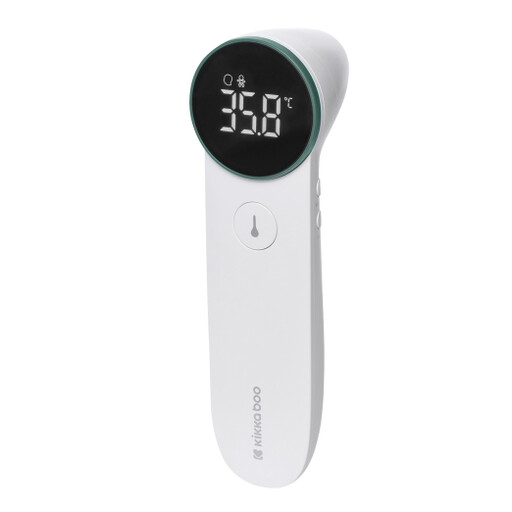
Why this product suits the profile: This model offers forehead, ear and object/room measurements, as well as contactless operation. With 20 memory positions and automatic switch-off after 10 seconds, it covers the basic requirements of a family household.
The measurement modes are clearly separated. This helps prevent object or room temperature from being mistaken for body temperature.
Three measurement modes, LED display, 20 memory positions, two AAA batteries and BPA-free ABS housing according to the product details.

Why this product suits the profile: This model combines contactless and contact forehead measurement with a positioning aid. The Age Precision display matches the colour indicator to different age groups.
PositionCheck with target light, distance sensor and on-screen instructions addresses the common source of errors caused by incorrect positioning.
3-in-1 measurement for body, liquids and food, colour display, silent mode and a measuring time of approximately two seconds according to the product description.
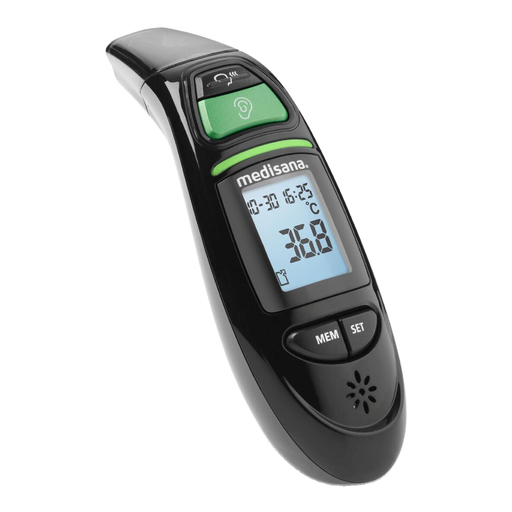
Why this product suits the profile: This device is designed for households that want to measure surface, liquid and room temperatures as well as body temperature.
The six designated measurement ranges make it clear that object, liquid and room temperature are separate applications.
Forehead and ear measurement, surface, liquid and room temperature modes, date and time display, plus a visual fever alert according to the product description.
We have put together a complete, regularly updated list of products that fully meet these strict selection criteria and the safety regulations applicable in the EU.
This depends on the type of device. With a forehead thermometer, maintain the distance specified in the instructions; with an ear thermometer, the probe must be positioned correctly at or inside the ear canal. Babies should remain as still as possible during the measurement. If the result is unclear, repeating the measurement according to the instructions may be helpful.
The actual service life depends on battery care, cleaning, storage and mechanical stress. A general figure in years is therefore not reliable. Check that the probe is intact, the display remains easy to read and the device is tested regularly. Manufacturer support or warranty terms may provide further guidance.
You will generally need to pay for replacement batteries. Some ear thermometers require disposable probe covers, while models with a fully enclosed probe do not need such filters, according to the product details. It is therefore worth checking the contents, cleaning instructions and required accessories before buying.