
Lieferung heute & morgen

Qualitätsgarantie

Willkommens-Angebote freischalten: KOSTENLOSE Lieferung | Bis zu 80 % RABATT | Kostenlose 30-Tage-JoyPlus-Testphase
App herunterladen
A digital thermometer for babies and adults belongs in many home medicine cabinets. The choice ranges from classic digital fever thermometers and contactless forehead thermometers to multifunctional infrared thermometers for measuring ear, forehead, milk and bath-water temperatures. However, the differences are not limited to price.
If you base your decision solely on claims such as “one-second readings” or “clinically tested”, you can easily overlook important details. The key factors are the intended measuring method, correct use and features that suit your family’s everyday needs.
A result in around one second is convenient, but on its own says nothing about whether the measuring method is right for you. An ear thermometer is positioned differently from a forehead thermometer. With babies, movement, sweat on the forehead or an incorrect distance from the sensor can affect the result. A classic thermometer with a flexible tip takes longer, but may be the more suitable option for certain measuring sites.
Additional modes for room, surface or liquid temperatures are useful if you regularly need to check milk, bath water or room temperature. They are not essential for measuring body temperature alone. Before buying, make sure it is clear whether the device can actually switch between body mode and object mode, and what measuring distances the instructions specify.
A thermometer with a fever alert can indicate a preset threshold with an audible signal, vibration or colour display. However, this value is a guide, not a diagnosis. Interpretation depends on factors including the measuring site, age, time of day and state of health. If you are unsure or symptoms are concerning, seek medical advice.
A contactless thermometer is practical for sleeping children, as their forehead can be measured without touching them. An ear thermometer measures with a small probe in the ear canal and requires correct positioning. Therefore, check whether the model is specifically intended for babies, children and adults, and whether the instructions describe the relevant measuring site.
A classic digital fever thermometer with a flexible tip can be used under the tongue or in the armpit, provided this is specified in the instructions. These devices are often compact and usually require just one button cell.
A display in 0.1 °C increments makes it easier to read small changes. The stated measuring range is also important. According to the product information, for example, the Treesmile T11 covers 32.0 to 42.9 °C. Values such as “±0.1 °C” should only be considered in connection with the stated measuring range and the relevant conditions.
A large LCD or LED display can be helpful at night and for older people. A switchable display between Celsius and Fahrenheit is practical when travelling.
A memory function helps you compare several readings over time. The available memory capacity varies considerably: some models store 7 readings, while others store 20, 32 or 35. A silent thermometer is useful when taking readings from sleeping babies. Also check whether only the probe or the entire device may be cleaned. Infrared devices should generally not be immersed in water.
For medical thermometers, check the intended purpose, manufacturer details and existing markings such as CE. CE marking is not a substitute for correct use, nor does it guarantee that every model is suitable for every measuring situation.
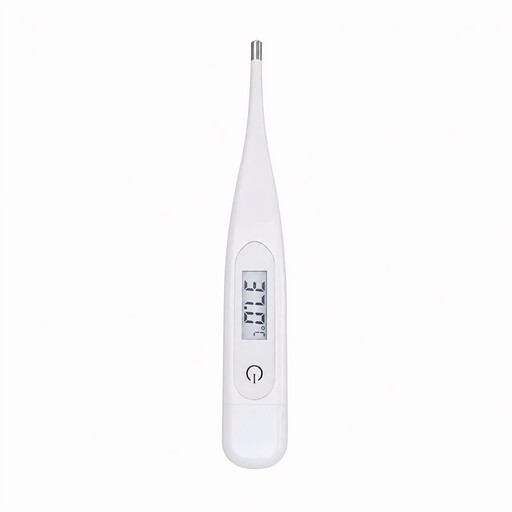
Why this product suits this profile: Its compact pen-style design is intended for basic body-temperature readings, making it suitable for the home medicine cabinet or your travel bag.
It does away with unnecessary extra modes and instead specifies the measuring range, resolution and error margins in the product information.
Display in 0.1 °C increments, Celsius/Fahrenheit switching and a mercury-free design.
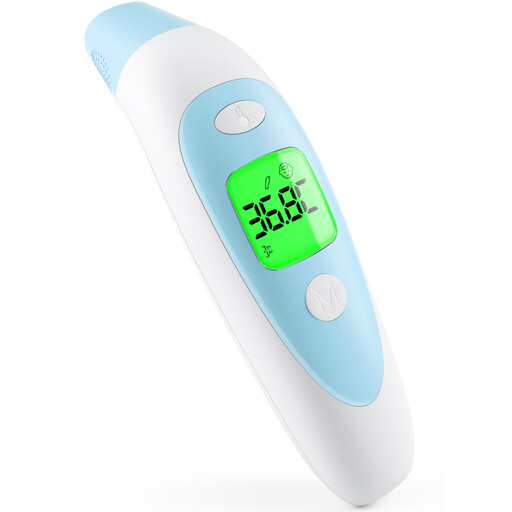
Why this product suits this profile: For households looking to combine ear, forehead and object measurements in one device, this 3-in-1 thermometer offers several clearly separated modes.
The product information explicitly lists the memory capacity, fever alert, silent mode, and CE and ISO certification.
32 memory readings, switching between °C and °F, and measurement of body, object and room temperature according to the product description.
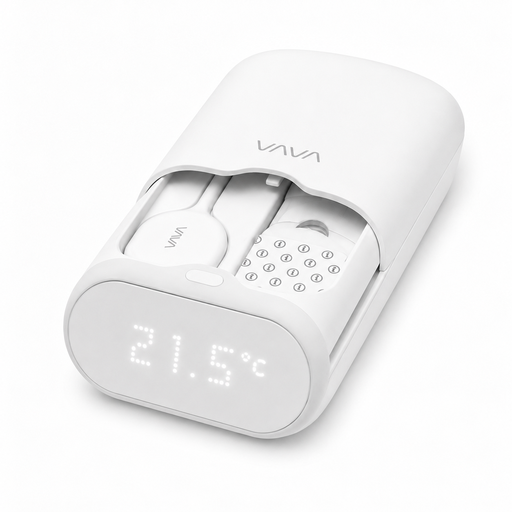
Why this product suits this profile: The armpit sensor sends readings to a separate LED display and is designed for rest periods when individual readings should cause as little disturbance as possible.
The system is designed not just for taking a single quick reading, but also alerts you to connection interruptions, a detached sensor and a low battery level.
Up to 24 hours of sensor operation, a stated wireless range of up to 15 metres and USB-C charging according to the product description.
We have put together a complete, regularly updated list of products that fully meet these strict selection criteria and the safety regulations applicable in the EU.
That depends on the device and the intended measuring site. Follow the manufacturer’s instructions precisely and, if necessary, repeat an unusual reading using the same method. A contactless forehead thermometer should be positioned correctly and used at the specified distance. If you have health concerns, a medical professional is the right person to contact.
Its service life depends on the battery, sensor, cleaning and storage. Replace the batteries as soon as the display becomes faint or readings appear irregular. Protect the device from moisture, knocks, direct sunlight and extreme temperatures. If it shows visible damage, it should no longer be used.
For contactless devices, the main ongoing cost is usually replacement batteries. Some models use AAA batteries, while classic pen-style thermometers often use an LR41 button cell. Disposable probe covers or single-use patches may incur additional costs. Therefore, check the contents of the package and the required consumables before buying.