
Lieferung heute & morgen

Qualitätsgarantie

Willkommens-Angebote freischalten: KOSTENLOSE Lieferung | Bis zu 80 % RABATT | Kostenlose 30-Tage-JoyPlus-Testphase
App herunterladen
A digital torque wrench displays the applied torque value directly and can alert you with an audible, visual or vibration signal when the target value is reached. This is particularly useful when tightening threaded connections on vehicles, bicycles or machinery to the manufacturer’s specifications.
However, not every digital model is suitable for every application. A range that is too high can be impractical for small bicycle bolts, while a model with too low a maximum value is unsuitable for wheel nuts. Claims such as ‘high accuracy’ or ‘professional’ should also be checked against specific data before you buy.
A torque wrench covering 4.2 to 85 Nm is suitable for many jobs on bicycles, motorcycles and smaller vehicle components. However, this range may be too limited for wheel nuts or larger suspension bolts. Conversely, a model covering 17 to 340 Nm is generally less suitable for delicate clamping connections on bicycles.
The key is to ensure that the required torque value falls as far as possible within the stated working range. The values given in the vehicle or bicycle handbook take priority over general recommendations.
A 3/8-inch torque wrench is often suitable for medium-sized sockets and work around the engine or suspension. A 1/2-inch torque wrench is designed for larger sockets and is often used for wheel bolts or higher torque values. For small bicycle and electronic components, 1/4 inch or a suitable adapter may be more appropriate.
You should therefore check your existing sockets, extensions and adapters before buying. An attractive low-price offer loses its practical advantage if you also need to purchase several incompatible accessories.
A torque wrench with LED display makes readings easier to see. An audible signal or vibration indicates that a preset value has been reached. These functions make the tool easier to use, but they do not replace correct settings, consistent force application or compliance with the manufacturer’s specifications.
When you see a claim of ±2 per cent accuracy, you should also check whether it applies to the tightening direction, the entire measurement range and a particular testing procedure. Product specifications should be understood as information provided by the manufacturer or supplier, not as a general guarantee for every application.
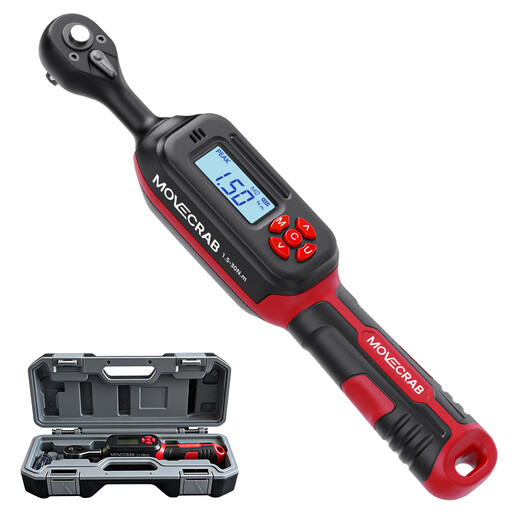
Why this product suits this profile: The low measurement range is designed for smaller threaded connections and may be suitable for selected bicycle and precision engineering tasks. According to the supplier, this model offers ±2 per cent accuracy clockwise.
The clearly defined measurement range helps you avoid buying an oversized automotive model for small bolts. The multi-unit display makes it easier to check different specifications.
According to the supplier: Track, Peak and Preset modes, storage for up to 500 values, plus vibration, audible and LED alerts.
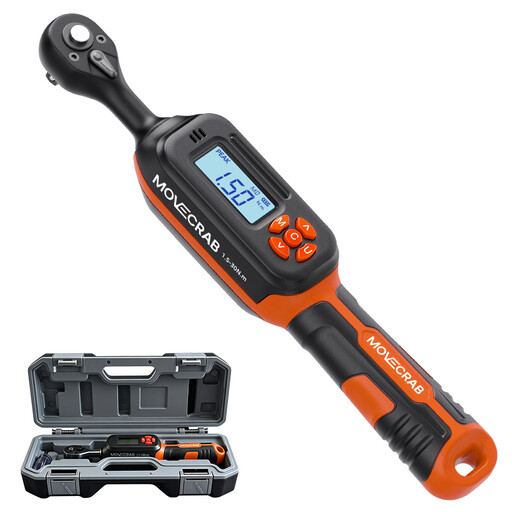
Why this product suits this profile: The medium measurement range and 3/8-inch drive are suitable for a wide range of jobs on motorcycles, bicycles and cars. According to the supplier, clockwise accuracy is ±2 per cent.
The specific measurement range makes the choice more transparent than a blanket claim that it is suitable for all vehicles. Before buying, you should compare the torque specifications for the relevant bolts.
According to the supplier: LED display, four measurement units, ten preset values, Track and Peak modes, plus a three-stage alert with light, sound and vibration.
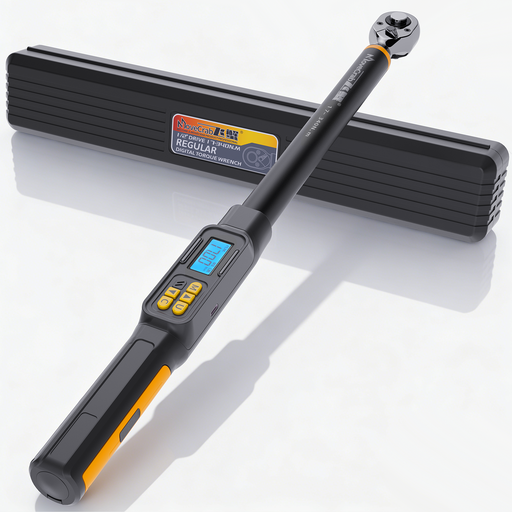
Why this product suits this profile: The larger measurement range is designed for automotive repairs, larger threaded connections and recurring work in a workshop or garage.
The 1/2-inch drive and higher range prevent a small model from being used outside its specifications when applying high tightening torques.
According to the supplier: four measurement units, ten memory slots, Peak and Track modes, plus audible, visual and haptic warnings.
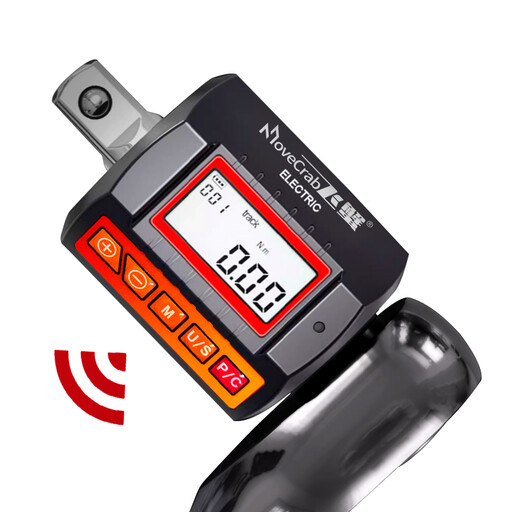
Why this product suits this profile: This adapter is a practical choice if you already have a ratchet or socket system and want to use different drive sizes.
The included 3/8 and 1/4-inch adapters reduce the risk of having to buy a second measuring tool simply because you use a different socket size.
According to the supplier: ±2 per cent clockwise, ±2.5 per cent anticlockwise, three operating modes, audible and visual alarm, and storage for up to 1,000 values.
We have put together a complete, regularly updated list of products that fully meet these strict selection criteria and the safety regulations applicable in the EU.
That depends on the particular threaded connection. A 3/8-inch model with a medium measurement range may be sufficient for smaller components. A 1/2-inch torque wrench is often required for wheel bolts and higher values. The vehicle manufacturer’s specifications are the deciding factor.
There is no single fixed service life. It depends on use, storage, battery condition, impacts and overloading. The tool should not be used beyond its stated range and should be checked regularly for the display, ratchet head and general operation.
This cannot be said as a general rule. Digital models provide a direct readout along with additional alarm and memory functions. Whether the measurement is sufficiently accurate depends on the stated tolerance, tightening direction, measurement range and correct use. The key is to compare the tool with the specific technical data.