
Lieferung heute & morgen

Qualitätsgarantie

Willkommens-Angebote freischalten: KOSTENLOSE Lieferung | Bis zu 80 % RABATT | Kostenlose 30-Tage-JoyPlus-Testphase
App herunterladen
By the Joybuy Product Recommendation Officer, 29 August 2026
Finding the right night light for a child's room is often harder than it seems. It should be calming, take away the fear of the dark, and help parents with night-time tasks like feeding or changing. But the market is flooded with products that often over-promise and under-deliver. Many parents only realise after buying that the light is too bright, the controls are impractical, or the material is unsuitable for little hands. This guide highlights the most common pitfalls and explains which core features you should look for to make an informed decision.
Before choosing a model, it helps to know the typical problems that arise with low-quality products. These not only lead to frustration but can also negatively affect your child's sleep.
To avoid the problems mentioned above, focus on the following three technical features. They are crucial in determining the night light's functionality and safety.
A crucial feature is stepless dimming. Unlike models with only two or three fixed brightness levels, it allows you to precisely adjust the light intensity for any situation—from a barely perceptible glow to a guiding light. The ideal light colour for a soothing light for babies is in the warm white range (approx. 2200 to 3000 Kelvin), as this light is perceived as calming and least disrupts the sleep cycle. A colour-changing night light can be a playful feature for older children, but it should be possible to lock it to a warm colour for the night.
There are two main options here: stationary models with a mains plug and flexible, battery-powered lights. A rechargeable night light offers maximum flexibility. It can be taken to bed for feeding, placed on the changing table, or carried by the child on their way to the toilet. Pay attention to the battery life, which can often exceed 100 hours at low brightness, as well as a modern charging port like USB-C. Stationary models are a good choice if the light has a fixed place in the child's room and needs to be constantly available.
A night light with a timer is an extremely practical feature. It can be set to turn off automatically after 30, 60, or 90 minutes once the child has fallen asleep. This saves energy and ensures an undisturbed deep sleep phase in complete darkness. A remote control can also add convenience, allowing parents to adjust the light from the doorway without disturbing their sleeping child.
Based on the criteria above, we have identified products that are well-suited for specific user profiles.
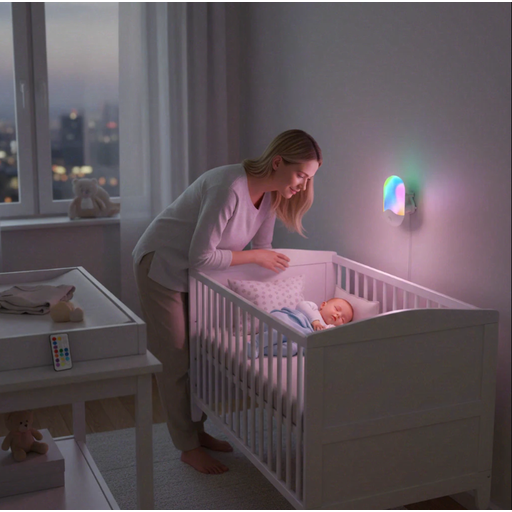
Why This Fits Their Persona: Ideal for parents looking for a permanently installed light source in the child's room that can be controlled remotely. Perfect for adjusting the brightness or turning off the light without having to enter the room.
The remote control allows for precise control of brightness and colour, bypassing the problem of impractical operation in the dark. The integrated timer function prevents the light from staying on unnecessarily all night.
Remote control for convenient operation; timer function for automatic shut-off; mains-powered for constant availability.
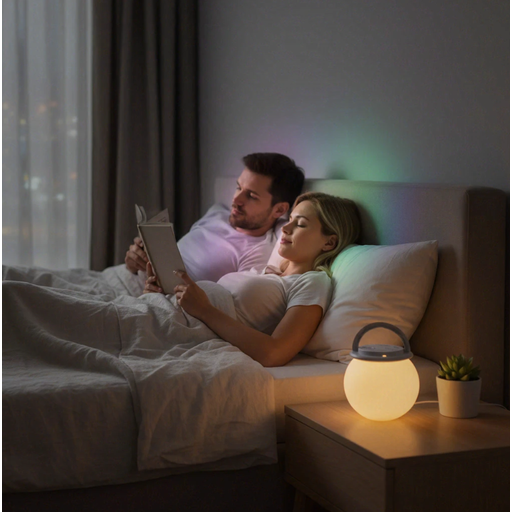
Why This Fits Their Persona: Perfect for parents who need a portable light for night-time feeding or changing. Thanks to its rechargeable battery, it can be taken anywhere, even by the child if they get up at night.
The stepless dimming via touch control solves the problem of lights being too bright. The robust ABS housing is safe for children. As a rechargeable night light, it eliminates dangerous access to disposable batteries.
Rechargeable and portable; stepless dimming for perfect brightness; long battery life in dimmed mode.
We have compiled a complete, real-time list of products that fully satisfy these strict selection criteria and UK safety regulations.
The battery life depends heavily on the set brightness. At minimum brightness, many models can last for 100 hours or more. At maximum brightness, the runtime is reduced to about 8 to 12 hours. A look at the battery capacity, specified in milliampere-hours (mAh) in the product details, provides a good indication.
Blue or cool white light can suppress the body's production of the sleep hormone melatonin, thus disrupting the process of falling asleep. For a soothing light for babies or a sleep aid light for children, a warm white light that resembles candlelight is therefore recommended. A colour-changing night light should be set to a warm hue like red or orange for bedtime.
The benefit of a night light varies with age. For parents, a dimmable nursing light is a great help right from birth. Children often develop a fear of the dark between the ages of two and three, especially when transitioning to their own room. From this point on, a gentle night light can provide a sense of security and promote independence when the child wakes up at night.