
Lieferung heute & morgen

Qualitätsgarantie

Willkommens-Angebote freischalten: KOSTENLOSE Lieferung | Bis zu 80 % RABATT | Kostenlose 30-Tage-JoyPlus-Testphase
App herunterladen
The right ceiling light can completely transform a room's atmosphere. A dimmable LED ceiling light promises maximum flexibility—from bright task lighting to a cosy evening ambience. However, the market is flooded with models whose promises often fall short in practice. Before you make a decision, it's crucial to understand the common pitfalls that can lead to disappointment and unnecessary expenses.
This guide will show you what to look for when making your selection to find a light that meets your needs not just today, but for years to come.
Many buyers are drawn in by appealing product images and marketing promises, but overlook crucial technical details. This often leads to three recurring problems.
To avoid these mistakes, you should focus on three objective criteria. These will help you to factually assess a light's performance and suitability.
A lamp's brightness is measured in lumens (lm), not in watts. Watts only indicate energy consumption. A modern LED light produces a lot of brightness with very few watts. The following values serve as a guide for general illumination:
For a 20 m? living room, a light with at least 2000 lm would be a good starting point. A dimming function gives you the freedom to adjust the brightness as needed. This ensures that the ceiling light in the bedroom provides a soft glow, while the LED kitchen light offers clear visibility for cooking.
The light colour is specified in Kelvin (K) and has an enormous impact on the room's atmosphere. A ceiling light with colour-changing capabilities allows you to flexibly shape the lighting mood.
A light that covers a range from 3000 K to 6000 K gives you full control, making it a versatile modern living room lamp.
The design should not only be aesthetically pleasing but also functional. A black LED ceiling light can create a strong visual accent in modern interiors. A round light, such as a 40cm round ceiling light, often distributes light very evenly and has a harmonious effect. Ensure that the size of the light matches the proportions of the room. A light that's too small will look lost in a large room, while one that's too bulky can overwhelm a small space.
Based on these objective criteria, we have identified a few models that represent a considered choice for different needs and rooms.
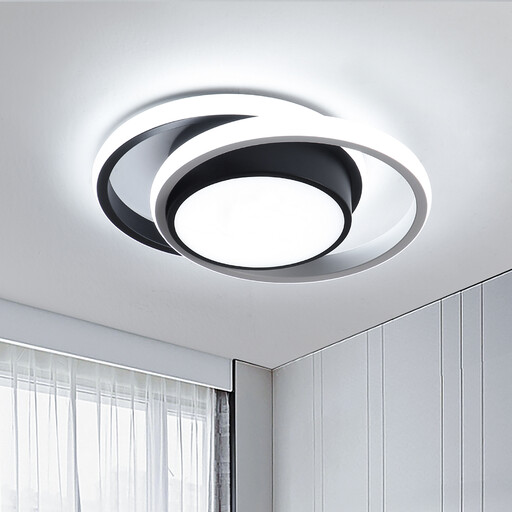
Why it's a good fit: Ideal for living rooms or bedrooms where the lighting mood changes frequently—from bright light for reading to warm, dimmed light for a relaxing evening.
Directly addresses the brightness and colour temperature traps with stepless dimming and an adjustable colour range from 3000K to 6000K via remote control.
Full control over brightness and colour temperature via remote. The modern, black design with a 40 cm diameter fits well with many interior styles.
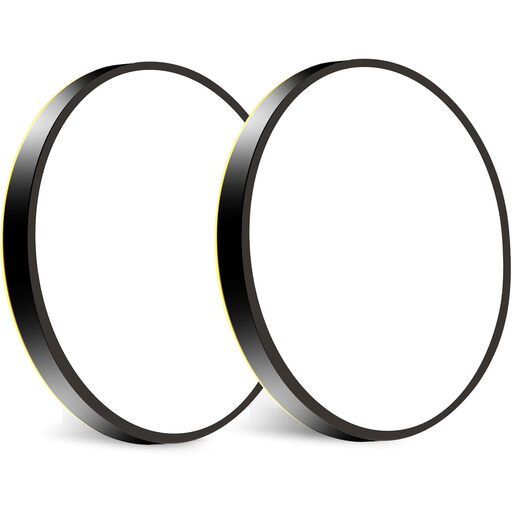
Why it's a good fit: Perfect for bathrooms, kitchens, or covered balconies where protection from moisture and dust is more important than a dimming function.
Avoids the mistake of installing an unsuitable light in a damp environment. The IP54 certification ensures protection against splashing water and dust ingress.
The IP54 rating ensures durability and safety in damp areas. The set of 2 offers a uniform and cost-effective solution for multiple areas.
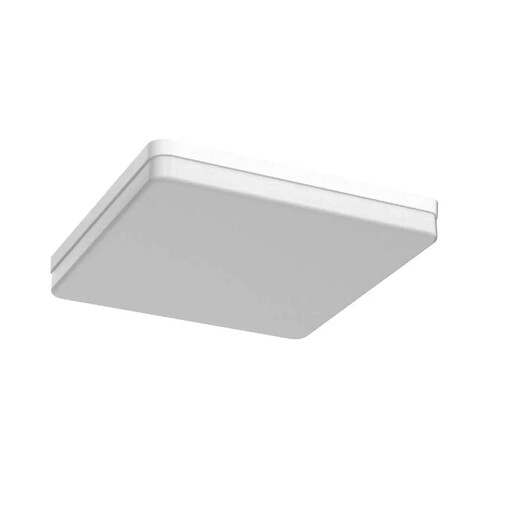
Why it's a good fit: For users seeking an unobtrusive yet bright lighting solution for hallways, home offices, or kitchens, who also value a clean, modern design.
Avoids the trap of superfluous features. It focuses on the essentials: excellent, uniform illumination with a pleasant neutral white colour temperature (4500K).
The ultra-slim design blends seamlessly into the ceiling. The high luminous efficacy of 3300 lumens at only 36 watts ensures brightness and energy efficiency.
We've compiled a complete, up-to-date list of products that fully meet these strict selection criteria and UK safety regulations.
1. How many lumens do I need for my living room? A good rule of thumb for living spaces is to plan for 100 to 150 lumens per square metre. For a 25 m? living room, that would be 2,500 to 3,750 lumens. With a dimmable light, it's wise to aim for the upper end of this range. This gives you enough brightness for activities like reading or cleaning, and you can simply dim the light down for a cosy atmosphere.
2. Can I install an LED ceiling light myself? Many modern LED ceiling lights are designed for easy installation on existing ceiling connections. The process is often straightforward. However, safety always comes first. Before starting any work, be sure to turn off the circuit breaker for the relevant circuit. If you are unsure or have no experience with electrical installations, hiring a qualified electrician is always the safest and recommended course of action.
3. What does colour temperature mean for an LED lamp? The colour temperature, measured in Kelvin (K), describes the colour of the white light. Low Kelvin values (e.g., 2700 K) produce a warm, yellowish light known as "Warm White," which creates a cosy mood. Medium values (approx. 4000 K) correspond to "Neutral White," often used in offices or kitchens. High values (from 5300 K) produce a cool, bluish light called "Daylight White," which promotes concentration.