
Lieferung heute & morgen

Qualitätsgarantie

Willkommens-Angebote freischalten: KOSTENLOSE Lieferung | Bis zu 80 % RABATT | Kostenlose 30-Tage-JoyPlus-Testphase
App herunterladen
Choosing the right ceiling lighting is crucial for the atmosphere and functionality of any room. Dimmable LED recessed spotlights offer a modern and flexible solution. However, the market can be confusing and is filled with technical pitfalls that can quickly lead to a poor purchase. As your Joybuy Product Recommendation Officer, I'll help you understand the key features and avoid common mistakes.
Many buyers focus on price or design, overlooking the technical details that determine longevity and performance. Three mistakes are particularly common:
These problems can be avoided by checking the right parameters before you buy.
To make an informed decision, let clear technical specifications—not advertising promises—be your guide. Here are the three most important criteria for your selection.
The "dimmable" label alone is not enough. Modern dimmable LED recessed spotlights typically require a trailing-edge dimmer (identifiable by the "RC" symbol). Older leading-edge dimmers (symbol "RL") are often designed for traditional incandescent bulbs and can cause issues like flickering with LEDs. Before purchasing, check which dimmer type is recommended or whether you need to replace an existing one. Many products also work at 100% brightness without a dimmer.
The IP (Ingress Protection) rating indicates how well a light fixture is protected against the entry of foreign objects and water.
Modern lighting should adapt to your needs, not the other way around.
Based on the criteria above, we have identified several products that are particularly well-suited for specific user profiles.

Why This Fits Their Persona: Ideal for DIY enthusiasts looking for a flexible and straightforward solution for various rooms like the bathroom, kitchen, or living room. The set offers excellent value for money for outfitting an entire room.
Thanks to its 3CCT function, it bypasses the inflexible lighting trap. The IP44 certification makes it safe for damp rooms, preventing failures from water spray.
Very low-profile design (30 mm) for easy installation. Direct 230V connection without a transformer. Dimmable with compatible dimmers.
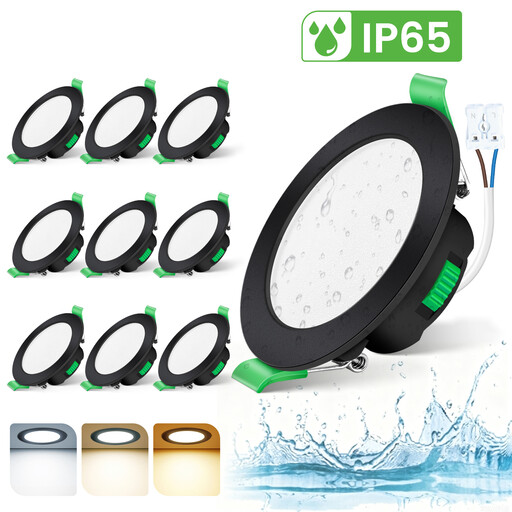
Why This Fits Their Persona: Perfect for homeowners who value a cohesive design (black finish) and maximum technical safety. Suitable for demanding installation scenarios, including under eaves or directly above a shower.
The high IP65 protection rating virtually eliminates moisture damage. The combination of dimmability and 3CCT colour temperature selection offers full control, preventing the other two common mistakes.
Extremely shallow installation depth of only 29 mm. Housing made of aluminium and polycarbonate for durability and good heat dissipation.
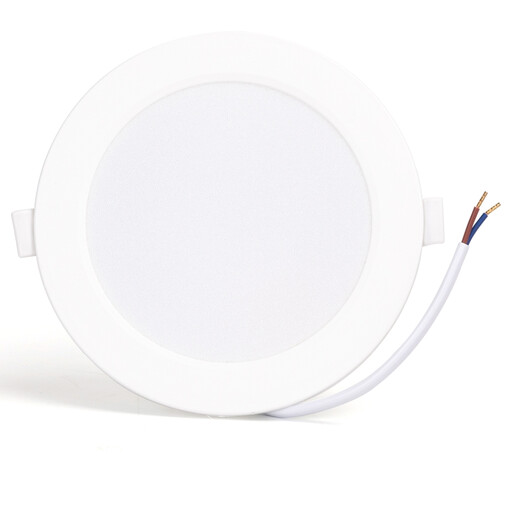
Why This Fits Their Persona: For tech enthusiasts who want to fully integrate their lighting into their smart home system (e.g., via a hub and app). Offers maximum control over brightness, colour (RGB), and colour temperature (CCT).
Control via an app completely bypasses the problem of incompatible wall dimmers. The RGB+CCT function provides infinite colour and white-tone options, solving the inflexible lighting problem in the most advanced way.
Voice control, schedules, and remote control (hub required). Bluetooth Mesh technology for a stable connection between multiple lights. Note: Only IP20 rated, making it suitable exclusively for dry indoor areas.
We have compiled a complete, up-to-date list of products that fully meet these strict selection criteria and German safety regulations.
For most dimmable LED recessed spotlights, a trailing-edge dimmer is recommended. Check the manufacturer's product description to ensure compatibility. Using the wrong type of dimmer is the most common cause of flickering or humming.
Yes, the majority of modern low-profile 230V ceiling spots are designed for direct connection to the mains electricity. An integrated driver converts the voltage internally, so no external transformer is needed. This simplifies installation and saves space in the ceiling.
As a general rule of thumb for uniform ambient lighting, you can plan for one spotlight per 1.5 to 2.5 square metres. However, this depends heavily on the light's brightness (lumens), beam angle, and the desired level of illumination in the room. For work areas like a kitchen island, you will need a higher density than for ambient lighting in a living room.