
Lieferung heute & morgen

Qualitätsgarantie

Willkommens-Angebote freischalten: KOSTENLOSE Lieferung | Bis zu 80 % RABATT | Kostenlose 30-Tage-JoyPlus-Testphase
App herunterladen
A dimmable bedside lamp with touch controls promises comfort and ambiance at your fingertips. However, the market is flooded with models whose real-world functionality often falls short of their marketing claims. Before making a decision, it's crucial to understand the common pitfalls that can lead to disappointment and unnecessary expense.
This guide focuses on the objective criteria that separate a great lamp from a subpar one, helping you make an informed choice.
Many buyers focus on design while overlooking technical flaws that only become apparent in everyday use. Pay close attention to these three points:
To avoid buyer's remorse, you should check three core technical parameters before purchasing. These are crucial in determining the functionality and longevity of your new lamp.
The quality of the dimming function is critical for user comfort.
For a versatile lamp in the bedroom, continuous dimming is generally the superior choice.
The colour of the light, measured in Kelvin (K), has a significant impact on a room's atmosphere.
Some modern table lamps offer the ability to switch between different colour temperatures. This flexibility allows a single lamp to be used for multiple purposes.
A modern table lamp should not only be visually appealing but also stable and secure. The material and construction of the base are decisive factors here. A heavy base made of metal (e.g., steel or aluminium) ensures high stability and prevents the lamp from tipping over easily if accidentally bumped. Models with a lightweight plastic base are often top-heavy and unstable. Look for solid craftsmanship, especially in designs like black and gold, where the quality of the surface finish determines its longevity.
Here are some recommendations tailored to different needs and priorities.
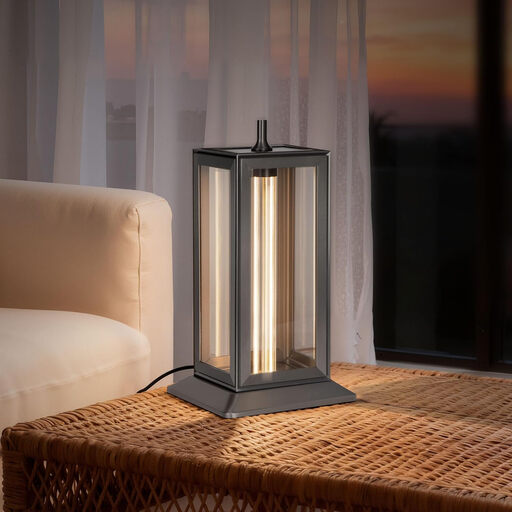
Why This Fits Their Persona: Ideal for users seeking an all-in-one solution. It combines a striking, modern design with maximum technical functionality for the bedside table or office.
This model offers true continuous dimming and three colour temperature modes. The integrated USB port is designed for charging modern devices, and the responsive touch sensor is built into the base.
Combines continuous brightness control with 3-step colour temperature adjustment. Features an integrated USB charging port that works even when the lamp is off.
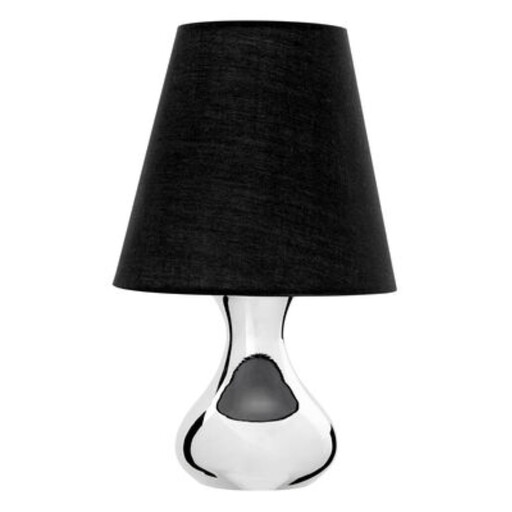
Why This Fits Their Persona: For users who prioritise timeless aesthetics and high-quality materials over extra technical features. A classic accent piece for the bedroom or living room.
This model intentionally omits touch electronics and USB ports. It relies on a classic switch and an E14 socket, which eliminates potential points of failure from the outset and ensures longevity.
High-quality material combination of a high-gloss chrome metal base and a conical fabric shade. Dimmability can be retrofitted by using an external dimmer or a smart bulb.
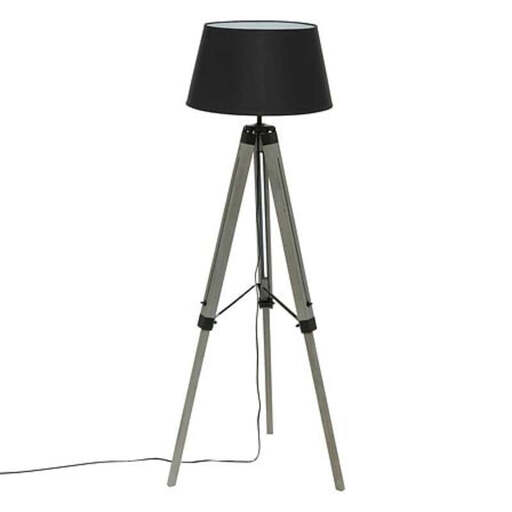
Why This Fits Their Persona: A floor lamp as a complement or alternative to the classic bedside lamp. Perfect for larger bedrooms or as part of a cohesive lighting scheme in the living area.
Focuses on one core function: stable, directional lighting. The standard E27 socket avoids complex electronics and gives the user the freedom to use a bulb of their choice (e.g., dimmable, smart, various colour temperatures).
The stable tripod design offers excellent stability. The adjustable lampshade allows you to direct the light precisely, making it ideal as a reading light next to an armchair or bed.
We have compiled a complete, up-to-date list of products that fully meet these strict selection criteria and safety regulations.
1. How long does an LED in a dimmable bedside lamp last? Integrated LED modules in high-quality lamps typically have a lifespan of 20,000 to 50,000 operating hours. With an average use of three hours per day, this equates to a lifespan of over 18 years. For lamps with replaceable bulbs, the lifespan depends on the specific bulb purchased.
2. Can I use a touch-controlled lamp with a switched outlet or smart plug? Generally, yes. However, note that the lamp requires a constant, minimal power supply to keep the touch sensor active. If you cut the power via the outlet, you will likely need to reactivate the lamp by touch after restoring power. It typically does not remember its last on-state.
3. Does dimming an LED lamp affect its power consumption? Yes, dimming an LED lamp directly reduces its power consumption. The lower the brightness is set, the less energy is required. Compared to traditional incandescent bulbs, the energy consumption of LEDs is significantly lower at every brightness level.