Households with chairs that have fixed upholstery
If the upholstery cannot be removed, first check whether it is suitable for wet cleaning.


First, check the care instructions for the specific dining chair: a machine that sprays and extracts water is only suitable if the upholstery can be cleaned with water. For individual stains, consider whether it comes with a suitable upholstery nozzle and how much effort it takes to set up. If you have several chairs, tank capacities, reach and machine maintenance become more important. If the cover is removable and the care instructions say it is machine washable, washing it may be an alternative to buying a stain remover.
If the upholstery cannot be removed, first check whether it is suitable for wet cleaning.
If you have several suitable chairs, details such as reach, tank capacities and the cleaning needed after use can help you work out what the process will involve.
If you plan to use the machine mainly after the odd party, weigh up the storage space and effort involved against having a removable, washable cover.
A good fit if: The chair has fixed upholstery that can be wet-cleaned, and you want to treat individual stains on small seats.
What to weigh up: Spraying and extraction do not replace checking the material or allowing the upholstery to dry.
A good fit if: You want to clean several suitable seats one after another, and the tank capacity, hose and cable lengths suit your cleaning area.
What to weigh up: More features can take up more space and mean extra cleaning afterwards. Tank capacity alone does not prove that a machine will give better results on a particular chair.
A good fit if: The specific cover is removable and its care instructions say it can be washed.
What to weigh up: This option is not available for all upholstered chairs; always follow the care instructions for the specific cover.
| Priority | What to check before buying | Who it matters most to |
|---|---|---|
| Material compatibility | The chair’s care label or manufacturer’s instructions; confirmation that water-based cleaning is allowed. | If I’m not sure whether my upholstery can be cleaned with water, I’ll check before choosing a machine. Shoppers who prioritise material compatibility are likely to make up around 33% of this buying group. |
| Targeted stain cleaning | A suitable upholstery nozzle, plus spray and extraction functions; cleaning solutions approved in the machine’s instructions. | For individual food or drink stains, I want to be able to use a suitable nozzle on the seat. Shoppers whose main priority is targeted stain removal are likely to make up around 27% of this buying group. |
| Cleaning several chairs | Compare the clean- and dirty-water tanks separately; check the hose, cable and accessories for the exact model variant. | If I have several suitable chairs, I want to know how often I’ll need to stop to refill or empty the machine. Shoppers looking to clean several seats one after another are likely to make up around 20% of this buying group. |
| Occasional use | Consider storage dimensions, tank removal and cleaning the tanks and hose; check whether the covers are removable. | If I only need the machine after the odd party, I want to factor in storage and cleaning up afterwards too. Shoppers who prioritise low effort for occasional use are likely to make up around 20% of this buying group. |
A machine’s stated cleaning surfaces do not tell you which cleaning methods are safe for the upholstery on your particular chair.
Check the chair’s care instructions before use. Don’t use steam just because the machine has a steam function.
The clean- and dirty-water tanks may have different capacities. If you’re cleaning several chairs, both affect how often you need to refill and empty the machine.
Compare the capacity of both tanks, as well as the hose and cable lengths for the exact model variant.
Machines vary in which cleaning solutions their instructions allow and how the tanks or hose should be cleaned after use.
Before buying, check the machine’s instructions, which cleaning solutions are permitted and how easy it is to access the parts that need cleaning.
Depending on the model and how you use it, you may also need to buy a suitable cleaning solution.
The notes below refer to the named models and product ranges. Suitability also depends on the care instructions for the specific chair upholstery.
According to BISSELL, the SpotClean HydroSteam Pro 3700N offers steam, wash and suction modes, along with two stain-removal brushes.
The StainStriker PX200EUT is a compact stain-remover alternative covered in a German product test.
The Clean It IN5011F0 and IN3010F0 differ in tank capacities and how they are designed for storage, among other things.
Philips describes the Stain Remover 3000 Series XW3192/11 as having a 3-in-1 nozzle for a range of soft surfaces.
The SE 3 Compact Home is a spray-extraction machine supplied with upholstery and crevice nozzles; the international article number given is 1.081-534.0.
Joybuy product options for cleaning stains from upholstered seats, provided the specific cover can be wet-cleaned.
 No image available
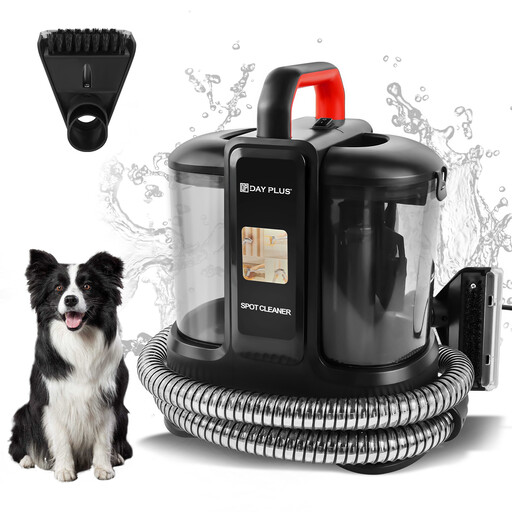
The spray and extraction function is relevant for seat covers that are suitable for wet cleaning.
Separate tanks: 1,2 l for clean water and 0,6 l for dirty water.
Supplied with a small and a large brush; 1,5-m hose and 4,25-m cable.
 No image available
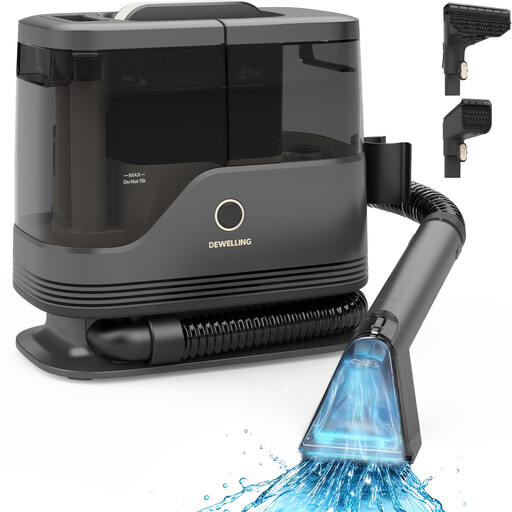
The spray and extraction function is designed for upholstery and sofas whose covers can be cleaned with water.
The description lists a standard nozzle and a wide nozzle, as well as separate clean- and dirty-water tanks.
Other stated specifications include a weight of 3,2 kg, a 1,15-m hose and a 5-m cable.
 No image available
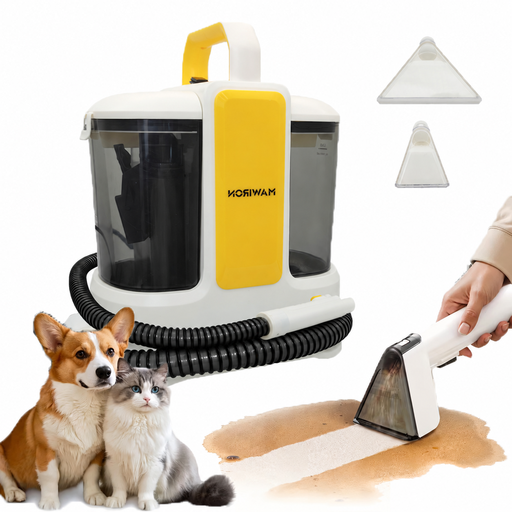
The described combination of spraying, brushing and extraction is intended for suitable upholstered surfaces.
Separate tanks with a capacity of 1,2 l for clean water and 0,8 l for dirty water; two brush heads.
The product description also mentions built-in storage for the hose, cable and brush heads.
 No image available
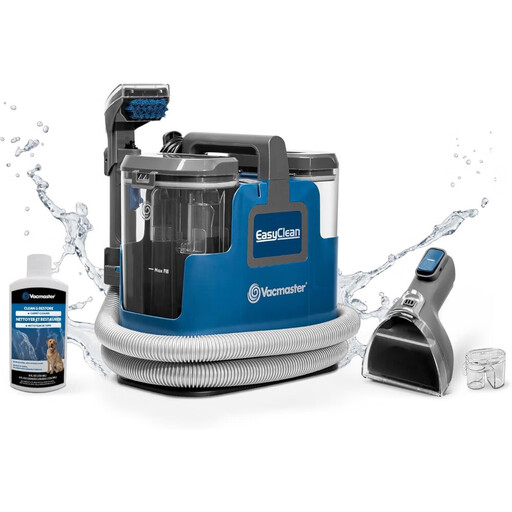
This model is described as a wet cleaner for upholstery and textiles; wet cleaning requires a cover that is suitable for it.
Specifications include a 500-W motor, a 1,8-m hose and a dual-tank system.
The description lists a weight of 3,4 kg and removable tanks.
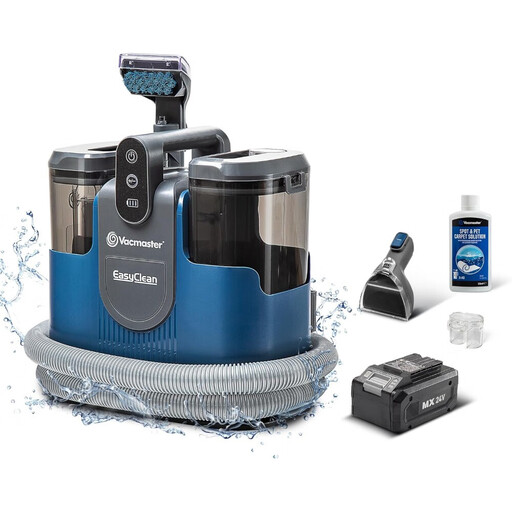 No image available
The description lists wet cleaning followed by extraction for suitable upholstery.
Separate tanks with a capacity of 1,6 l for clean water and 0,8 l for dirty water.
Cordless operation with up to 55 minutes’ runtime; a hose-cleaning tool is included.
No. The care instructions for the specific cover are what matter: Hoover distinguishes between water-based cleaning (W), solvent-based cleaning (S) and covers that must not be wet-cleaned (X), among other categories. An upholstery nozzle does not override these material restrictions.
First, check that the cover is suitable for the cleaning method you intend to use. If wet cleaning is allowed, use the machine as instructed, then clean the tanks and attachments or use the designated rinsing function. Don’t use the chair again until the cover is dry.
Not necessarily. IKEA Germany says that many upholstered dining chairs have removable, washable covers. Check the care instructions for your specific model to see whether this applies to your chair and how the cover can be washed.
For products covered by the relevant EU harmonisation rules, the CE marking and any required accompanying documents are relevant. The Federal Network Agency lists instructions for use and safety information in German among the points to check. A CE marking is not independent proof of cleaning performance.
For new goods in Germany, the seller is generally responsible under the statutory warranty, which lasts for two years from delivery; the consumer advice centre distinguishes this from a voluntary manufacturer’s guarantee. Online purchases are also generally covered by a right to cancel, usually within 14 days of receiving the goods.