
Lieferung heute & morgen

Qualitätsgarantie

Willkommens-Angebote freischalten: KOSTENLOSE Lieferung | Bis zu 80 % RABATT | Kostenlose 30-Tage-JoyPlus-Testphase
App herunterladen
The dining table is often the heart of the home—a place for shared meals, conversations, and social gatherings. However, choosing the right model can be a challenge. The vast array of sizes, materials, and styles makes the decision complex. This guide provides objective criteria and a selection of models to simplify your search for the perfect dining table for your kitchen or dining room.
Three key aspects can help you systematically narrow down your options: size, material, and functionality. A thoughtful decision ensures that the table not only looks great but also meets the demands of daily life.
The table's dimensions should be based on two factors: the size of the room and the number of people who will regularly use it.
A dining table for 4 people typically has a length of 120 cm to 140 cm. For larger households or frequent guests, a dining table for 6 people or more is a sensible choice, usually with a length of 160 cm and up. A smaller kitchen table can be a practical solution for a quick morning coffee, while a large dining room table sets the stage for festive occasions.
The material significantly influences the table's appearance and durability.
An extendable dining table is an extremely flexible solution. It has a small footprint for everyday use but can be easily expanded when needed to accommodate additional guests. Mechanisms like extension leaves or synchronized slides make it easy to operate.
Based on the criteria mentioned, we have curated a selection of models that are suited for different needs due to their specific features.
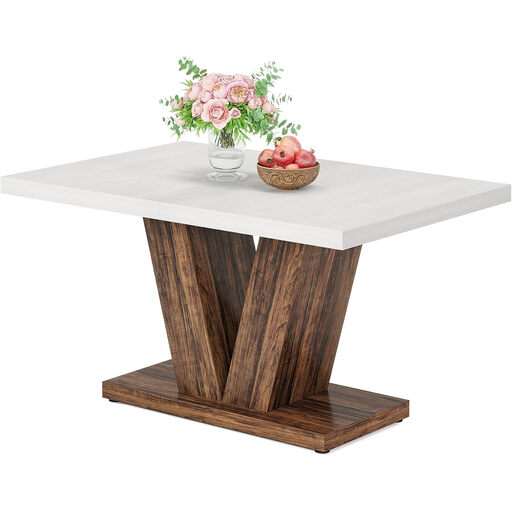
Why it stands out: This model combines an appealing farmhouse aesthetic with a thoughtful design. The triangular pillar base ensures high stability while providing plenty of legroom.
Advantages:
Who is it for? This table is a great choice for small families or couples looking for a stable and stylish table for daily use in smaller apartments or dining areas.
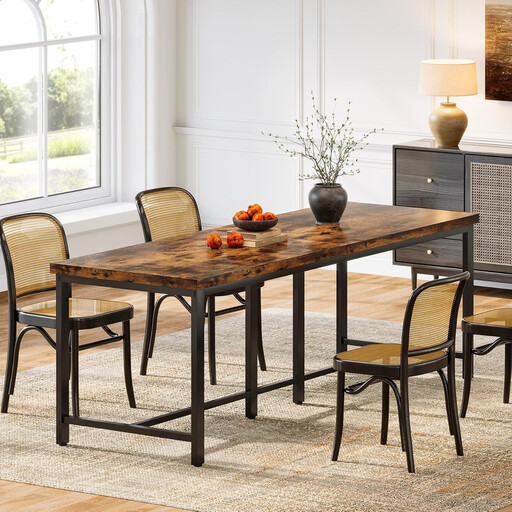
Why it stands out: With its generous 200 cm length and striking industrial style, this table is a statement piece. The combination of a rustic wood look and a black metal frame creates a modern yet inviting atmosphere.
Advantages:
Who is it for? Ideal for anyone who needs a lot of space—whether for large family dinners, dinner parties, or as a multifunctional table in a home office. The industrial style appeals to fans of urban and modern design.
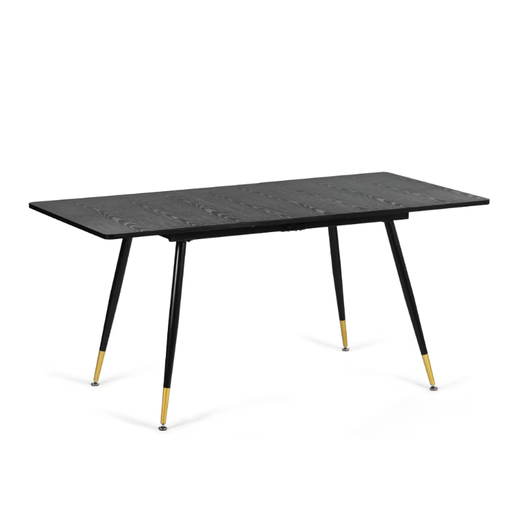
Why it stands out: This model impresses with its flexibility and elegant design. The extendable function and the modern colour combination of black and gold make it a versatile piece of furniture.
Advantages:
Who is it for? Perfect for households that need a flexible solution for gatherings of various sizes. Its modern design fits well into contemporary interior styles and offers an elegant look.
The choice of the right dining table heavily depends on personal taste and spatial constraints. If you have a preference for natural materials and want to compare more models with different wood types and designs, you might find the perfect piece in our broader collection.
Discover our selection of wooden dining tables
As a rule of thumb, plan for at least 80 cm, ideally 100 cm, of clearance from the table's edge to the nearest wall or another piece of furniture. This space ensures that people can get up and walk behind the chairs comfortably, even when someone is seated at the table.
Surfaces made of engineered wood (MDF) with a high-quality PVC or melamine coating are generally very low-maintenance. They are resistant to stains and can be easily cleaned with a damp cloth. Metal frames are also robust and require little upkeep.
The terms are often used interchangeably. Traditionally, a kitchen table tends to be smaller, more robust, and intended for everyday, informal use in the kitchen. A dining room table is often larger, features a more formal design, and is placed in a separate dining room for more formal occasions. Today, these lines are increasingly blurring due to open-plan kitchen and living concepts.