
Lieferung heute & morgen

Qualitätsgarantie

Willkommens-Angebote freischalten: KOSTENLOSE Lieferung | Bis zu 80 % RABATT | Kostenlose 30-Tage-JoyPlus-Testphase
App herunterladen
A new dining table is more than just a piece of furniture—it's the heart of your home life, whether for daily breakfast, family dinners, or social gatherings with friends. However, with the vast array of sizes, materials, and styles available, making a choice can be a challenge. Are you looking for a compact kitchen table for a small flat or a large dining room table for the whole family? This guide offers practical guidance to help you make an informed decision that fits your space, budget, and lifestyle.
Three key criteria will help you narrow down your options and find the right model for your needs: size, material, and shape.
The size of your table depends on two factors: the available space and the number of people who will regularly sit at it. As a rule of thumb, you should allow for a width of about 60 cm and a depth of 40 cm per person for comfortable seating. Additionally, each chair needs about 80 cm of space behind it to be pulled out comfortably.
The material not only defines the look of the table but also its durability and maintenance needs.
The shape of the table influences the room's dynamic and the interaction among those seated.
Here is a selection of models that meet different requirements for size, style, and functionality.
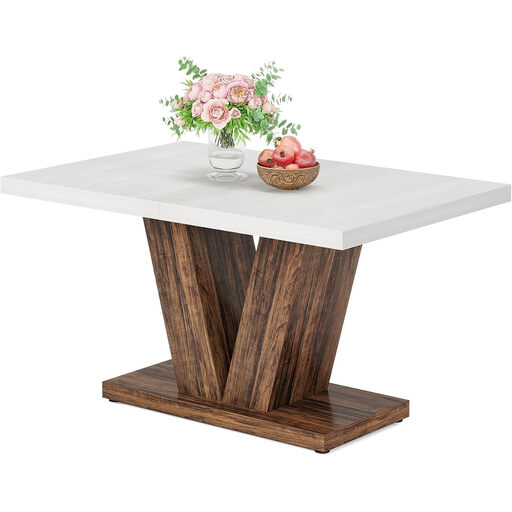
Why it stands out: This model is distinguished by its sturdy triangular column base and a 4 cm thick tabletop. The design is inspired by the simple farmhouse style and offers a clean, modern aesthetic.
Advantages:
Who is it for? This table is a fitting option for those looking for a stable and stylish kitchen table for a smaller apartment and who prefer a streamlined farmhouse design.
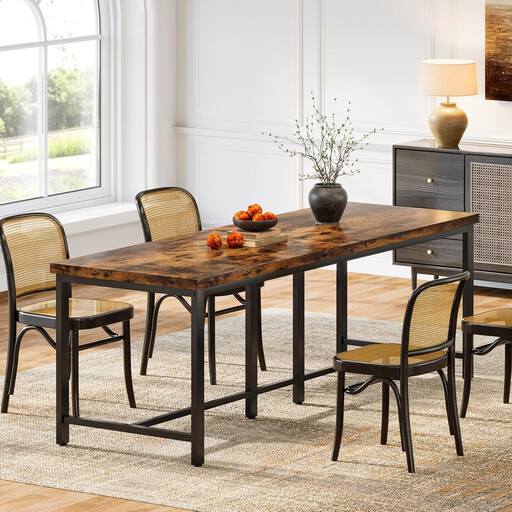
Why it stands out: With a length of 200 cm and its distinctive wood top with metal legs, this model makes a bold industrial-style statement. The combination of a rustic wood grain and the black metal frame creates a modern contrast.
Advantages:
Who is it for? Ideal for anyone who needs a large dining room table for social gatherings and appreciates the industrial dining table style. Its versatility also makes it an interesting choice for multi-functional living spaces.

Why it stands out: This round dining table combines a sociable shape with practical utility. The integrated storage shelf between the legs offers extra space for placemats, magazines, or decorations.
Advantages:
Who is it for? A great choice for anyone who wants to create a sociable dining atmosphere and appreciates clever storage. The table is well-suited for square rooms or open-plan kitchens.
If these models aren't quite right for you, or if you prefer a more specific style, there are many other alternatives to explore.
Discover our entire collection of rustic kitchen tables and find the model that perfectly matches your style.
How much space should I plan for per person at a dining table? A common recommendation is to allow for a width of about 60 cm and a depth of 40 cm per place setting. This ensures that every guest has enough room for their plate, cutlery, and elbows without feeling cramped.
What is the difference between solid wood and engineered wood? A solid wood table is made entirely from a single type of wood and is known for its durability and unique, natural grain. Engineered woods, such as MDF or particleboard, are made from wood fibres or chips pressed together with resins under pressure. They are often more cost-effective, dimensionally stable, and available in a wide variety of surface designs and colours.
How do I care for an engineered wood dining table? Care is generally straightforward. For daily cleaning, wiping with a soft, slightly damp cloth is sufficient. You should avoid using harsh or abrasive cleaning agents. To protect the surface from heat, scratches, and moisture, it is advisable to use placemats, coasters, and tablecloths.