
Lieferung heute & morgen

Qualitätsgarantie

Willkommens-Angebote freischalten: KOSTENLOSE Lieferung | Bis zu 80 % RABATT | Kostenlose 30-Tage-JoyPlus-Testphase
App herunterladen
Choosing the right pendant light for your dining table is crucial for a room's ambiance. It's more than just a light source; it's a central design element. However, the market is filled with options whose aesthetics often mask functional shortcomings. Many buyers only realise after installation that their new lamp provides inadequate light, has an uninviting colour temperature, or simply hangs at the wrong height. This guide will show you the critical details to look for to make an informed decision.
Before we dive into the technical details, it's important to know the most common mistakes that often lead to disappointment and unnecessary costs.
To avoid the mistakes mentioned above, you should check three core aspects before buying. These form the basis for a functional and aesthetically pleasing lighting solution.
The right size and positioning are fundamental. As a rule of thumb for a single, round or square pendant lamp over the dining table:
For a long table or a lamp for a kitchen island, linear models or an arrangement of several smaller pendant lights are suitable.
These three values determine the atmosphere your light will create.
The material shapes the character of the lamp and should match the interior design style.
Here are some recommendations tailored to different needs and interior styles.
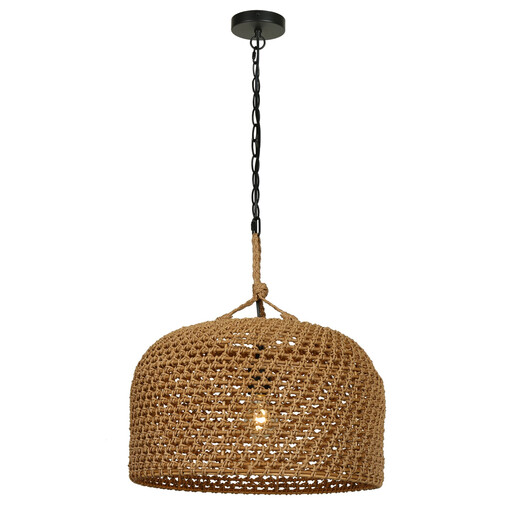
Why it's a great fit: Ideal for anyone looking to create a warm, organic atmosphere in a Boho or Scandi style. The woven rattan creates a fascinating play of light and shadow.
With a 45 cm diameter, it avoids the "too small" mistake and makes a clear statement over medium-sized tables. The E27 socket allows you to choose your own bulb to ensure the desired light quality (Kelvin/lumens).
The natural material and artisanal look create an inviting and relaxed mood. The height-adjustable chain offers flexibility during installation.
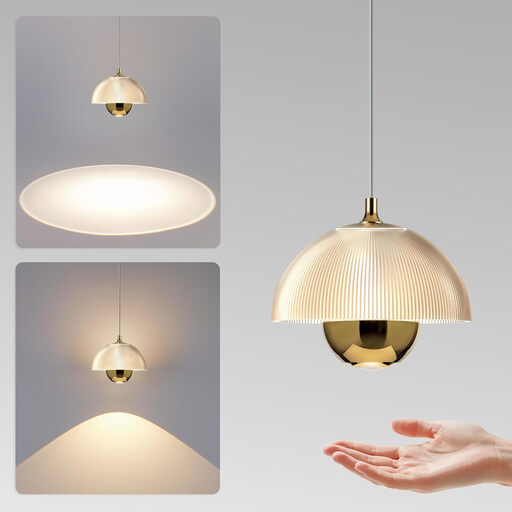
Why it's a great fit: For those who want to combine modern design with smart functionality. The touchless control is not only hygienic but also a technical highlight in any modern kitchen or dining room.
This model elegantly solves the "wrong light quality" problem. With three selectable colour temperatures (2700K, 3850K, 5000K) and stepless dimming via sensor, the light adapts to any situation—from a cosy dinner to focused work.
The innovative sensor control for brightness and colour temperature offers maximum convenience and flexibility. The dual light (upward and downward) ensures balanced room illumination.
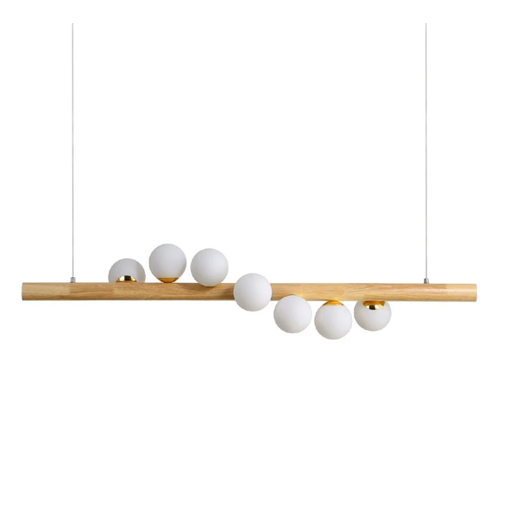
Why it's a great fit: Perfect for illuminating long dining tables or kitchen islands where a single round light is not enough. The combination of wood, glass, and metal suits many modern interior styles.
With a length of 120 cm and seven light sources, it solves the problem of uneven illumination over large surfaces. It avoids the "incorrect sizing" error by covering the entire length of the table and ensuring uniform brightness.
The linear arrangement of seven glass globes provides extensive, glare-free lighting. The cable is height-adjustable, offering installation flexibility.
We've compiled a complete, up-to-date list of products that meet these strict selection criteria and rigorous safety standards.
1. How high should a pendant light hang over a dining table? A good rule of thumb is a distance of 75 to 90 cm between the tabletop and the bottom edge of the light. This height ensures the table is well-lit, the light doesn't cause glare, and the view of the person opposite remains clear. With a height-adjustable pendant lamp, you can fine-tune this distance after installation.
2. What does "dimmable" mean for an LED pendant light? "Dimmable" means the brightness of the light can be adjusted. For integrated LED pendant lights, there are two main types: models with a built-in dimmer (often controllable via remote or sensor) and models compatible with an external, wall-mounted LED dimmer switch. Check the product description to see which type of dimmer is required.
3. Can I install any pendant light on a sloped ceiling? No, not every model is suitable for this. To install on a sloped ceiling, you need a light with a flexible joint on the canopy (the ceiling mount) or a special mounting kit. The product details usually specify whether a light is suitable for sloped ceilings. If this information is missing, it's safe to assume it's designed for flat ceilings.