
Lieferung heute & morgen

Qualitätsgarantie

Willkommens-Angebote freischalten: KOSTENLOSE Lieferung | Bis zu 80 % RABATT | Kostenlose 30-Tage-JoyPlus-Testphase
App herunterladen
A new pendant light for the dining table can change the atmosphere of an entire room. But the selection is vast, and not every lamp that looks appealing online serves its purpose in everyday life. Often, the weaknesses only become apparent after installation: the light is glaring, the table is inadequately lit, or the lamp looks out of place in the room. As your Joybuy Product Recommendation Officer, I'm here to help you navigate these common pitfalls and make an informed decision.
Before we dive into the details, let's look at the three most common problems that can lead to a purchase you'll regret.
dining room pendant lamp can overwhelm the space and obstruct lines of sight.To avoid these mistakes, you should check three essential criteria before buying. These will help you find a pendant light for the dining table that is both functional and aesthetically pleasing.
The right dimensions are crucial. A simple rule of thumb can help you get your bearings:
modern dining table lamp or an arrangement of several smaller lights is often the better choice.lamp over the dining table doesn't blind anyone, but the table is well-lit and the view of the person opposite remains clear. Therefore, look for a height-adjustable suspension.The functionality of a lamp is determined by its light output. Two values are key here:
The material shapes the character of the lamp and its effect in the room. A wooden pendant light radiates warmth and naturalness and fits well with Scandinavian or country styles. A black pendant light made of metal, on the other hand, looks modern and graphic and is often found in industrial or minimalist designs. A well-thought-out designer pendant light often combines different materials such as glass, metal, and fabric to create a special aesthetic.
Here are some recommendations tailored to different needs and interior styles that take the above criteria into account.
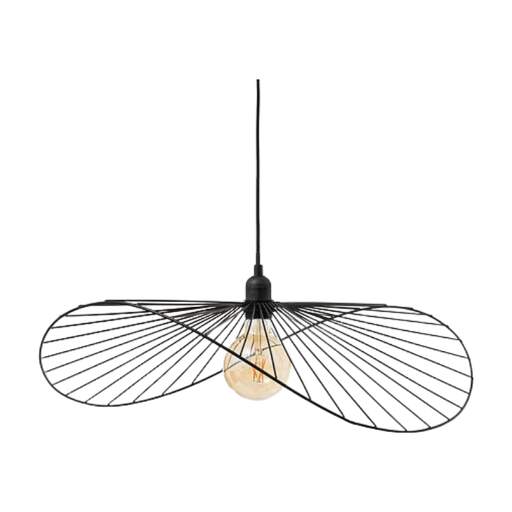
Why it's a match: Offers a clean, modern design that seamlessly fits into many interior styles without breaking the bank. Ideal for anyone looking to make a stylish statement.
The open, geometric steel structure has an airy feel and prevents the lamp from appearing bulky despite its 58 cm diameter. The light can spread freely throughout the room.
Its low weight and self-assembly design make installation straightforward. The material is robust and low-maintenance.
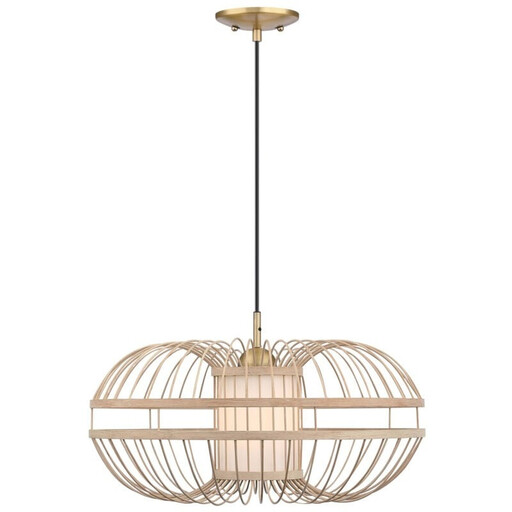
Why it's a match: The combination of natural bamboo, brushed brass, and frosted glass creates a warm, elegant atmosphere. Perfect for those who appreciate natural materials in a modern context.
The frosted glass shade provides soft, glare-free light diffusion. The light is distributed evenly, ensuring cosy yet functional illumination of the table.
The light is suitable for mounting on sloped ceilings and, thanks to its 127 cm cord, offers installation flexibility in rooms with varying ceiling heights.
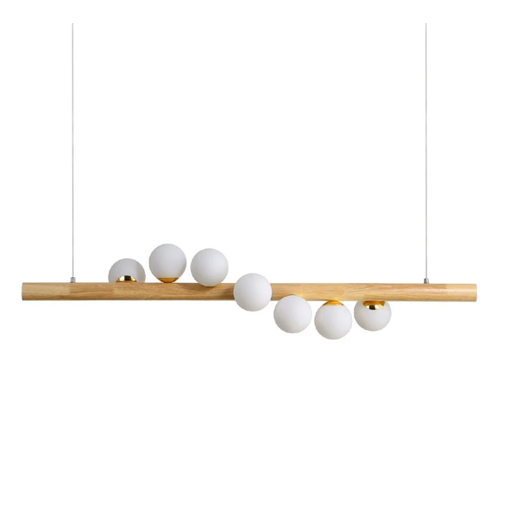
Why it's a match: With its linear shape and seven spirally arranged glass globes, this fixture is specifically designed for evenly illuminating long, rectangular dining tables or kitchen islands.
It solves the common problem of "light islands" and shadows that occurs when using a single, round light over a long table. The seven light sources provide continuous, uniform illumination.
The combination of wood, glass, and metal creates a modern yet warm aesthetic. The G9 LED bulbs are already included.
We've compiled a complete, up-to-date list of products that fully meet these strict selection criteria and all relevant safety regulations.
1. How high should a pendant light hang over the dining table? As a rule of thumb, there should be a distance of 60 to 70 cm between the tabletop and the bottom edge of the lampshade. This ensures good illumination without causing glare and keeps the view of the person opposite you clear.
2. What light colour is best for the dining area? A warm white light colour with a value between 2,700 and 3,000 Kelvin is generally perceived as pleasant and cosy. It creates an inviting atmosphere that is ideal for meals and social gatherings.
3. Can I dim any pendant light? No. For a light to be dimmable, several conditions must be met: the fixture itself must be designed for dimming, the bulb used (e.g., an LED bulb) must be explicitly marked as "dimmable," and you need a compatible dimmer switch on the wall. Check the product specifications carefully before purchasing.