
Lieferung heute & morgen

Qualitätsgarantie

Willkommens-Angebote freischalten: KOSTENLOSE Lieferung | Bis zu 80 % RABATT | Kostenlose 30-Tage-JoyPlus-Testphase
App herunterladen
A new dinnerware set can completely transform your dining experience. But the joy of a beautiful design can quickly turn to disappointment when plates fade after a few washes or the first chip appears after a short time. As a Joybuy Product Recommendation Officer, I analyse product information daily to help you separate the wheat from the chaff. In this guide, I'll show you the most common pitfalls and what to look for when choosing, so your new dinner service is both stylish and durable enough for everyday use.
Many buyers focus primarily on design, overlooking crucial quality features. This often leads to frustration and unnecessary expense. Pay special attention to these three points:
To avoid a bad purchase, you should check three central aspects. These objective criteria will help you assess the quality of a dinnerware set, regardless of marketing promises.
The choice of material affects the weight, robustness, and appearance of your dinnerware.
A truly practical dinnerware set must withstand the rigours of the dishwasher and microwave. A reliable indicator is the firing temperature during manufacturing. Products fired above 1,200°C have a vitrified, resistant surface. The glaze fuses firmly with the ceramic body, making it scratch-resistant and impervious to temperature fluctuations. Look for manufacturer specifications like "high-fired" or specific temperature details.
Before buying, consider which pieces you truly need in your daily life.
Here are some recommendations tailored to different needs and lifestyles. Each of these sets meets the quality criteria mentioned above.
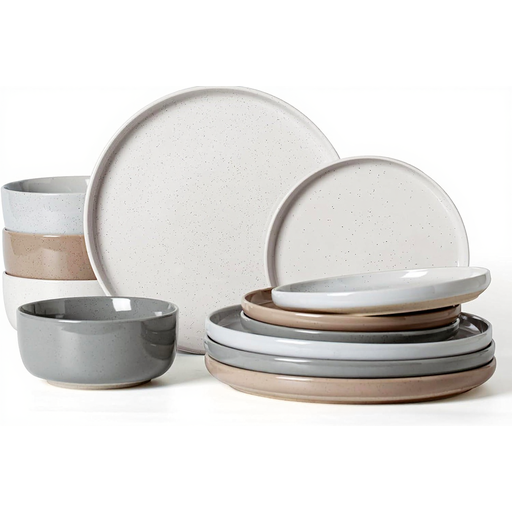
Why it's a great fit: Perfect for those seeking a modern, minimalist design that still radiates warmth. The soft pastel tones and fine speckled pattern fit perfectly into contemporary kitchens and are robust enough for daily family use.
According to the manufacturer, this set is fired at 1282°C. This high temperature ensures a dense, resilient glaze that remains colourfast and glossy, even with frequent dishwasher use.
The combination of aesthetic design and high material durability makes it a long-lasting companion. It is also stackable to save space.
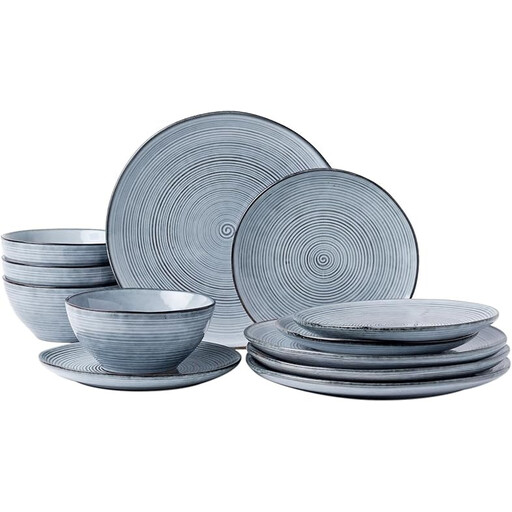
Why it's a great fit: For those who appreciate the extraordinary. The irregular shape and artisanal spiral pattern make each piece unique. It's a statement set that is still fully suitable for everyday use.
Despite its "handmade look," it is made of high-quality, glazed ceramic that is scratch-resistant according to the manufacturer. It debunks the myth that unique design must be fragile.
The set combines artistic design with practical functionality. It is dishwasher and microwave safe, making it as suitable for daily use as it is for special occasions.
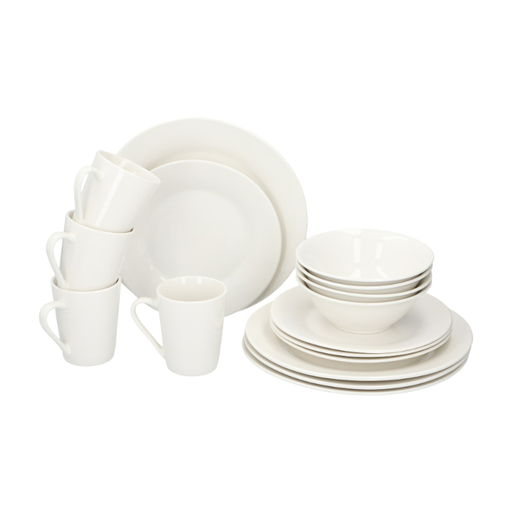
Why it's a great fit: The perfect starter set. This set is straightforward, functional, and above all, complete. With plates, bowls, and mugs, it offers everything you need to start out in your own home.
It directly solves the problem of the incomplete set. As a 16-piece combo service, it includes all essential components, eliminating the tedious search for matching additions.
A complete, coordinated set offering excellent value for money. The classic white design is timeless and easy to combine with other pieces.
We have compiled a complete, up-to-date list of products that fully meet these strict selection criteria and German safety regulations.
Look for a smooth, non-porous glaze and a certain weight, which indicates high material density. A key clue in product descriptions is a high firing temperature (ideally above 1,200°C). This points to a sintering process that makes the material particularly resilient.
Traditionally, a dinner service refers to a set primarily intended for main meals, comprising dinner and soup plates. A combo service is more comprehensive, combining the dinner service with a coffee service, thus also including dessert plates, cups, and saucers. Today, the terms are often used interchangeably, so it's important to always check the exact contents of the set.
Yes, to a large extent. The main cause of scratches is not the act of cutting, but the quality of the glaze. A hard glaze, fired at a high temperature, is significantly more scratch-resistant. Cheaper dinnerware with a softer glaze is more prone to visible cutlery marks. To further protect the surface, you should avoid using serrated knives directly on the plate unless absolutely necessary.