
Lieferung heute & morgen

Qualitätsgarantie

Willkommens-Angebote freischalten: KOSTENLOSE Lieferung | Bis zu 80 % RABATT | Kostenlose 30-Tage-JoyPlus-Testphase
App herunterladen
A new dinnerware set is often more than just a practical purchase—it's a part of daily life that sets the tone for every meal. Yet, the sheer number of options can be overwhelming. Many buyers discover only after a few weeks that their supposed bargain is already cracking, the colours are fading in the dishwasher, or essential pieces like deep soup plates are missing. To help you avoid this kind of disappointment, we've identified the most common pitfalls and will show you which objective criteria truly matter.
Before you make a decision, be aware of these common problems that often only become apparent with everyday use:
To make an informed decision, focus on these three objective features. They are more crucial than any marketing promise.
The choice of material affects the weight, durability, and maintenance of your new dinner service.
These two features are essential for the modern household. Look for explicit manufacturer specifications. Dinnerware that is dishwasher-proof and microwave-safe is designed so that the glaze is not damaged by the heat of the microwave or the detergents in the dishwasher. Products fired at high temperatures (often above 1200°C) generally offer greater reliability in this regard.
Consider the types of meals you typically serve. A good basic set for a family or a multi-person household should include at least the following:
Some sets also include cereal bowls or coffee mugs, which adds further value and ensures a cohesive look on your table.
Here are some recommendations tailored to different needs and households, all of which meet the quality criteria mentioned.
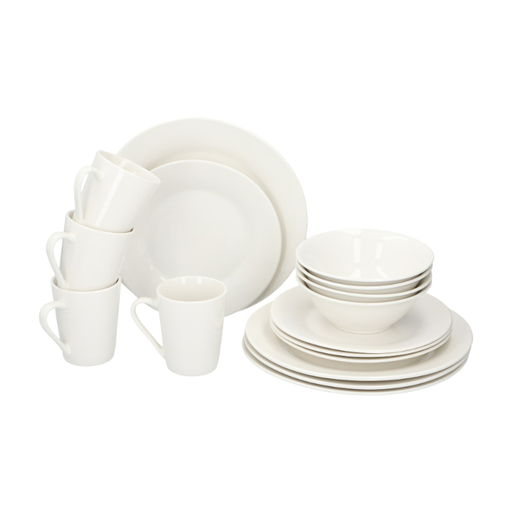
Why it's a great fit: This 16-piece set provides a complete starter kit for four people, including dinner plates, dessert plates, bowls, and mugs. It's ideal for a first home or as a straightforward, cohesive solution without the need to buy extra pieces.
It solves the problem of incomplete sets by including all the essential components for daily use. The explicit "dishwasher-proof" specification also offers more assurance than vague wording.
A comprehensive 16-piece set offering excellent value. Microwave and dishwasher-proof for maximum everyday convenience.
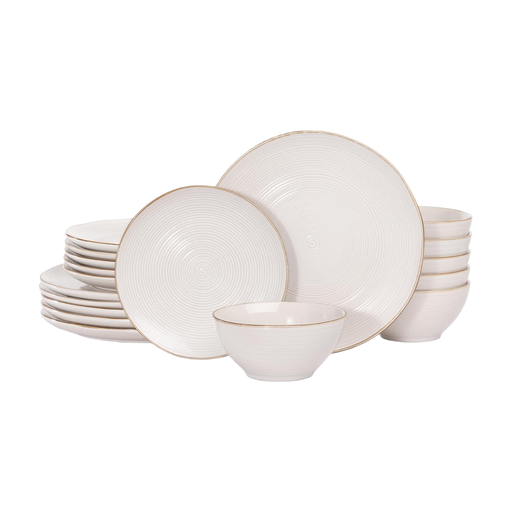
Why it's a great fit: For those who prioritise aesthetics. The irregular spiral design and high-quality earthenware finish stand out from standard dinnerware. This set for 6 is perfect for hosts who want to set a stylish table.
According to the manufacturer, the earthenware is fired at high temperatures for 13.5 hours. This ensures high density and resistance to scratches and chipping—a clear advantage over dinnerware that is merely visually appealing but fragile.
Unique, handcrafted-style design combined with scratch resistance and stackability. The set is designed for 6 people, making it suitable for larger gatherings.

Why it's a great fit: This set is a specialised solution. The deep, wide shape with an 8.5-inch diameter is ideal for dishes with plenty of sauce, like pasta, curries, or large salads. Its stackability is a practical advantage for kitchens with limited storage space.
According to the manufacturer, these bowls are not only dishwasher and microwave-safe but also oven-safe. This offers functionality that goes far beyond the average, surpassing vague "safe" claims and demonstrating true versatility.
High functionality thanks to being oven-safe and having a space-saving, stackable design. Perfect as a complement to an existing dinner plate set.
We have compiled a complete, up-to-date list of products that fully meet these strict selection criteria and European safety standards.
The main difference lies in the raw materials and firing temperature. Porcelain is fired at very high temperatures (approx. 1300–1450°C), which gives it high density, hardness, and a slightly translucent appearance. It is non-porous. Earthenware is fired at lower temperatures, making it thicker, heavier, and permeable to water without an intact glaze. High-quality stoneware sits between these two materials in terms of durability.
Pay close attention to the manufacturer's exact wording. The term "dishwasher-proof" is more reliable than "dishwasher-safe." Look for references to standards like DIN EN 12875 or for symbols on the underside of the dish. A high-quality, smooth glaze without cracks and a high firing temperature are also good indicators of durability.
A practical starter set for four people should include at least 12 pieces: four large dinner plates, four small plates, and four deep plates or multi-purpose bowls. A 16-piece set that also includes cups or mugs offers even greater value and ensures a consistently uniform look.