
Lieferung heute & morgen

Qualitätsgarantie

Willkommens-Angebote freischalten: KOSTENLOSE Lieferung | Bis zu 80 % RABATT | Kostenlose 30-Tage-JoyPlus-Testphase
App herunterladen
Choosing a new dinnerware set can be a refreshing update for your kitchen. However, the search for the perfect set for four people is often more complicated than you might think. The market is filled with tempting designs and promises that don't always hold up in daily use. Before you make a decision you might later regret, you should be aware of the common pitfalls that often lurk behind a beautiful facade.
As a Joybuy Product Recommendation Officer, I filter relevant information to provide you with an objective basis for your decision. This guide focuses on the objective criteria that define a quality dinnerware set.
Common Pitfalls When Buying Dinnerware:
To make an informed decision, you should focus on three core parameters. These will help you objectively evaluate the quality and everyday practicality of a dinnerware set.
The choice of material significantly influences the weight, durability, and appearance of your dinnerware.
These features are more than just marketing terms; they are indicators of material quality.
A standard set for four people typically consists of twelve pieces: four large dinner plates, four smaller dessert or salad plates, and four bowls. Pay attention to the dimensions:
Here are some recommendations tailored to different needs and lifestyles.
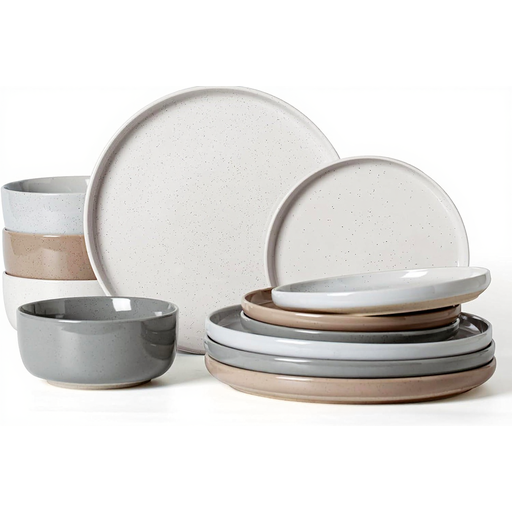
Why it's a great fit: Ideal for anyone looking for a modern dinner service with individual character. The soft Morandi colours and random speckle pattern lend an artistic touch to the table without breaking the bank. It's a stylish starter set for a first home or a deliberate upgrade.
According to the manufacturer, the set is fired at 1282°C (2340°F), which makes the ceramic and glaze highly durable. The classic, round shapes stack efficiently and fit easily into standard kitchen cabinets and dishwashers.
Each piece is unique thanks to the random speckle pattern. The set provides a complete, aesthetically pleasing service ready for immediate use.
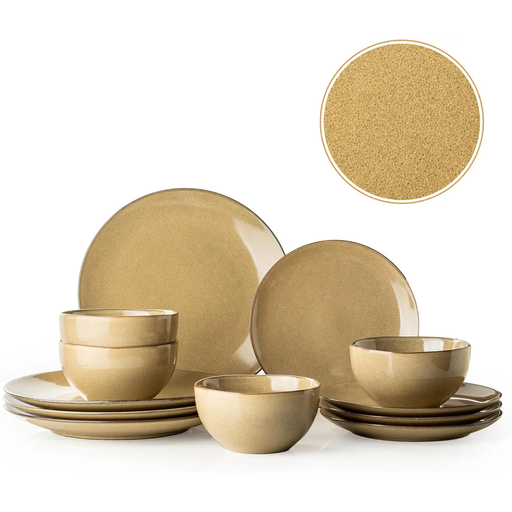
Why it's a great fit: This set is designed for maximum durability. It's an excellent choice for intensive, daily use in a family household where scratch resistance and hassle-free handling are the priority.
According to the manufacturer, the set is made from special ORC ceramic clay and fired at approx. 1400°C (2552°F). The GLIDECOAT glaze technology is said to provide an extremely hard, scratch-resistant surface that withstands the typical wear and tear of family life.
High scratch and heat resistance due to special manufacturing processes. The materials are lead- and cadmium-free according to the manufacturer, offering peace of mind for daily use with food.
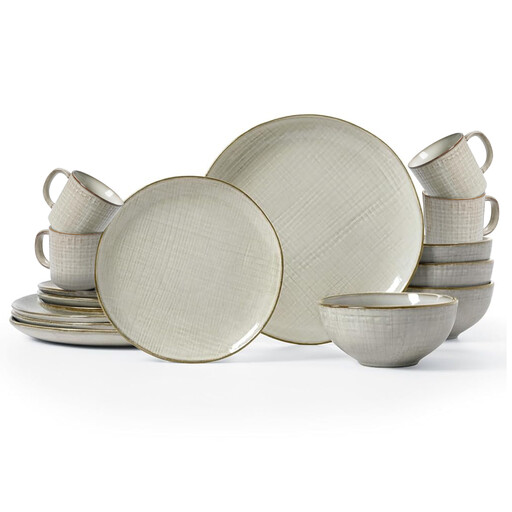
Why it's a great fit: The linen-effect finish combined with a reactive glaze creates a sophisticated, almost handcrafted aesthetic. It is ideal for hosts looking for dinnerware that serves as a stylish statement piece for special occasions and dinner parties.
Despite its artistic design, the set is practical for everyday use. According to the manufacturer, the reactive glaze is fired at 1200°C (2192°F), making it durable and safe for the dishwasher and microwave. The shapes are designed to stack well.
Each piece is unique due to the reactive glaze, featuring a slightly uneven, high-quality texture. This gives the table setting a special, individual touch.
We've compiled a complete, up-to-date list of products that fully meet these strict selection criteria and our standards for quality and safety.
Look for manufacturing details in the product description. Terms like "high-fired" or specific temperatures (e.g., above 1,200°C / 2,192°F) are good indicators. Materials like porcelain or vitrified stoneware are inherently non-porous and therefore more resistant to the stresses of the dishwasher.
Porcelain is generally lighter, thinner, and more resistant to chipping than stoneware. It often appears more elegant and formal. Stoneware is thicker, heavier, and conveys a more rustic, cosy feel. Due to its mass, it tends to keep food warm a little longer. The choice is ultimately a matter of personal style and desired feel.
A 12-piece set (consisting of four dinner plates, four dessert plates, and four bowls) forms a solid foundation for a family of four. In everyday life, however, the demand for bowls can be higher (e.g., for cereal in the morning, soup at lunch, and a snack in the afternoon). It can therefore be wise to supplement such a set with additional, matching bowls.