
Lieferung heute & morgen

Qualitätsgarantie

Willkommens-Angebote freischalten: KOSTENLOSE Lieferung | Bis zu 80 % RABATT | Kostenlose 30-Tage-JoyPlus-Testphase
App herunterladen
A new dinnerware set can completely transform the ambiance of your dining table. However, the initial joy over a beautiful design often gives way to disappointment when the new tableware fails to impress in daily use. Scratches, chipped edges, or fading colours are common frustrations. As your Joybuy Product Recommendation Officer, I'll help you identify the typical pitfalls and make a choice that is both aesthetically pleasing and practical.
Many buyers focus on appearance and overlook crucial quality features. Here are the three most common mistakes that lead to buyer's remorse:
To avoid these problems, you should focus on a few core parameters that determine the longevity and everyday usability of your new dinnerware set.
The material has a direct impact on weight, durability, and care.
A good dinner service for 4 people should be thoughtfully composed. Before buying, check if the included pieces match your daily habits.
Instead of making a one-size-fits-all recommendation, we have matched products to different needs and households.
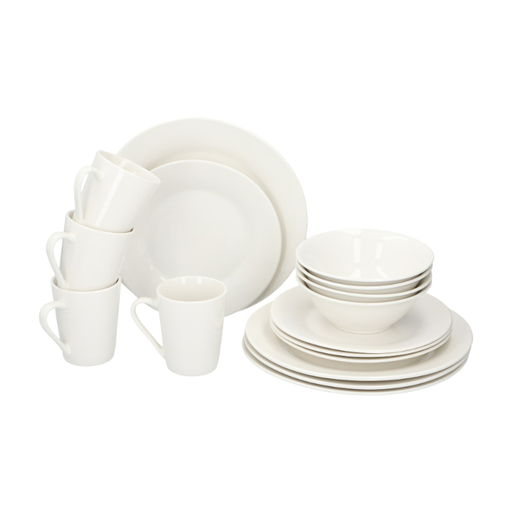
Why This Fits Their Persona: Ideal for moving into a first apartment or for families looking for a straightforward, complete solution. This set covers all basic meals from breakfast to dinner.
This 16-piece combination set solves the problem of incomplete sets by including dinner plates, dessert plates, bowls, and mugs. No immediate additional purchases are needed for a basic setup.
Comprehensive service for four people. According to the manufacturer, the stoneware set is dishwasher and microwave safe, ensuring its suitability for everyday use.
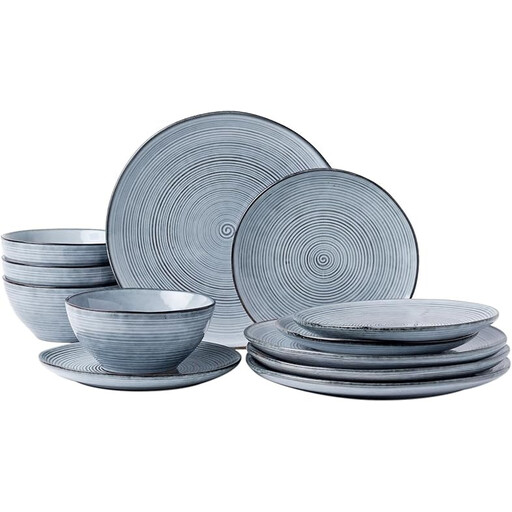
Why This Fits Their Persona: For anyone seeking modern tableware with an artisanal feel. The irregular shape and spiral pattern create a unique accent on the dining table.
Although the design is irregular, the manufacturer describes it as stackable ("nestable design"). This bypasses the pitfall of impractical, space-consuming designs.
The glazed ceramic is scratch-resistant, microwave-safe, and dishwasher-safe. The set combines a distinctive aesthetic with the demands of daily use.
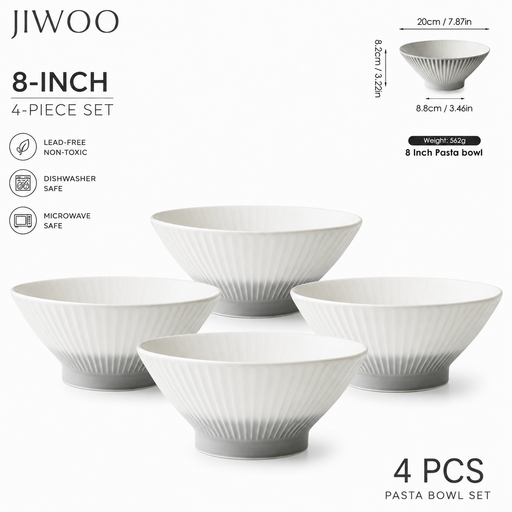
Why This Fits Their Persona: Perfect for households that already own a good set of plates but need versatile, large bowls for pasta, salads, cereal, or soups.
Instead of buying a complete, mismatched set, this bowl set specifically fills a gap in existing dinnerware. This is both cost-effective and sustainable.
With a 20 cm diameter and a wide, shallow design, the bowls are highly versatile. The minimalist design is easy to combine with existing tableware.
If you're specifically looking for individual bowls or special sets, we have curated a wide selection that meets criteria for material quality and everyday practicality.
1. What is the difference between stoneware and porcelain? The main difference lies in the raw materials and firing temperature. Porcelain is fired at higher temperatures (approx. 1,300–1,450 °C or 2,372–2,642 °F), which makes it denser, harder, and less porous. Stoneware is fired at lower temperatures (approx. 1,100–1,250 °C or 2,012–2,282 °F), making it slightly thicker, heavier, and more prone to chipping if the glaze is not of high quality.
2. How can I tell if a dinnerware set is truly durable and dishwasher-safe? Look for the quality of the glaze. A smooth, even, and non-porous glaze is a good sign. For stoneware and ceramic, a complete glaze, including on the bottom rim, is important to prevent water absorption. Products from established manufacturers that explicitly mention high firing temperatures and scratch-resistant glazes often offer greater reliability.
3. How many pieces should a good dinnerware set for 4 people have? A 12-piece set (4 each of dinner plates, dessert plates, and bowls) is a solid foundation. For more comprehensive needs, including morning coffee or tea, a 16-piece set with additional cups or mugs is the more practical choice. Consider which pieces you use most often in your daily routine to find the right set size.