
Lieferung heute & morgen

Qualitätsgarantie

Willkommens-Angebote freischalten: KOSTENLOSE Lieferung | Bis zu 80 % RABATT | Kostenlose 30-Tage-JoyPlus-Testphase
App herunterladen
Dinosaur toys appeal to children of different ages. Some are interested in realistic dinosaur figures, while others prefer a T-Rex toy with sounds or a dinosaur excavation kit. But choosing the right one isn’t always easy for parents, grandparents and collectors. Product images often highlight lots of features, while important details about age suitability, materials, batteries and small parts can be less obvious.
The description ‘dinosaur with sound and lights’ doesn’t tell you much about volume, power supply or how it works. Check whether batteries are included, how many are needed and whether you can switch the effects off. A toy that’s constantly loud can be impractical in everyday life, especially for younger children.
A dinosaur toy labelled as suitable for ages 3 and up may still contain moving parts, small accessories or detachable elements. The age recommendation doesn’t replace checking the warnings. For children under 36 months, the ‘Small parts – choking hazard’ warning is particularly important. For older children, too, the toy should suit their stage of development and how they’re expected to use it.
A remote-controlled dinosaur with walking, dancing and light effects may seem exciting at first. But when choosing, it’s also worth considering whether it moves reliably on the intended surface, how the remote control works and whether replacement or charging information is available. A simple dinosaur car toy that doesn’t need batteries may be more practical for everyday play than an electronic model with lots of features.
Check the manufacturer’s age recommendation, the dimensions and the surface the toy will be used on. Small dinosaur figures are well suited to collections, role play and storage boxes. Larger models need more space and are less convenient to take along. For a dinosaur toy for children aged 3 to 6, easy-to-grip shapes and straightforward controls are often a good choice.
If a set includes several vehicles or figures, check whether all the pieces can be stored neatly after play. This helps prevent accessories from going missing and makes the set easier to use in a child’s bedroom.
Look for smooth edges, sturdy connections and clear information about the materials. PVC or other plastics are commonly used in plastic toys; the manufacturer’s information and product labelling are what matter most. The CE mark indicates that the manufacturer declares the product meets the relevant EU requirements. It is not, however, an independent quality mark.
For toys sold in Germany, information about the EN 71 toy safety standard, cleaning and any small parts is also useful. For toys that get a lot of use, check moving parts, battery compartments and plug-in connections regularly.
Electronic models may use batteries or a rechargeable battery. Check the exact details: the remote-controlled T-Rex in our selection needs batteries for both the dinosaur and the remote control, and the product information states that these are not included. The Kosmos set, on the other hand, doesn’t require batteries.
For toys with sound and lights, remove the batteries if you’re storing them for a longer period. Depending on the material, non-electronic figures can usually be cleaned with a slightly damp cloth. Always follow the care instructions for the individual product.
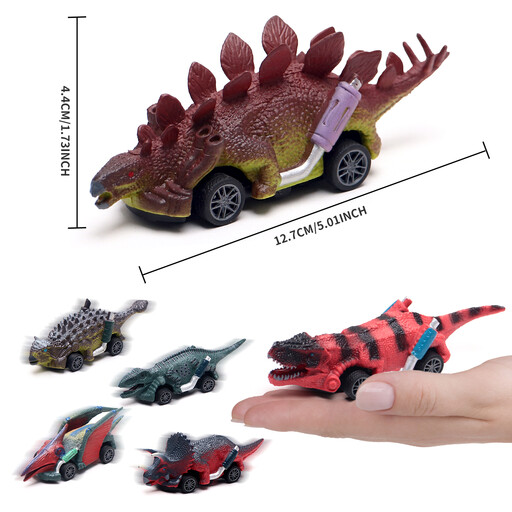
Why this product suits this profile: This set combines six dinosaur cars with a simple pull-back mechanism and, according to the product description, doesn’t need batteries. That makes it a handy choice for fuss-free play indoors and outdoors.
The pull-back mechanism is clearly described and doesn’t rely on sound or light effects. Important: the product warning flags small parts, so this set isn’t suitable for children under 36 months.
Six vehicles, no batteries needed and compact dimensions of around 13 × 4 × 3,5 cm.
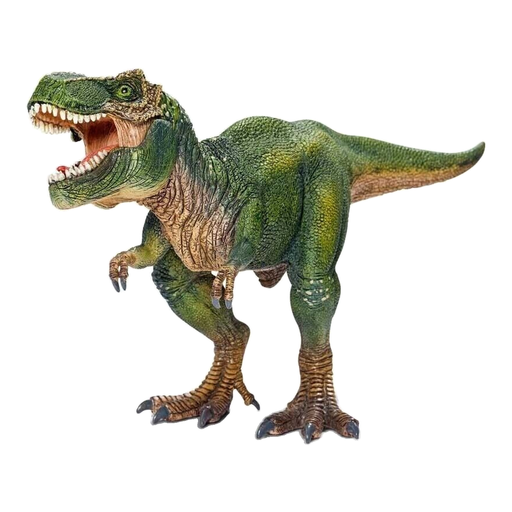
Why this product suits this profile: The figure is listed as suitable for children aged 3 and up, measures 28 × 9,5 × 14 cm according to the product details and is part of the Schleich Dinosaurs collection. It’s also a good fit for collectors and imaginative play.
No batteries, no remote control and no complicated set-up. The play value comes from the figure, role play and collecting. Be sure to check the small-parts warning.
Detailed design, durable plastic construction and no need for a power supply.
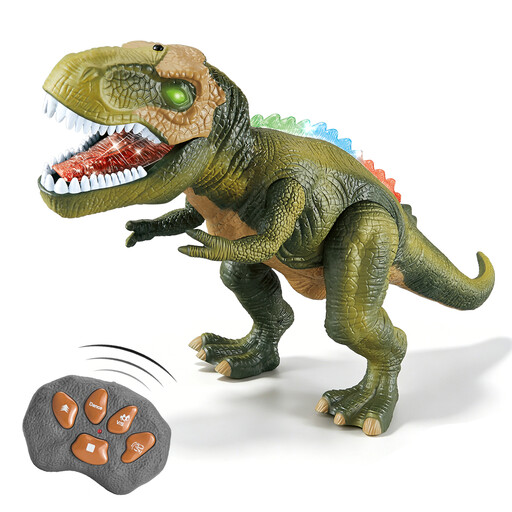
Why this product suits this profile: This model is aimed at children aged 3 and up. It offers remote control, movement functions, lights in the eyes, mouth and back crest, as well as dinosaur sounds. A flat surface is recommended for use.
The product information explains the control directions and battery requirements: three AA batteries for the dinosaur and two AA batteries for the remote control. None are included.
Moves forwards and backwards and turns, with an automatic dance mode and combined light and sound effects.

Why this product suits this profile: This science kit is listed as suitable for children aged 8 to 14 and includes a large observation tank with a separate hatching area. It’s a good choice for families who can make time for observation and regular care.
The contents and age recommendation are clearly specified. This isn’t simply a dinosaur toy, but a nature observation project that needs regular care and adult supervision.
Large tank, step-by-step instructions and no batteries required.
We’ve put together a complete, regularly updated list of products that meet these strict selection criteria and fully comply with the safety regulations in force in the EU.
Only choose a model that the manufacturer explicitly approves for this age group. Also check for small parts, detachable accessories, sharp edges and battery compartments. Simple figures or larger vehicles may be easier to manage than sets with lots of small pieces. Always follow the specific warnings on the product page and packaging.
Lifespan depends on the materials, construction, how intensively the toy is played with and how it’s stored. Figures without electronics have fewer parts that can wear out. For vehicles and remote-controlled models, check the wheels, joints, battery compartments and remote control regularly. Keeping toys somewhere clean and dry, and cleaning them according to the manufacturer’s instructions, can help them last longer.
Figures, pull-back cars and many excavation kits don’t usually incur battery costs. Depending on the model, toys with sound and lights may need several batteries, so check the battery type and what’s included before you buy. A science kit may also need consumables and regular care. So a lower purchase price doesn’t necessarily mean it’ll cost less to use.