
Lieferung heute & morgen

Qualitätsgarantie

Willkommens-Angebote freischalten: KOSTENLOSE Lieferung | Bis zu 80 % RABATT | Kostenlose 30-Tage-JoyPlus-Testphase
App herunterladen
A dish drainer may seem straightforward at first. In practice, though, the details determine whether plates sit securely, water ends up on the worktop or the drainer becomes impractical after a short time. Particularly in small flats, rented kitchens and when camping, your choice should suit the space you have available and the amount of washing-up you do each day.
A two-tier dish drainer makes use of vertical space, but still needs a sufficiently deep and wide base. It’s easy to overlook the external dimensions until you compare them with your worktop after buying. So before you order, measure the length, width and height of the space available next to the sink. Make sure the tap, wall units and windows won’t get in the way either.
A built-in tray or one that’s hard to reach can encourage standing water, limescale marks and residue to build up. A removable draining tray is more practical for everyday use, as you can empty and clean it separately. If you’re choosing a sink drainer, check that the tray extends far enough and catches water reliably.
A dish drainer designed for plates isn’t automatically suitable for heavy pans. Placing heavy items on one side or on an upper tier can make the drainer tip over. That’s why details such as the maximum load, non-slip feet and recommended weight distribution matter more than general claims about capacity.
A compact model may be enough for a single-person household or a small kitchen. Families, on the other hand, often need several tiers or a longer draining area. A model with a stated capacity of up to 17 plates, such as the 5five 2-Tier Dish Drainer, is designed for larger amounts of washing-up each day. Even so, compare the stated capacity with the size of your plates and the space available for bowls, cups and glasses.
For metal dish drainers, steel, the coating and the finish around contact points are all important. Surfaces that are damaged or poorly protected may be more prone to corrosion with prolonged exposure to water. Stainless steel, such as 304 stainless steel, is often used for draining baskets because it resists rust and doesn’t need a coating. PP or ABS plastic parts are lightweight and usually easy to rinse clean, but you should still check their heat resistance and care instructions.
A practical kitchen dish drainer should channel water away or collect it in a tray. Useful features include:
A foldable dish drainer is particularly useful for small worktops, rented homes or camping. Before folding it away, make sure it’s completely dry so moisture doesn’t collect in the joints.
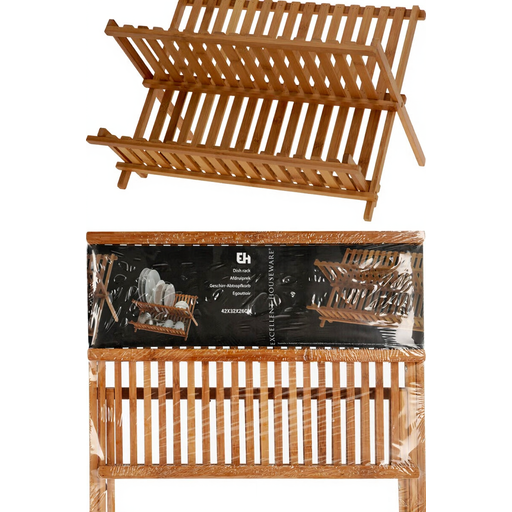
Why this product suits you: Measuring 42 × 32 × 26 cm, this compact dish drainer is ideal for small worktops and the everyday needs of a one- or two-person household.
The removable PP draining tray and separate cutlery holder make it easy to empty and clean. The stated maximum load is 8 kg.
Powder-coated carbon steel, removable tray, cutlery holder and non-slip feet.
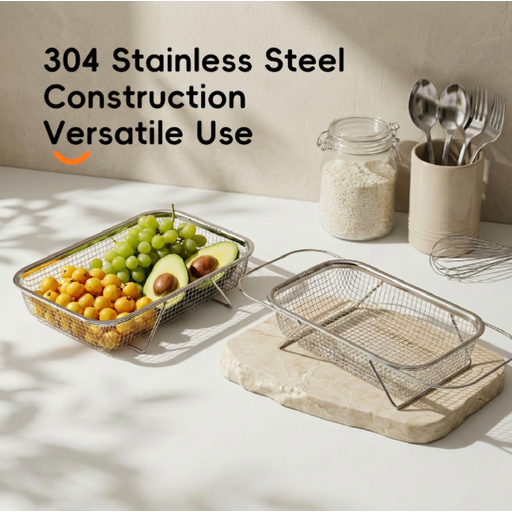
Why this product suits you: This extendable draining basket, made from 304 stainless steel, fits over the sink to free up worktop space.
Its 29.5 × 6.9 cm dimensions and extendable design make it easier to check the fit. Make sure the basket rests securely on the sink before loading it.
Uncoated 304 stainless steel, adjustable length and evenly spaced drainage holes.
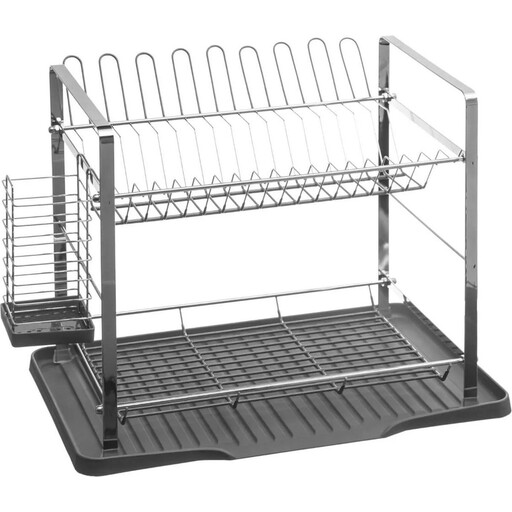
Why this product suits you: With two tiers and room for up to 17 plates, this drainer is well suited to families, regular cooking and use at the campsite.
The stated capacity, non-slip base and removable cutlery tray make it easier to plan how you use it. It measures 50 × 30.5 × 34 cm.
Two-tier design, draining tray, removable cutlery basket and stated capacity of up to 17 plates.
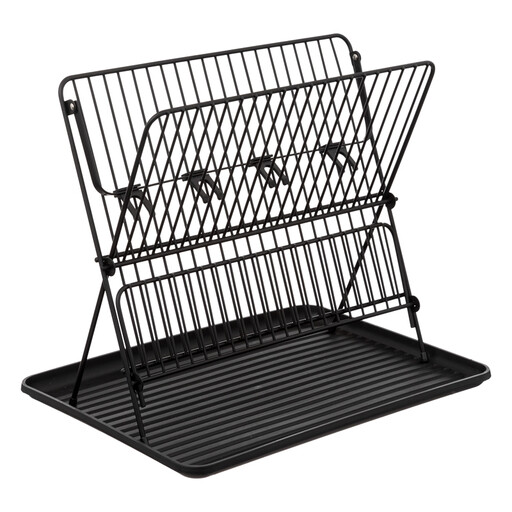
Why this product suits you: This foldable dish drainer combines two tiers with space-saving storage, making it a good choice for rented homes or changing locations.
The removable draining tray helps keep water off the worktop. For a secure base, make sure the drainer is fully opened out and avoid loading one side more heavily than the other.
Steel and PP construction, two tiers, protective rails and a flat-folding design for storage.
A dish drainer is easier to keep clean if you empty the tray regularly. Depending on the material, you can remove limescale with a mild cleaning product and a soft cloth. Abrasive cleaners can scratch plastic and coatings. Place knives in the cutlery drainer with the blades facing inwards. Heavy pans belong on a stable tier designed to hold them, not on a narrow upper plate rack.
If you only need to dry cutlery separately, a standalone cutlery drainer with several compartments and a spout may be all you need. For fruit, vegetables or rinsing items in the sink, extendable draining baskets are a better fit than a traditional dish drainer.
We’ve put together a complete, regularly updated list of products that fully meet these strict selection criteria and the safety regulations in force in the EU.
Choose a size that suits the space available and the number of items you need to dry each day. Before you buy, measure your worktop, the distance from the wall and the clearance beneath any wall units. Compact or foldable models are often easier to fit into small kitchens.
A removable draining tray collects water beneath the drainer. Empty and clean it regularly. Models that sit directly over the sink can drain water through their openings into the basin; make sure they sit securely and level.
Its lifespan depends on the material, the load it carries, how well it’s cared for and how much moisture it’s exposed to. Distributing weight evenly, avoiding abrasive cleaners and drying hard-to-reach areas can help keep it in good condition. Damaged coatings or unstable feet are signs that it may be time to replace it.