
Lieferung heute & morgen

Qualitätsgarantie

Willkommens-Angebote freischalten: KOSTENLOSE Lieferung | Bis zu 80 % RABATT | Kostenlose 30-Tage-JoyPlus-Testphase
App herunterladen
A dish drainer should hold wet dishes securely, channel water away and keep your worktop tidy. In small kitchens, every centimetre counts. But not every model marketed as a space-saving dish rack or modern kitchen organiser will automatically suit your household.
Three common reasons for buying the wrong one are:
Before you buy, it’s worth checking the dimensions, material, cleaning requirements and intended use.
Measure the space available beside or behind your sink. The key measurements are length, width and height when fully assembled. If you’re considering a two-tier dish drainer, also check whether wall cupboards, windows or kitchen utensils above it might get in the way.
A two-tier model can hold plates, cups and larger items separately. A low-profile dish rack takes up less vertical space and is well suited to an open worktop. In a small kitchen, a foldable dish rack can be a practical choice if you want to put it away after washing up.
Check the internal layout, too. Plate holders, a cutlery basket and a separate area for pots help prevent wet dishes from being piled on top of one another.
A dish drainer with a drip tray collects water directly beneath the rack. However, it will only protect your worktop reliably if you empty and clean the tray regularly. Standing water can encourage limescale deposits and hygiene problems.
Useful features include:
A cutlery drainer with removable compartments is usually easier to clean thoroughly than one with a fixed basket. For plastic parts, check whether the manufacturer says they can be cleaned in the dishwasher.
Steel provides a sturdy frame, while plastic is often used for the tray, cutlery basket or protective covering. On a black dish drainer, water marks and limescale may be more or less visible depending on the surface finish. Regular cleaning with a damp cloth and mild detergent is therefore a good idea.
Don’t assume the stated maximum load means every tier can support the same weight. Heavy pots and pans should always go on the bottom. If you’re using a shelf for spices or kitchen utensils, heavier items should also be placed on the lower tier. A level, non-slip surface helps reduce the risk of the rack sliding or tipping over.
The models below suit a range of needs, from everyday draining and cutlery organisation to extra storage for kitchen utensils.
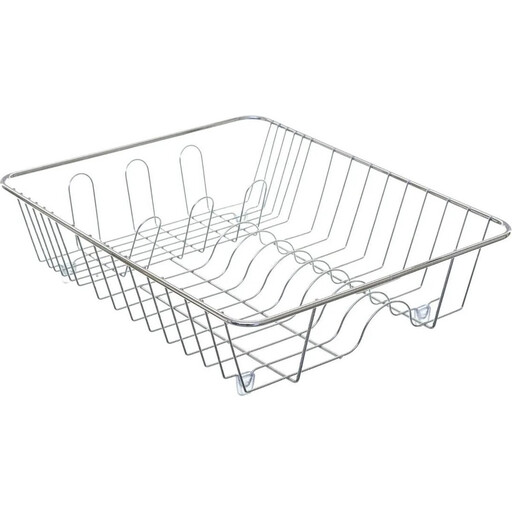
Why this product suits you: This low-profile model provides a dedicated space for everyday washing up and needs no special assembly. It’s designed for kitchens and, according to the product description, camping too.
The raised edge is designed to keep water within the designated area. It’s described as having space for up to 10 plates and 6 glasses, plus a cutlery basket.
Steel and ABS construction, 39 × 33,5 × 10,5 cm, an integrated cutlery basket and easy cleaning with a damp cloth.
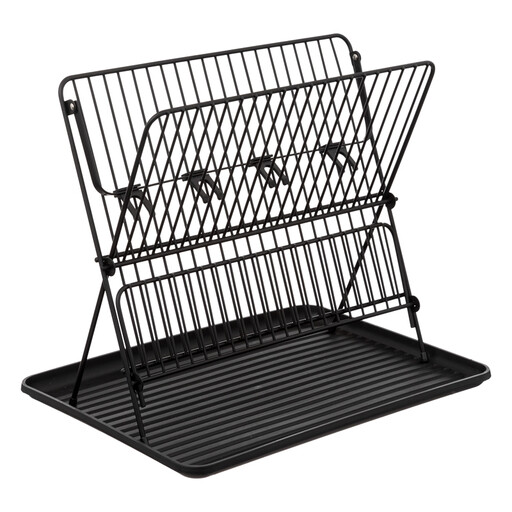
Why this product suits you: The two-tier design makes use of vertical space on your worktop and folds flat when not in use. That’s handy for households short on space.
The removable drip tray collects the water. The manufacturer recommends not overloading the top tier, and emptying and cleaning the tray regularly.
Two tiers, steel and PP materials, protective edges and a foldable design with a separate drip tray.
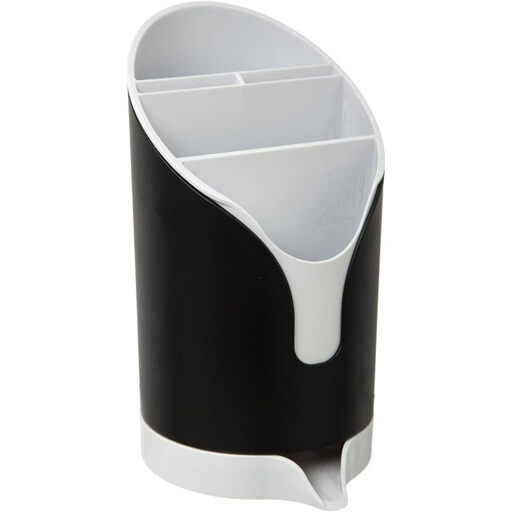
Why this product suits you: If you want to dry cutlery and kitchen utensils separately from your dishes, this compact design gives you three compartments to keep everything organised.
The three removable compartments make the inside surfaces easier to reach. A separate drip tray collects liquid and can be cleaned on its own.
ABS plastic, measuring 11 × 20,5 cm, a removable white insert and, according to the product details, dishwasher-safe parts.
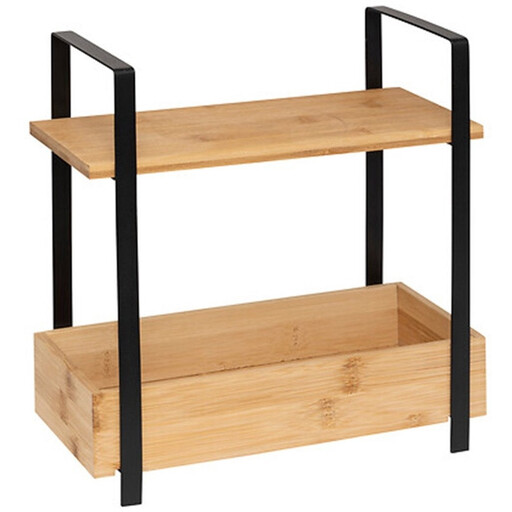
Why this product suits you: This two-tier shelf isn’t primarily a dish drainer, but it works well alongside one, providing extra space for spices, kitchen tools, cleaning products and other dry items.
Keeping dry storage separate from wet dishes prevents the wooden surfaces from being in constant contact with water. Place heavier items on the bottom tier.
30 × 14 × 30 cm, steel frame, two bamboo trays, a carry handle and a stated maximum load of 2 kg.
We’ve put together a complete, regularly updated list of products that meet these strict selection criteria and the safety regulations in force across the EU.
Place the rack on a level, stable and preferably non-slip surface. Put plates in the holders provided, make sure glasses are secure, and place heavy pots on the bottom. The drip tray should sit fully beneath the rack.
Its lifespan depends on the material, load, moisture and cleaning. Empty the drip tray regularly, remove limescale deposits and avoid harsh or corrosive cleaning products. If you have a foldable model, don’t force the hinges.
There are normally no energy costs, as dishes dry naturally in the air. The main tasks are emptying the drip tray and cleaning the rack, cutlery basket and shelves. Making these steps part of your daily kitchen routine helps reduce water build-up and deposits.