
Lieferung heute & morgen

Qualitätsgarantie

Willkommens-Angebote freischalten: KOSTENLOSE Lieferung | Bis zu 80 % RABATT | Kostenlose 30-Tage-JoyPlus-Testphase
App herunterladen
A dish drainer should hold wet dishes securely, direct water away and keep your worktop as dry as possible. But in small kitchens, one-person households or homes where the washing-up is a regular job, design isn’t the only thing that matters. The dimensions, material, stability and ease of cleaning all determine whether a dish drainer is genuinely practical for everyday use.
Product images can make it difficult to judge the actual size. A multi-tier dish drainer takes up less width, but can be considerably taller. Before buying, measure the space available next to your sink. Remember to account for the tap, wall cabinets and the distance from the wall.
A dish drainer without a suitable tray can let water run straight onto your worktop. This means more wiping down and could damage delicate surfaces. A removable tray or a drainage channel that directs water towards the sink is therefore an important feature. The tray should also be easy to remove and clean.
The stated capacity won’t always reflect a mixed load of plates, cups, glasses and pans. A two-tier dish drainer may hold plenty of plates, while larger pans or bowls might only fit on the lower tier. Look for specific details such as dimensions, the number of plate slots and the available holders, rather than relying on general marketing claims.
A space-saving dish drainer with a vertical design is a good choice for smaller worktops. A single-tier model is usually lower and gives you quick access to your dishes. A two-tier model makes use of the available height and can be useful if you have a larger volume of washing-up. Check the following before buying:
A foldable dish drainer is particularly handy for small kitchens, holiday homes or camping. If you choose a foldable model, make sure it locks securely into place when unfolded and sits on a level surface.
A metal dish drainer is often made from steel or stainless steel. Coated steel can be sturdy, but the finish needs to remain intact to prevent moisture from reaching damaged areas over time. ABS or PP plastic components are lightweight and can be used for drip trays or cutlery holders.
Look for:
The material alone doesn’t determine how easy a drainer is to maintain. Remove water regularly and allow the drainer to dry completely.
A dish drainer with a drip tray protects your worktop, provided the tray is large enough to collect the water. A cutlery drainer with separate compartments makes it easier to sort knives, forks and cooking utensils. A drainage channel or spout can make the tray easier to empty.
If you want to dry your dishes right next to the sink, check that the sink dish rack will actually fit the width of your sink. A freestanding model is more flexible, but needs a suitable worktop.
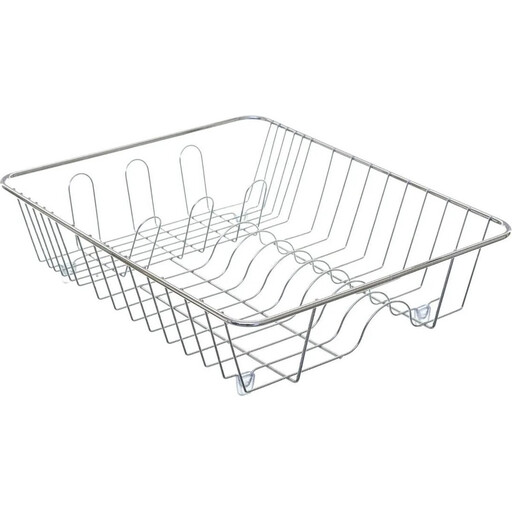
Why it suits this type of buyer: Its compact, single-tier design is well suited to smaller households and lighter loads of washing-up. It’s listed as holding up to 10 plates and comes with a cutlery basket.
The specific dimensions of 39 x 33.5 x 10.5 cm make it easier to plan where it will go. A raised edge is designed to help contain water.
A steel and ABS plastic construction, a cutlery basket and a weight of 610 g. According to the product details, this model is also suitable for camping.
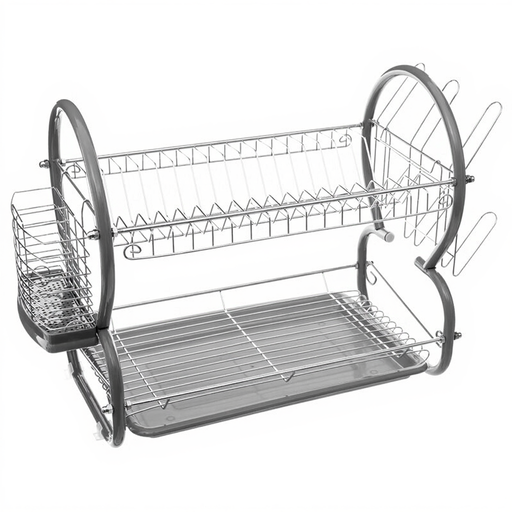
Why it suits this type of buyer: Its two-tier design is made to hold dishes, glasses and cutlery, offering an organised solution for everyday use at home.
Its stated dimensions of 55.5 x 25.5 x 38 cm make it clear how much space you’ll need. The usage guidance recommends positioning the drip tray correctly and distributing the load evenly.
Powder-coated CR steel, two tiers and a drip tray system. It comes flat-packed for self-assembly.
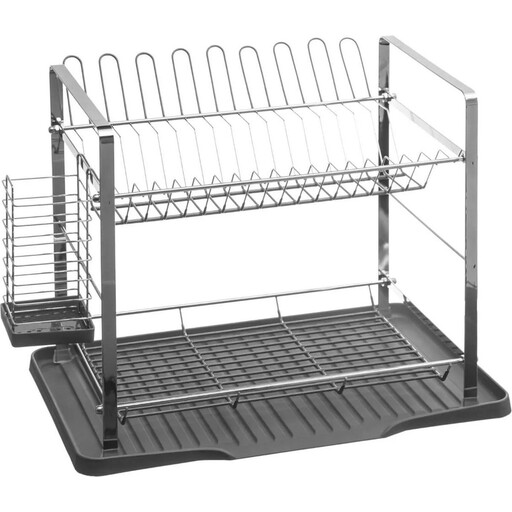
Why it suits this type of buyer: Two tiers and a stated capacity of up to 17 plates make this a practical choice for households that wash up regularly. The manufacturer also says it can be used in the kitchen or when camping.
The dimensions of 50 x 30.5 x 34 cm show how much space you’ll need. The removable cutlery basket and drip tray can be cleaned separately.
Two tiers, a non-slip base, a removable cutlery basket and stated capacity for up to 17 plates. The product description recommends cleaning it with a damp cloth.
We’ve put together a complete, regularly updated list of products that meet these strict selection criteria and fully comply with the safety regulations applicable in the EU.
Place your dish drainer on a level, stable surface and distribute heavier items as evenly as possible. If you have a two-tier dish drainer, avoid putting heavy pans on an upper tier that looks delicate, unless the manufacturer says it is designed to take the weight.
After washing up, we recommend:
Only rely on the product’s own details to confirm whether it’s dishwasher-safe. For example, the 5five Dish Drain Rack with tray is listed as unsuitable for the dishwasher.
A compact, single-tier model with a shallow base is often enough for one- or two-person households. Families and households with lots of cookware should consider the footprint, number of tiers and plate capacity together. It’s not just the maximum number of plates that matters; you’ll also need room for cups, bowls, glasses and cutlery.
Choose a model with a drip tray, raised edges or a drainage channel. Empty and clean the tray regularly. You should also position the drainer so that water can’t run behind or beside the sink.
Its lifespan depends on the material, the load it carries, how well it’s maintained and how much moisture it’s exposed to. Don’t leave a metal drainer in contact with standing water for long periods. Damaged coatings, loose joints or rust spots are signs that it’s time to check the construction or replace the drainer.